
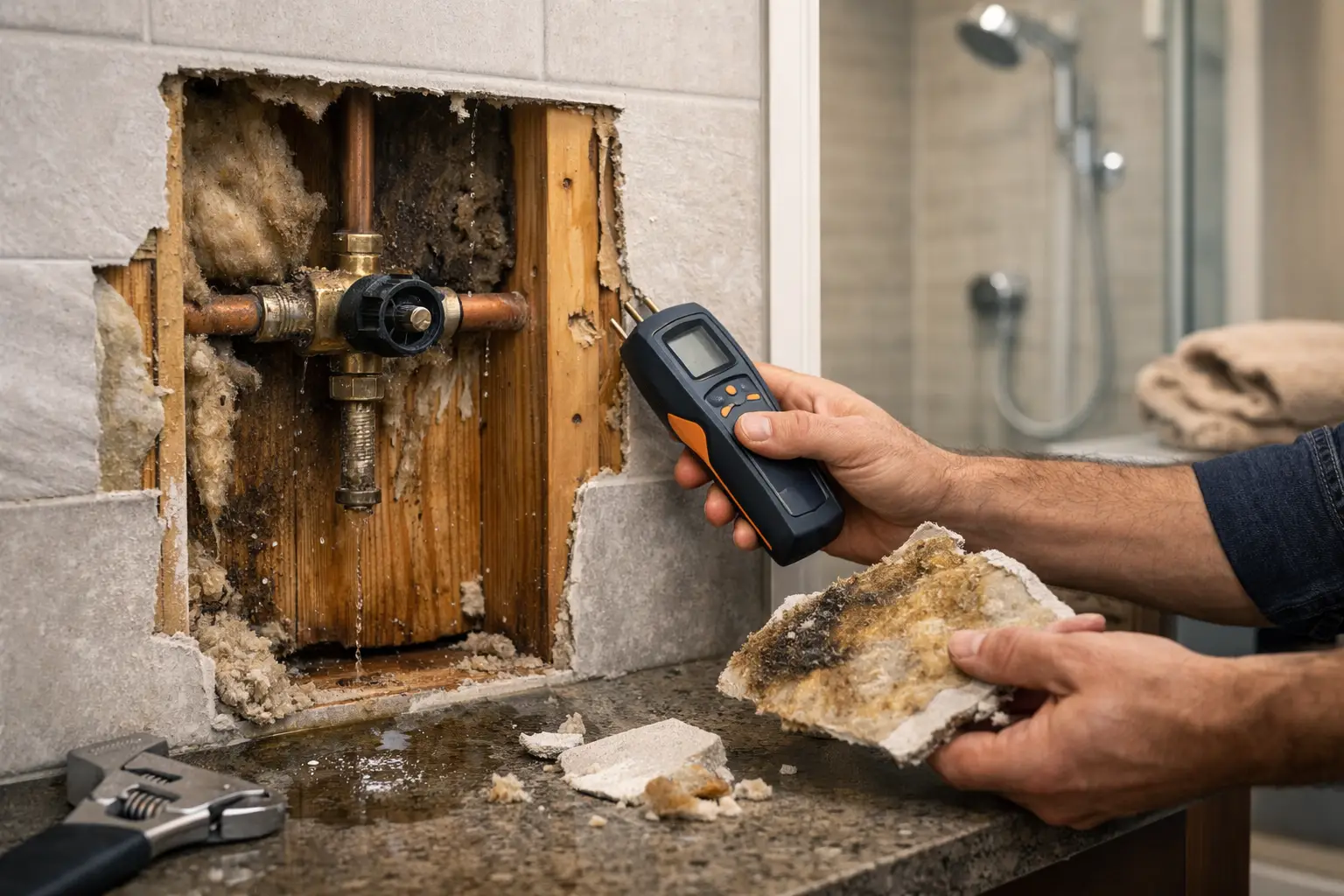
A shower wall can look perfectly dry while water is slowly damaging the framing, insulation, drywall, or subfloor behind it. If you are asking, “is a shower leak behind wall” the reason for a stain, odor, loose tile, or higher water bill, the answer may be yes – but the source is not always where the damage appears.
A shower leak can come from a plumbing connection, a failed shower pan, cracked grout, worn caulk, or a problem at the valve. Finding the correct source early matters. A small repair may stay small when handled promptly, while repeated moisture can lead to mold growth, structural repairs, and a much larger bathroom project.
Signs a Shower Leak Is Behind the Wall
The most obvious sign is a water stain on the wall or ceiling beside, below, or behind the shower. In a two-story home, a stain on the ceiling under an upstairs bathroom deserves immediate attention. Water often travels along pipes, framing, and drywall before it becomes visible, so the stain may not sit directly below the leak.
A persistent musty smell is another warning. Bathrooms naturally get humid, but a damp odor that remains after the room has dried can point to trapped moisture behind tile or drywall. Peeling paint, bubbling drywall, soft baseboards, warped flooring near the shower, or loose tiles can also indicate a hidden water issue.
Pay attention to changes in the shower itself. If grout lines are cracking, caulk is separating at corners, or tile feels loose when pressed, water may be reaching the wall assembly. These conditions do not always mean there is an active plumbing leak, but they should not be ignored.
Other signs homeowners commonly notice include:
- Water pressure that suddenly seems lower at the showerhead
- A water meter that continues moving when all fixtures are off
- A damp wall on the opposite side of the shower
- Discoloration around the shower valve or trim plate
- Floor tile that feels soft, shifts, or develops cracked grout
No single symptom identifies the cause with certainty. The goal is to recognize when a closer inspection is needed before moisture spreads.
Is a Shower Leak Behind the Wall or at the Surface?
The difference matters because the repair can range from resealing a joint to opening a wall and replacing damaged plumbing. Surface failures are usually related to caulk, grout, tile, or shower-door seals. Plumbing leaks occur in supply lines, drain connections, the valve body, or fittings located behind the wall.
One useful clue is when the water appears. If staining or moisture worsens even when no one has used the shower, a pressurized supply line or valve may be leaking. If the problem appears only after showering, the shower pan, drain, tile assembly, or caulked joints become more likely suspects.
Do not assume grout is waterproof. Grout fills joints and supports the tile finish, but the shower’s waterproofing system is behind the tile. Cracked grout can allow water to get where it should not, yet simply applying more grout may not solve a failed waterproofing layer or a damaged pan.
Likewise, replacing caulk can be a practical maintenance repair when the problem is limited to an open seam. It will not repair a leaking pipe or restore rotten framing behind the wall. An accurate diagnosis protects you from spending money on a cosmetic fix that hides the problem for a few months.
Simple Checks You Can Make Safely
Start by drying the shower completely. Run the shower for several minutes without spraying water directly onto the walls. Check adjacent walls, the floor outside the shower, and any ceiling below for fresh moisture. Then repeat while directing water at different areas, such as the corners, door frame, tile walls, and curb. This may help narrow down whether the issue is related to spray, drainage, or plumbing pressure.
You can also inspect the trim plate around the shower handle. If moisture appears around the valve or the wall feels soft nearby, the valve or its connections may need professional attention. Avoid removing plumbing components unless you know how to shut off the water and reinstall them correctly.
For a shower with a visible drain, look for cracked sealant, missing grout, or signs that water pools in one area instead of flowing freely to the drain. Slow drainage does not automatically mean a leak, but standing water puts extra stress on the pan and surrounding seams.
Check your water meter only when all faucets, appliances, irrigation systems, and water-using fixtures are off. If the meter’s leak indicator moves, there may be a plumbing leak somewhere in the house. That test cannot confirm the shower as the source, but it is valuable information to share with a repair professional.
When to Stop Using the Shower
Stop using the shower if water is actively dripping through a ceiling, drywall is soft or swollen, flooring is buckling, or you see visible mold growth. Continuing to use the fixture can turn a localized repair into a larger demolition and restoration job.
If the shower is your only bathing option, it can be tempting to keep using it carefully. That is risky when the source is unknown. Water from a failed pan or leaking valve can spread into wall cavities every time the shower runs, even if the visible damage seems minor.
Shut off the water supply to the shower or the home if you suspect a pressurized pipe leak. If you are not sure where the shutoff is located, do not force a valve that has not been used in years. Call for help and explain what you are seeing, when it occurs, and whether it happens with the shower off.
What Professional Leak Repair May Involve
A proper shower leak inspection starts with locating the source, not immediately tearing out tile. Depending on the symptoms, a contractor may test the shower pan, inspect the drain and valve, check moisture levels in nearby materials, or access plumbing from the opposite side of the wall. Opening the back side of a wall can sometimes preserve the finished shower surface when the issue is a supply line or valve connection.
A drain or shower pan failure may require more extensive work. In some cases, the shower floor and lower wall tile must be removed to rebuild the waterproofing correctly. If the bathroom already has aging tile, recurring grout cracks, an outdated layout, or multiple repair needs, a targeted repair may not be the best long-term value. A shower renovation can address hidden water damage while improving storage, accessibility, fixtures, and finish quality at the same time.
The right option depends on the condition of the shower and what is found behind the wall. A trustworthy contractor should explain the likely cause, show you the affected area when possible, and outline what is repairable before recommending a larger project.
Preventing the Next Shower Leak
Most shower leaks do not begin as emergencies. They develop through neglected caulk, failing grout, loose fixtures, or older plumbing components. Inspect shower corners, the curb, tile transitions, and the area around the valve several times a year. Replace deteriorated caulk before gaps allow repeated water exposure.
Keep the bathroom ventilated during and after showers. Exhaust fans reduce lingering humidity, helping protect paint, drywall, and cabinetry. They do not prevent a plumbing leak, but they make it easier to notice when moisture is coming from somewhere it should not.
For Dallas-Fort Worth homeowners planning a bathroom update, it is also wise to address aging supply lines, valves, drains, and waterproofing while walls are open. Wisez Improvement can help evaluate whether a focused repair or a more complete shower solution makes sense for your home.
A dry-looking shower should not have to be a guessing game. If you notice a new stain, musty odor, soft wall, or recurring tile problem, document it with photos and arrange an inspection before the next shower sends more water where it does not belong.