
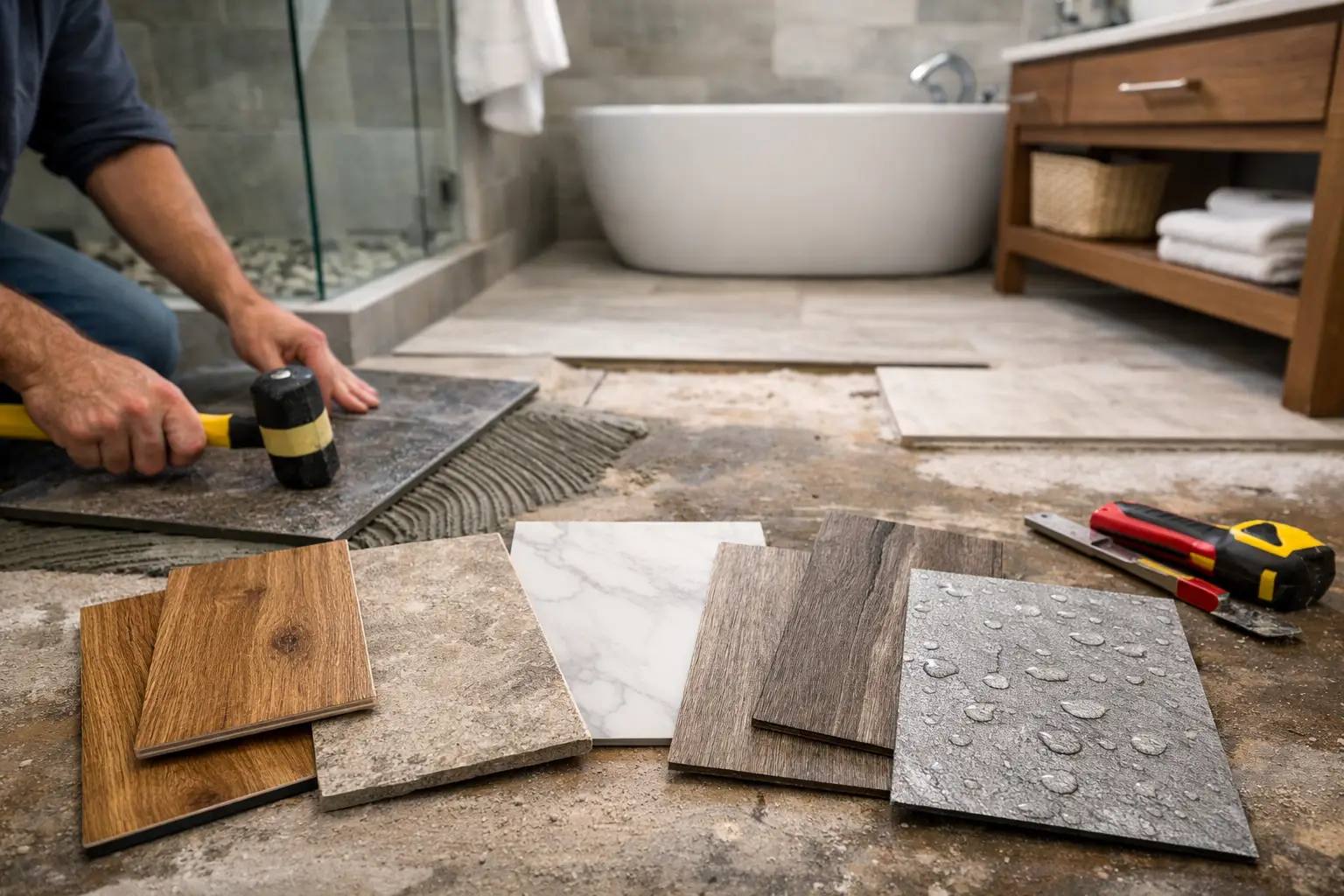
A bathroom floor can look great on installation day and still fail early if water gets beneath it. The best bathroom flooring for moisture is not simply the material labeled waterproof. It is the option that fits how your household uses the room, the condition of the subfloor, and the quality of the installation around showers, tubs, toilets, and vanities.
For Dallas-Fort Worth homeowners, that distinction matters. A busy family bath sees wet towels, shower splash, humid air, and the occasional toilet overflow. A guest bath may need a different level of protection than a primary bathroom with a large walk-in shower. Choosing the right floor starts with being honest about the water exposure the room will face.
Best Bathroom Flooring for Moisture: Start With Water Exposure
Bathrooms do not all get wet in the same way. A powder room has moisture from handwashing and plumbing connections, but it rarely sees a soaked floor. A hall bath used by children can experience frequent splashing. A shower remodel with a curbless entry or oversized glass enclosure needs flooring and waterproofing that work together at a much higher level.
The floor covering is only one layer of protection. Tile, vinyl, and stone can resist water at the surface, but water can still reach the subfloor through failed caulk, open transitions, cracked grout, loose toilet seals, or poorly detailed shower edges. If there is existing soft flooring, staining at the ceiling below, or a toilet that rocks, address the source of the moisture before covering it with a new finish.
A good flooring decision also considers comfort, slip resistance, maintenance, budget, and style. The material with the highest water resistance is not automatically the best choice for every project.
1. Porcelain Tile: The Strongest All-Around Choice
Porcelain tile is often the best fit for full bathroom remodels because it handles everyday water exposure exceptionally well. It is dense, durable, and available in finishes that resemble natural stone, wood, concrete, and clean modern patterns. With proper installation, porcelain works on bathroom floors, shower walls, and shower floors.
For most homes, a matte or textured porcelain tile offers better traction than a highly polished finish. Smaller tiles or mosaic sheets are especially practical on shower floors because the additional grout lines can improve footing and allow the floor to follow the required slope toward the drain.
Porcelain is not maintenance-free. Grout needs periodic cleaning and may require sealing depending on the grout type used. More importantly, tile installation has to begin with a solid, properly prepared substrate. Tile does not flex well. If the floor structure moves or the underlayment is installed incorrectly, cracked grout and loose tiles can follow.
Porcelain usually costs more upfront than vinyl, particularly when demolition, floor preparation, waterproofing, and detailed layout are involved. The payoff is a long-lasting finish that can add value and make a bathroom feel complete rather than simply updated.
2. Ceramic Tile: A Practical Value for Lower-Wear Baths
Ceramic tile is another reliable moisture-resistant option. It comes in a wide range of sizes, colors, and price points, making it a practical choice for guest bathrooms, powder rooms, and standard tub-and-shower spaces. Glazed ceramic tile resists water well at the surface and can provide a polished look without the price of many porcelain selections.
The trade-off is durability. Ceramic is generally less dense than porcelain and may chip more easily in a hard-working family bathroom. Large-format ceramic can still be an attractive option, but it needs a flat, stable floor and careful installation.
If you are deciding between porcelain and ceramic, consider how long you plan to stay in the home and how heavily the bathroom is used. Ceramic can be a smart budget-conscious choice when the underlying preparation is not compromised.
3. Luxury Vinyl Plank or Tile: Comfortable and Water-Resistant
Luxury vinyl plank, often called LVP, and luxury vinyl tile offer a softer, warmer surface underfoot than tile. Quality products are water-resistant or waterproof, easy to clean, and available in convincing wood and stone visuals. They can work well in powder rooms, guest baths, and bathrooms where comfort and a lower installation cost are priorities.
The wording on the box deserves a closer look. Waterproof vinyl means the plank or tile itself will not absorb water. It does not mean water cannot travel through seams, around the toilet, or beneath the perimeter of the floor. Once moisture becomes trapped under a floating vinyl floor, it can contribute to odor, mold, adhesive issues, or damage to the material below.
LVP is generally not our first choice inside a walk-in shower area or a bathroom with known leak history. It also can be dented or gouged by heavy objects, and its appearance may not provide the same long-term resale appeal as a well-installed tile floor. Still, for the right bathroom and budget, it is a practical option with a comfortable finish.
4. Sheet Vinyl: Strong Protection With Fewer Seams
Sheet vinyl is less common in high-end remodels, but it remains one of the most effective bathroom flooring choices for moisture. Because it can cover much of the room in a single sheet, it has fewer seams for water to penetrate than vinyl planks or tiles. It is also budget-friendly, easy underfoot, and available in more attractive designs than many homeowners expect.
Its limitations are mostly aesthetic and repair-related. Sheet vinyl can look less custom than tile, and a tear or deep cut may be difficult to repair invisibly. Careful installation around the toilet, tub, and doorways is essential. It is a strong functional choice for rental properties, secondary bathrooms, and homeowners who want dependable water resistance without a major tile investment.
5. Natural Stone: Beautiful, but Demanding
Marble, travertine, slate, and other natural stones can create a distinctive bathroom that no manufactured material fully duplicates. They are especially appealing in primary bathrooms where design detail is a priority. However, stone needs more care than porcelain or vinyl.
Many natural stones are porous and need sealing. Some can stain, etch, or change appearance when exposed to certain cleaners and personal-care products. Polished stone may also become slippery when wet. Honed finishes and appropriate tile sizing can help, but homeowners should be prepared for regular maintenance.
Stone is best selected for its character, not because it is the easiest moisture solution. A properly waterproofed installation is critical, and the material should match the level of upkeep you are willing to provide.
6. Sealed Concrete: Best for a Specific Modern Look
Sealed concrete can suit a contemporary bathroom, particularly in homes with slab foundations or an industrial design direction. It is durable and can be stained, polished, or given a textured finish. When sealed correctly, it resists moisture well.
Concrete is not automatically waterproof, though. It can crack as a home moves, and coatings or sealers require maintenance over time. It can also feel hard and cool underfoot. This option works best when it is part of an intentional overall design, not as a shortcut around proper floor preparation.
Installation Details Matter as Much as the Material
A beautiful floor cannot make up for a weak subfloor or an unresolved plumbing issue. Before new flooring goes in, the installer should check for moisture damage, movement, uneven areas, and plumbing concerns around the toilet flange, tub, shower valve wall, and vanity connections. Replacing damaged plywood now is far less disruptive than opening a finished bathroom later.
For tile floors, proper underlayment, movement joints where needed, and compatible setting materials protect the installation. In wet shower areas, a waterproofing system behind and beneath the tile is essential. Grout is not the waterproof layer. Caulked changes of plane, properly sloped shower floors, and well-fitted drains all matter.
For vinyl, the subfloor needs to be smooth, clean, and dry before installation. Product instructions on underlayment, expansion space, and adhesives should be followed closely. A floor that looks level can still have low spots or loose areas that shorten its life.
How to Make the Final Choice
If you want the most dependable long-term answer for a frequently used bathroom, porcelain tile is usually the leading choice. It performs well around moisture, supports a wide range of designs, and holds up under regular use when installed correctly. Ceramic tile is a sensible alternative for a lower-traffic room. Vinyl can be an efficient solution when comfort and budget lead the decision, while natural stone and concrete serve more specific design goals.
The right answer changes when there is a plumbing problem, an aging subfloor, or a shower conversion involved. Wisez Improvement approaches bathroom flooring as part of the complete room, checking the conditions that can cause a new floor to fail before recommending the finish that will look right and perform well.
Before choosing a color or tile pattern, have the bathroom evaluated for water paths that are easy to miss. A properly repaired, prepared, and installed floor gives you more than a finished look. It gives the room a foundation that can handle real life.