
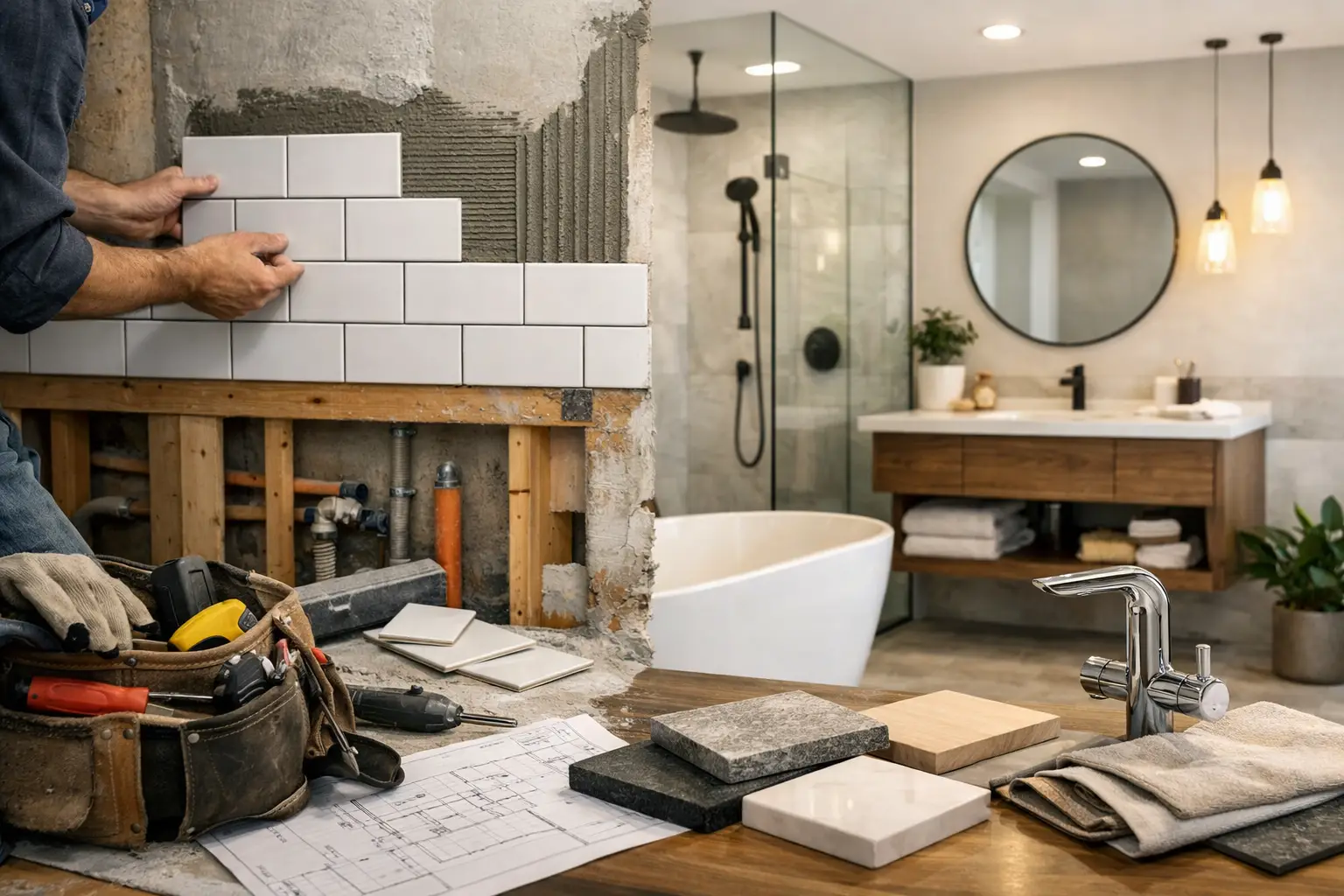
If you are asking what does bathroom remodel include, you are probably trying to answer a bigger question: how much work is this really going to take? Most homeowners start with a picture in mind – a better shower, a cleaner layout, updated tile, more storage – but the actual scope goes well beyond picking finishes.
A bathroom remodel usually includes demolition, plumbing and electrical updates, wall and floor preparation, tile or surround installation, vanity and cabinet work, fixture replacement, lighting, painting, and final trim. In some projects, it also includes layout changes, custom glass, tub-to-shower conversions, ventilation improvements, and repair work hidden behind the walls. The exact scope depends on the age of the bathroom, the condition of the plumbing, and how far you want to go.
What does bathroom remodel include in a real project?
In a real home, a bathroom remodel is not just a cosmetic swap. It is a chain of connected tasks, and each one affects the next. Replacing a vanity may lead to plumbing updates. New tile may require subfloor repair. A larger shower may call for drain relocation, new waterproofing, and custom glass.
That is why a professional remodel starts with a clear plan. Before materials are installed, the contractor needs to understand what stays, what goes, what needs repair, and whether the layout still works for the household. A guest bath remodel and a primary bathroom renovation can look very different, even when both are called a “bathroom remodel.”
Demolition and prep work
Most bathroom remodels begin with removal of the old materials. That can include the vanity, sink, toilet, flooring, tub, shower wall tile, mirrors, light fixtures, and damaged drywall. In older bathrooms, demo often reveals the real condition of the space.
This stage matters more than many homeowners expect. Once surfaces are opened up, a contractor may find water damage, mold around a tub surround, rotted subfloor near the toilet flange, or outdated plumbing connections. These issues are not glamorous, but fixing them is part of doing the remodel correctly.
Prep work also includes protecting nearby floors, containing dust, and getting the room ready for the rebuild. Good project execution at this stage helps prevent delays later.
Plumbing updates are often part of the job
A lot of bathroom remodeling work is plumbing work, even when the layout stays mostly the same. Faucets, drains, shutoff valves, shower valves, supply lines, and toilet connections may all need replacement or adjustment.
If you are converting a tub into a walk-in shower, moving a vanity, or upgrading from basic fixtures to more specialized hardware, the plumbing scope gets larger. Sometimes the visible fixtures are only part of the issue. Older homes may have worn lines, poor drainage slope, or connections that should be corrected while the walls are open.
This is one area where cutting corners usually costs more later. A bathroom can look finished on the surface and still have hidden plumbing problems behind the tile or inside the wall.
Electrical, lighting, and ventilation
Bathrooms need more than a new vanity light to feel updated. A remodel may include replacing old fixtures, adding recessed lighting, installing a better exhaust fan, updating switches and outlets, or improving task lighting around the mirror.
Ventilation is especially important. If a bathroom has constant moisture problems, peeling paint, or mildew buildup, a stronger or better-placed exhaust fan may be part of the remodel. This is not just about comfort. Moisture control protects the finishes you are paying for.
Electrical updates also come into play when homeowners want extra function, such as lighted mirrors, more outlet access, or dedicated lighting zones for a primary bath.
Shower, tub, and waterproofing work
For many homeowners, the wet area is the center of the project. That may mean a new bathtub, a tub-to-shower conversion, a larger shower base, custom tile, niche installation, new fixtures, or custom glass.
What matters here is not just the final look. It is the assembly behind it. A proper bathroom remodel includes waterproofing beneath the tile or wall finish, correct slope to the drain, secure fixture installation, and careful sealing at transitions.
This is one of the biggest differences between a quick refresh and a real remodel. A fresh surface can look good for a while. A properly rebuilt shower is designed to hold up to daily use without letting water get where it should not.
Flooring, walls, and tile installation
Bathroom floors and walls take a lot of wear. Remodels often include removing old flooring and replacing it with tile, luxury vinyl, or another water-resistant material. Wall work may include drywall repair, backer board installation in wet areas, tile installation, and paint.
Tile can be one of the most visible parts of the remodel, but it is also one of the most labor-intensive. Layout, spacing, cuts, edge details, and grout all affect the final result. The same tile can look average or excellent depending on the installation quality.
If the subfloor is uneven or damaged, that has to be addressed before new flooring goes in. This is another example of why bathroom remodel pricing can vary. Two bathrooms may look similar in size, but the condition underneath can change the scope significantly.
Vanity, cabinets, countertops, and storage
A remodel often includes replacing the vanity, sink, countertop, mirror, and storage elements. Some homeowners want a simple vanity upgrade. Others need better organization, more counter space, double sinks, or custom cabinet solutions.
This part of the project is where function and design meet. A bathroom should look clean and updated, but it also needs to work for everyday routines. A family sharing one bathroom may need durable surfaces and more storage. A primary bathroom may prioritize comfort, visual detail, and a more custom feel.
Cabinet installation also ties back into plumbing and wall conditions. New vanity sizes, new sink configurations, and different counter heights may all require adjustments.
Fixtures and finish details
Small details do a lot of work in a bathroom remodel. That includes faucets, shower trim, toilet installation, towel bars, mirrors, glass enclosures, hardware, and trim pieces. These final elements shape how complete and polished the room feels.
They also affect long-term performance. A quality shower valve, properly installed toilet, and well-fitted glass enclosure are not just style choices. They influence comfort, maintenance, and durability.
Homeowners sometimes try to save money by treating these items as an afterthought. The better approach is to choose finishes that match the level of the overall project. A remodeled bathroom with weak fixtures can lose value fast in everyday use.
What may or may not be included
Not every contractor includes the same scope in a quoted bathroom remodel. That is where confusion starts. One estimate may include only surface replacement. Another may include plumbing corrections, waterproofing, tile prep, disposal, finish installation, and punch-list completion.
Ask direct questions. Does the job include demolition and haul-off? Are plumbing and electrical updates included? Is waterproofing part of the shower installation? Are materials and labor both covered? Will permits be needed? If damage is found behind the walls, how is that handled?
A clear scope helps you compare bids fairly. It also helps avoid the common problem where a low initial number grows once the work begins.
When a bathroom remodel becomes a repair-plus-remodel job
Many bathrooms need more than visual upgrades. Leaks, soft flooring, aging supply lines, cracked shower pans, loose toilets, and poor drainage can turn a remodeling project into a repair-plus-remodel job.
That is not a bad thing if it is caught early and handled correctly. In fact, it is often the smartest time to fix underlying problems because the room is already open. A contractor who understands both remodeling and repair can usually solve these issues more efficiently than one focused only on cosmetics.
For homeowners in the Dallas-Fort Worth area, that practical approach matters. A bathroom is one of the most used rooms in the house, and it needs to perform well long after the final cleanup. That is the standard Wisez Improvement builds toward on every well-scoped project.
How to know what your bathroom remodel should include
The right scope depends on your goals. If the bathroom is structurally sound and you just want a visual update, the remodel may focus on finishes, fixtures, vanity replacement, and paint. If the bathroom has layout problems, water damage, or an outdated shower setup, the scope should be broader.
A good estimate should match the actual condition of the space, not just the wishlist. That means looking at the bathroom in person, understanding how you use it, and identifying any repair issues before the project starts. The best remodels are not simply prettier versions of the old bathroom. They are built to solve the reasons you wanted to change it in the first place.
If you are planning a remodel, think beyond the tile color and mirror style. The real value is in a bathroom that looks right, works right, and holds up under daily use.