
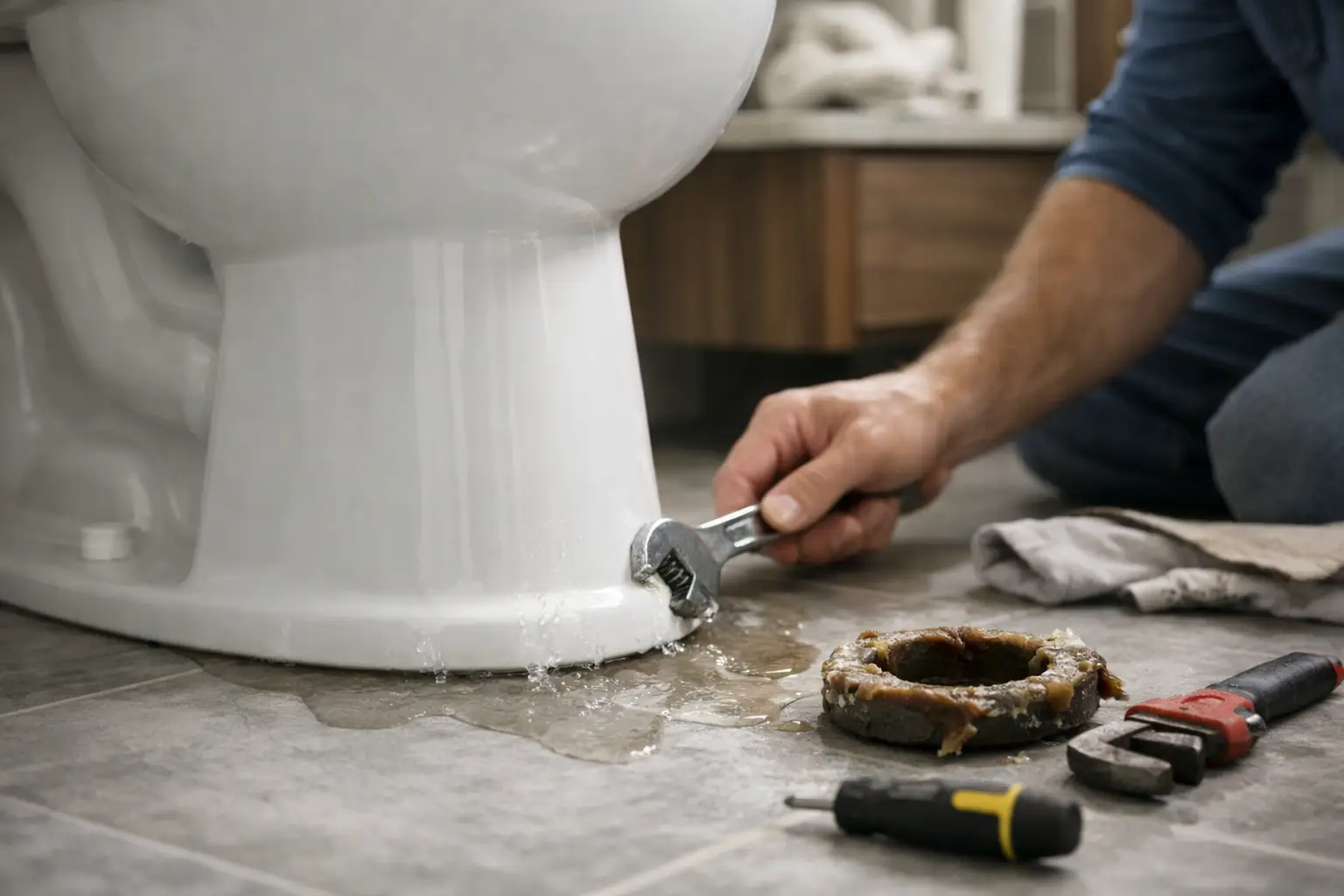
Water around a toilet is never something to ignore. A small puddle at the base can be a simple maintenance issue, but it can also be the first visible sign of a failing seal, damaged flooring, or a plumbing problem hidden below the fixture. The key is identifying when the water appears and where it begins before moisture has time to damage the bathroom floor or subfloor.
What Causes Toilet Base Leaks?
When homeowners ask what causes toilet base leaks, the most common answer is a failed wax ring. This wax seal sits between the toilet and the drain pipe in the floor. Its job is to keep wastewater and sewer gas inside the plumbing system as the toilet flushes. When it no longer seals correctly, water can escape beneath the toilet and show up around its base.
That said, not every wet floor means the wax ring has failed. Water can travel down the outside of the bowl or tank, collect under the toilet, and make the source difficult to spot. A proper diagnosis starts by understanding the conditions that trigger the leak.
A failed wax ring or toilet seal
A wax ring can fail because it has aged, shifted, been compressed incorrectly, or was damaged during a previous toilet installation. Unlike many plumbing parts, a standard wax ring is not designed to be reused. If the toilet was removed for new flooring, a repair, or a remodel and the old ring was put back in place, a leak may develop soon afterward.
A failed seal typically leaks during or shortly after a flush. The water may be clear at first, but because it is leaving the drain connection, it should be treated as contaminated. Repeated flushing can send moisture below tile, vinyl, laminate, or wood flooring where it may cause staining, soft spots, loose tile, and mold growth.
Loose toilet bolts or a rocking toilet
The bolts at the base of the toilet hold it firmly to the flange, which is the fitting that connects the toilet to the drain pipe. If those bolts loosen or the toilet was not set level, the fixture can rock slightly every time someone sits down. That movement breaks the seal over time.
A toilet should feel solid, not shift from side to side. Tightening the bolts may help only if the seal has not already been disturbed. Over-tightening is not the answer because porcelain can crack under excess pressure. If a toilet rocks, it often needs to be removed, inspected, properly shimmed if necessary, and resealed.
A broken, corroded, or improperly installed flange
The flange is hidden under the toilet, but it is a critical part of the installation. A cracked cast-iron flange, corroded metal ring, broken plastic flange, or flange installed too low below the finished floor can prevent the wax ring from making a reliable seal.
This is common after flooring updates. New tile or thick flooring can change the finished floor height, leaving the flange too low for the original seal arrangement. In other bathrooms, water damage around the flange may have weakened the surrounding floor enough that the toilet can no longer stay secure. Replacing only the wax ring without correcting the flange or floor issue may lead to another leak.
A cracked toilet bowl or base
Porcelain is durable, but it can crack from impact, improper installation, shifting flooring, or pressure from overtightened bolts. Some cracks are easy to see. Others are hairline cracks near the base or underneath the bowl and only leak when the toilet is flushed.
A crack in the bowl or base usually calls for toilet replacement rather than a patch. Temporary repair products are rarely a dependable long-term solution for a fixture that holds water and experiences regular use. A professional can determine whether the moisture is from a crack, the seal, or another connection before recommending replacement.
Condensation, tank leaks, or supply-line drips
Sometimes the toilet base is dry after flushing but wet after humid weather, a hot shower, or several hours of nonuse. In that case, condensation may be forming on the tank and dripping to the floor. This is more likely when cold water enters the tank in a warm, humid bathroom.
A leaking tank-to-bowl connection, fill valve, shutoff valve, or supply line can produce the same misleading puddle. Run a dry paper towel around the tank bolts, water supply connection, and underside of the tank. If you find moisture there, the water may be running down the exterior of the toilet rather than leaking from beneath it.
A drain blockage or plumbing backup
A partial drain blockage can make a toilet flush slowly, bubble, or overflow. While an overflow does not necessarily mean the base seal has failed, repeated backups can put pressure on the plumbing system and expose weaknesses at the toilet connection. If more than one fixture drains slowly or water appears in a tub or shower when the toilet flushes, the problem may be farther down the drain line.
This is not a situation to solve by repeatedly flushing. Stop using the fixture and have the drain system evaluated. Continued use can spread wastewater across flooring and into adjacent rooms.
How to Tell Where the Water Is Coming From
Before assuming the toilet needs to be pulled, dry the floor completely and place a few sheets of toilet paper around the base. Flush once and watch closely. If the paper becomes wet near the bottom of the bowl only during the flush, the wax ring, flange, or toilet installation is a likely cause.
If water appears without a flush, inspect the tank, supply line, shutoff valve, and condensation on the outside of the porcelain. Check the floor around the toilet after a shower as well. In a small bathroom, water from a tub, shower, wet bath mat, or nearby vanity leak can travel farther than expected.
Pay attention to odor and movement. A sewer smell, a soft floor, dark discoloration at the edges of flooring, or a toilet that rocks are stronger signs that water has been getting beneath the fixture. Caulk around the front and sides of a toilet can improve appearance, but it does not fix a failed seal. In fact, caulking over an active leak can trap water underneath and delay detection.
What to Do When Your Toilet Leaks at the Base
If water appears after flushing, limit toilet use until the problem is repaired. Clean up visible water with gloves, disinfect the floor, and keep children and pets away from the affected area. If the leak is actively spreading, shut off the water supply valve behind the toilet. This will not stop water already in the bowl from draining, but it prevents the tank from refilling.
Avoid simply tightening bolts, adding more caulk, or pouring chemical drain cleaners into the bowl as a first response. Those steps can create new problems or conceal the real one. A correct repair may be as straightforward as resetting the toilet with a new seal, but it may also require flange repair, floor reinforcement, or replacement of a cracked fixture.
When Professional Repair Makes Sense
A homeowner may be able to identify a loose supply connection or obvious condensation, but a leak that occurs at the base during flushing deserves prompt attention. Removing a toilet involves safely disconnecting the water supply, lifting a heavy porcelain fixture, cleaning the old seal, inspecting the flange, and resetting the toilet level and secure. The condition of the flooring underneath matters just as much as the new wax ring.
For Dallas-Fort Worth homeowners, Wisez Improvement can assess the source of the leak and handle the plumbing repair with the surrounding bathroom in mind. That is especially valuable when damaged tile, flooring, vanity work, or an aging bathroom creates a larger repair decision.
A toilet base leak is often repairable when addressed early. Taking action now protects the parts of your bathroom you cannot see, including the floor structure below the fixture.