
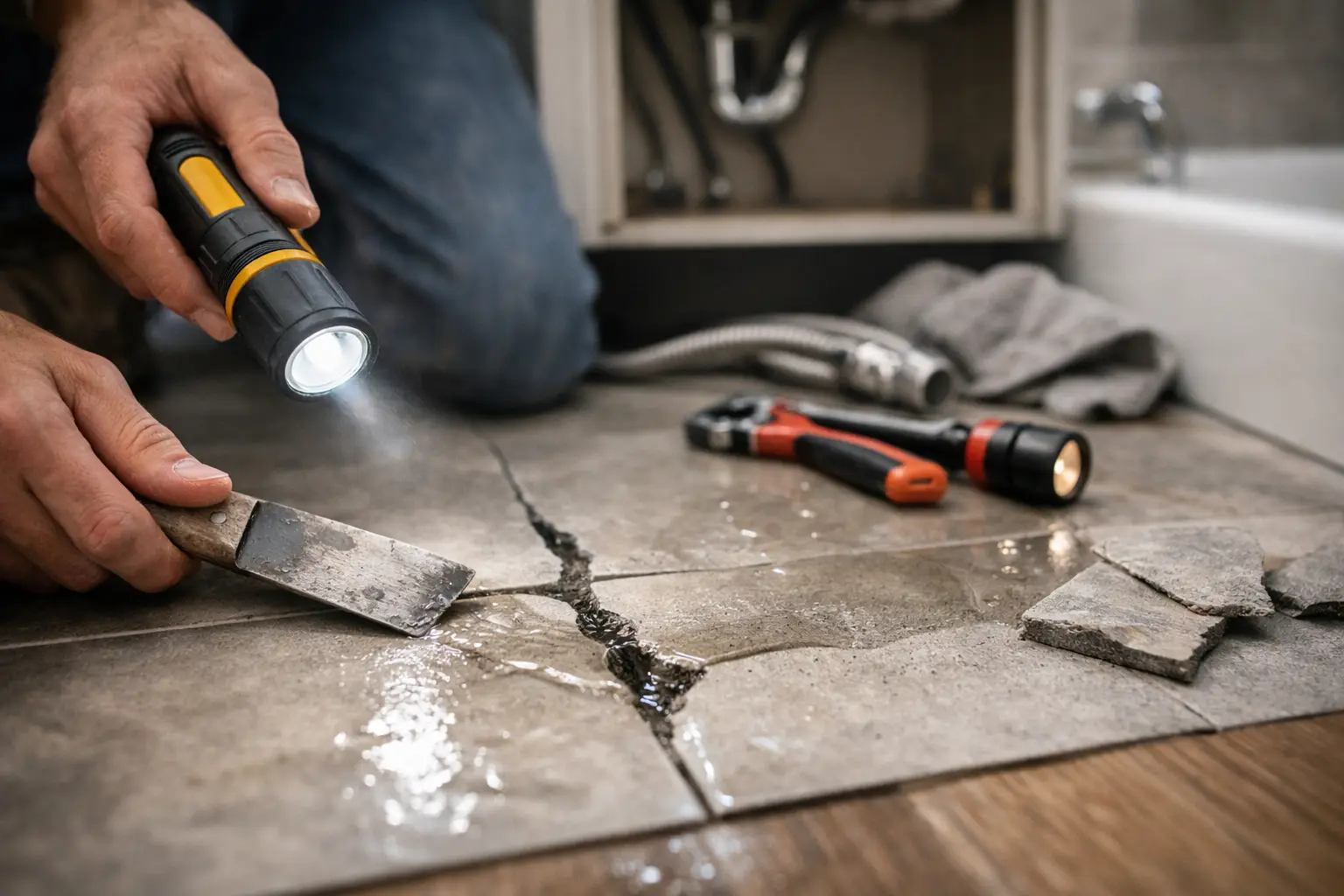
A hairline crack near a shower drain may look like a cosmetic issue. But when that tile is part of a shower floor, tub surround, or frequently wet bathroom wall, it deserves attention. Can cracked tile cause leaks? Yes, it can contribute to leaks by giving water a path past the finished surface and into the layers underneath.
The tile itself is not usually the only line of defense against water. A properly built bathroom also relies on sound grout, flexible caulk at movement joints, a waterproof membrane or shower pan, and correctly installed plumbing. That means one cracked tile does not automatically mean your wall or floor is leaking. It does mean the area should be inspected before a small repair turns into damaged drywall, swollen subflooring, or mold behind the wall.
Can Cracked Tile Cause Leaks in a Bathroom?
Cracked tile can allow water to enter through the break, particularly if the crack is open, the tile moves underfoot, or grout around it has failed. In a dry area, such as an accent wall away from a sink or shower, the risk may be low. In a shower enclosure or on a bathroom floor that sees regular splashing, the risk is much higher.
Water rarely stays where it lands. It can work through a crack, follow seams or fastener penetrations, and collect behind tile or below the floor. Over time, repeated moisture exposure can weaken backer board, soften wood framing, loosen adjacent tiles, and create stains in a room below.
The condition of the waterproofing layer determines how serious the problem becomes. A well-installed waterproof membrane may continue protecting the structure even if a surface tile cracks. However, older bathrooms, poorly built showers, or areas with a failed shower pan may have little protection once water gets past the tile and grout.
Why Bathroom Tile Cracks
Finding the cause matters as much as replacing the tile. If the tile cracked because the surface beneath it is moving, a replacement tile may crack again.
A dropped object can chip or crack wall tile without indicating a larger issue. This is common around a tub or vanity and may be a straightforward repair. Floor tile and shower-floor tile are different. Cracks in these locations can point to subfloor movement, inadequate support, improper thinset coverage, or a floor that flexes when walked on.
In Dallas-Fort Worth homes, normal foundation and structural movement can also affect rigid finishes such as tile. Temperature changes and minor settling can stress a tiled surface, especially when an installation does not include proper movement joints. Water damage below the tile can create movement too, which is why a loose or cracked floor tile should not be ignored.
Cracks along the edge where tile meets a tub, shower base, countertop, or wall are often related to failed caulk rather than the tile itself. Those transitions should be sealed with flexible, mildew-resistant bathroom caulk, not rigid grout. Grout can crack when two surfaces move independently.
Signs Water May Be Getting Behind the Tile
A visible crack is the obvious clue, but several nearby symptoms can reveal a moisture problem. Watch for tile that sounds hollow when tapped, grout that keeps cracking or falling out, soft flooring near the shower or toilet, peeling paint on the opposite side of a bathroom wall, and staining on the ceiling below.
A persistent musty odor is another reason to investigate. It does not prove there is a hidden leak, but it can indicate moisture has been trapped behind finishes long enough to affect drywall, wood, or insulation.
Pay attention to when the problem appears. If a stain grows after showers but not after using the sink, the shower surround, drain connection, pan, or plumbing behind the valve may be involved. If moisture shows up around a toilet, the source could be the wax ring, supply line, shutoff valve, or flooring at the toilet base rather than a cracked tile.
How to Tell Whether the Crack Needs Immediate Repair
Start by looking at the location and condition of the crack. A small, stable hairline crack in a dry backsplash is usually not an emergency. A cracked tile on a shower floor, along the bottom row of a shower wall, around a tub edge, or next to a drain should be addressed soon because these areas receive frequent water exposure.
Do not rely on grout or caulk alone to cover a broken tile. Caulk can temporarily limit water entry at a perimeter joint, but it is not a dependable long-term repair for a tile that is loose, cracked through, or supported by damaged material underneath.
It is also worth checking whether the tile moves. Press gently around the cracked area. If it shifts, rocks, or produces a crunching sound, stop using that portion of the shower if possible and schedule an assessment. Movement may mean the bonding material has failed or the substrate beneath the tile has been compromised.
If you see active leaking, spreading stains, soft drywall, or water damage in an adjacent room, treat it as a repair priority. Surface tile repair may be only one part of the solution. The underlying waterproofing or plumbing issue needs to be identified before the area is closed back up.
Repair Options Depend on What Is Behind the Tile
For isolated damage with solid surrounding tile and no evidence of moisture, replacing one tile may be the right answer. A qualified installer can remove the broken tile carefully, inspect the backing material, install a matching replacement, and restore the grout or caulk joints.
If the tile is loose, multiple tiles are cracking, or the wall feels soft, a spot repair may only hide a bigger problem. The affected area may need to be opened so the contractor can inspect the backer board, framing, waterproofing, and plumbing connections. This is more involved, but it prevents new tile from being installed over damaged materials.
A failing shower floor requires particular care. Shower floors depend on proper slope toward the drain and a waterproof system below the tile. Replacing only the visible cracked tile may not solve a leak caused by a damaged pan, poor drainage, or missing waterproofing. In that case, rebuilding the shower floor or updating the full shower assembly may be the more durable choice.
There is a trade-off between the lowest immediate cost and the right repair. A small tile replacement can be efficient when the installation below is sound. When hidden moisture or movement is present, investing in corrective work early can avoid replacing drywall, flooring, cabinetry, or ceilings later.
What Homeowners Should Do Before a Repair Visit
Avoid prolonged showers in the affected area if the crack is in a wet zone or you suspect water is getting behind the tile. Wipe up standing water, use the bathroom fan, and take clear photos of the crack, surrounding grout, and any stains or peeling paint nearby. Note whether the issue worsens after shower use, bath use, or running a specific fixture.
Do not remove tiles yourself if there is a chance of plumbing or waterproofing damage behind the surface. Breaking out tile can disturb adjacent tiles and make it harder to determine the original source of a leak. A professional inspection can separate a simple finish repair from a plumbing, pan, or substrate issue.
For homeowners who want one team to evaluate both the tile and the bathroom systems behind it, Wisez Improvement can assess the condition, explain the repair scope clearly, and help determine whether targeted repair or a larger bathroom update makes sense.
A cracked tile is not always a major leak waiting to happen. Still, bathrooms give water plenty of opportunities to find weak points. Addressing the crack while the problem is visible and contained is usually the best way to protect the work you can see and the structure you cannot.