
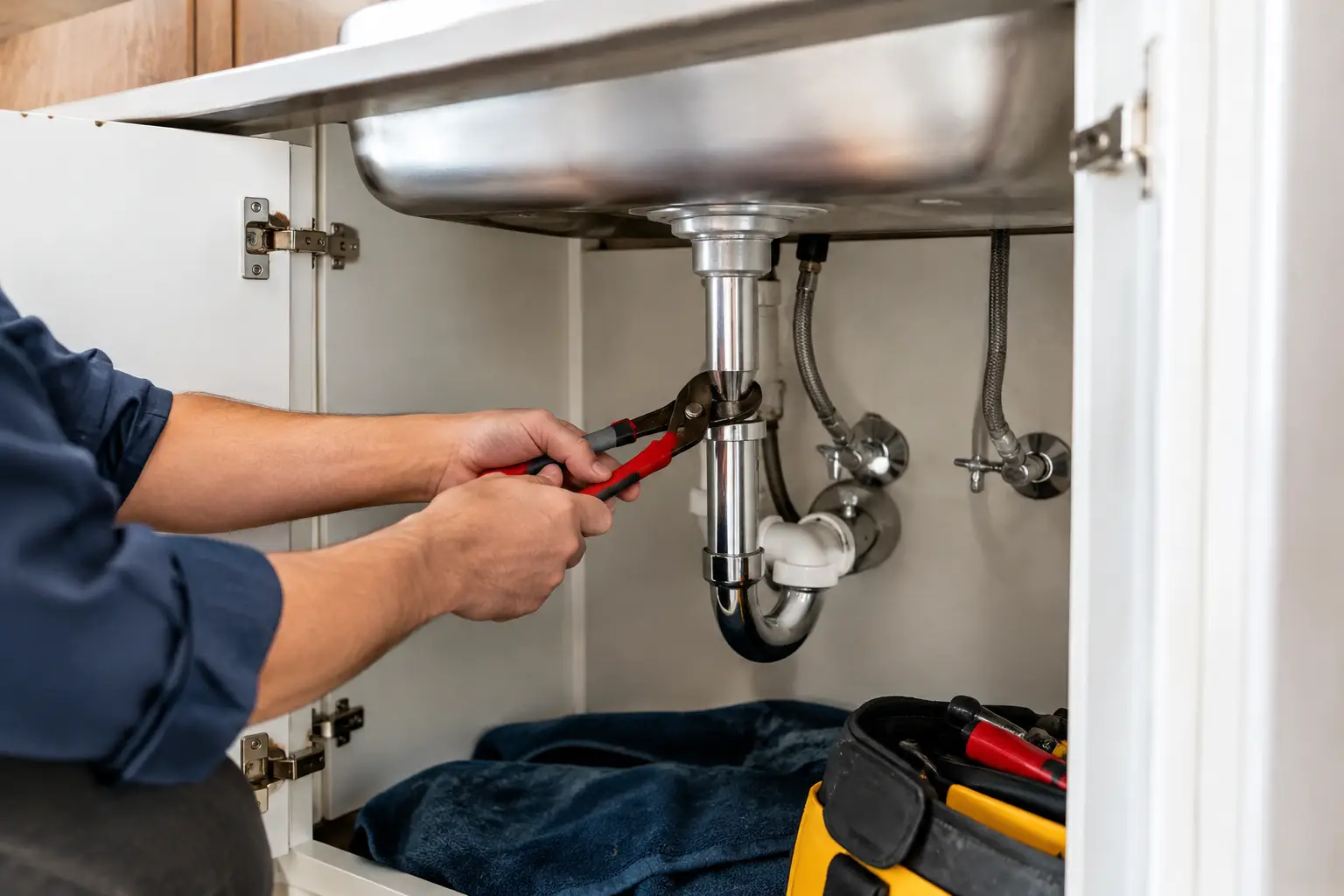
A damp cabinet floor, a sour smell, or a slow-draining sink can turn a useful storage space into a frustrating repair. Under sink plumbing is easy to ignore because it stays out of sight, but it includes several connections that work hard every day. A small drip at a drain joint or supply valve can damage cabinetry, encourage mold growth, and create a larger repair if it is left alone.
For Dallas-Fort Worth homeowners, the goal is not to take apart every pipe at the first sign of trouble. It is to recognize what is normal, identify problems early, and know when a professional repair will protect your home better than another temporary fix.
What Is Included in Under Sink Plumbing?
The plumbing below a bathroom vanity or kitchen sink generally has two separate jobs. Water supply lines bring clean hot and cold water to the faucet. Drain pipes carry used water away through the wall or floor drain.
The supply side usually includes two shutoff valves, flexible supply lines, and faucet connections. The drain side includes the sink tailpiece, the curved P-trap, and a pipe that leads into the wall. In kitchens, you may also see a garbage disposal connection, dishwasher drain hose, or water filtration equipment. Bathroom vanities may have tighter clearances because drawers, shelving, or pedestal-style designs leave less room for pipe placement.
Every component needs to be secure, properly aligned, and accessible for future service. That last point matters during a vanity replacement or bathroom renovation. A cabinet that looks excellent but blocks shutoff valves or forces drain pipes into an awkward position creates problems later.
Signs Your Under Sink Plumbing Needs Attention
A visible leak is the clearest warning, but plumbing issues often show up in less obvious ways. Check inside the cabinet after running the faucet for a minute. Look around the drain joints, shutoff valves, supply lines, and bottom of the faucet connections.
Moisture is not always a plumbing leak. In some cases, a cold-water line sweats during humid weather. Condensation usually appears as fine droplets along the outside of a pipe rather than a concentrated drip at one fitting. Still, repeated moisture can damage cabinet materials, so it should be addressed with insulation, better ventilation, or an evaluation of the area.
Other warning signs include:
- A persistent musty, sewer-like, or sour odor inside the cabinet
- Water stains, swollen particleboard, peeling laminate, or soft cabinet flooring
- A slow drain, gurgling sound, or recurring clog
- Corrosion around shutoff valves or supply line connections
- A shutoff valve that will not turn or continues dripping when closed
Do not assume a slow drain is simply hair or soap buildup. A partial blockage may be close to the sink, but it can also be farther down the line. If multiple fixtures drain slowly or you notice backups elsewhere in the home, the issue may not be limited to the sink assembly.
The P-Trap Has an Important Job
The curved section of pipe below the drain is called a P-trap. It holds a small amount of water that blocks sewer gases from entering the room. When the trap is installed at the wrong angle, leaks at its joints, or dries out in a rarely used sink, odors can become noticeable.
A loose slip-joint connection can sometimes be corrected by realigning the pipe and tightening it carefully. Over-tightening is a common mistake, especially with plastic fittings. It can damage threads, pinch a washer incorrectly, or crack a fitting. If the pipes do not line up naturally, forcing them together is not a real solution. The drain may need to be reconfigured so water flows properly and connections stay sealed.
Older homes can also have mixed materials under the sink, such as newer plastic trap components connected to older metal drain piping. This is not automatically a problem, but corroded metal threads and deteriorated connections deserve professional attention before they fail.
Supply Lines and Shutoff Valves Deserve a Close Look
Many under-sink leaks occur on the water supply side. Flexible braided supply lines are common in newer installations and generally reliable, but they should not be kinked, stretched, or rubbing sharply against cabinet edges. Inspect them for corrosion at the fittings, fraying, discoloration, or a slow drip that appears only while the faucet is running.
The shutoff valves are equally important. These valves allow you to stop water to the faucet without shutting off water to the whole house. A valve that is seized, corroded, or leaking at the stem may work until the day it is needed most – then fail when someone tries to turn it.
Testing a shutoff valve occasionally is useful, but move it gently. If it resists strongly, do not force it. Replacing a worn valve is usually far less expensive and disruptive than dealing with an uncontrolled leak after a valve breaks.
When a DIY Fix Makes Sense
Some basic maintenance is reasonable for a homeowner. Cleaning debris from a stopper, removing hair from a bathroom drain, or placing a bucket under a small active drip while arranging service are practical steps. A loose drain connection may also be simple to correct if the pipes are in good condition, properly aligned, and easy to access.
The trade-off is that under-sink repairs can look simpler than they are. A drain that leaks after a trap adjustment may have a worn washer, cross-threaded fitting, damaged pipe, or alignment issue behind it. Chemical drain cleaners are another risky shortcut. They can damage certain pipes and seals, create hazardous splashing during later service, and do little for a physical blockage.
If you are replacing a faucet, disposal, vanity, or sink, inspect the existing valves and drain piping before installation begins. Reusing compromised parts to save a small amount upfront can put a new fixture or new cabinetry at risk.
Plumbing Details That Matter During a Vanity Remodel
A bathroom renovation is the best time to correct under sink plumbing that has been patched repeatedly over the years. New vanity dimensions, deeper drawers, offset sinks, and wall-mounted faucets can all affect where the drain and supply lines need to sit.
For example, a floating vanity offers a clean, modern appearance but leaves plumbing visible unless it is planned carefully. A vanity with functional drawers may require drain placement that clears the drawer boxes. Double-sink vanities need enough room for two traps, two sets of valves, and access for maintenance without crowding the cabinet.
Professional planning prevents a common remodeling problem: installing beautiful cabinets first, then discovering that the existing drain is too low, too far off center, or directly in the way of usable storage. Correcting pipe locations before finishes are complete produces a cleaner result and avoids unnecessary cabinet modifications.
Wisez Improvement approaches bathroom work with both the finished design and the plumbing behind it in mind. That combination is especially valuable when a repair exposes a larger issue or when a vanity upgrade creates an opportunity to improve access, function, and appearance at the same time.
When to Call a Plumbing Professional
Call for service promptly if water is reaching the cabinet base, flooring, or wall. The same applies if you smell sewer gas, see corrosion on older valves, have recurring leaks, or cannot isolate water at a shutoff valve. A professional should also evaluate drain pipes that require repeated tightening, have poor alignment, or leak after a basic washer replacement.
For kitchen sinks, disposal replacements and dishwasher drain connections need careful installation. Improper drain routing can lead to odors, drainage issues, or water returning to the appliance. In bathrooms, leaks around faucet mounting hardware may travel down the back of the cabinet and remain hidden until damage is already visible.
A qualified contractor can identify whether the repair is limited to a connection or whether it involves the faucet, drain assembly, wall pipe, cabinet damage, or a larger drainage concern. That clarity helps homeowners make a sound decision instead of replacing parts one at a time without solving the cause.
Keep the Cabinet Dry and Accessible
After any repair, wipe the cabinet dry and check it again after using the faucet several times. Avoid packing the area so tightly with cleaners, bins, and household supplies that valves and drain connections cannot be seen. A simple cabinet liner can help reveal small drips early, but it should not hide standing water.
The best under sink plumbing is not the kind you think about every day. It is dry, secure, accessible, and properly planned around the way your kitchen or bathroom actually functions. When something changes, addressing it early protects more than the pipes – it protects the cabinetry, finishes, and investment around them.