
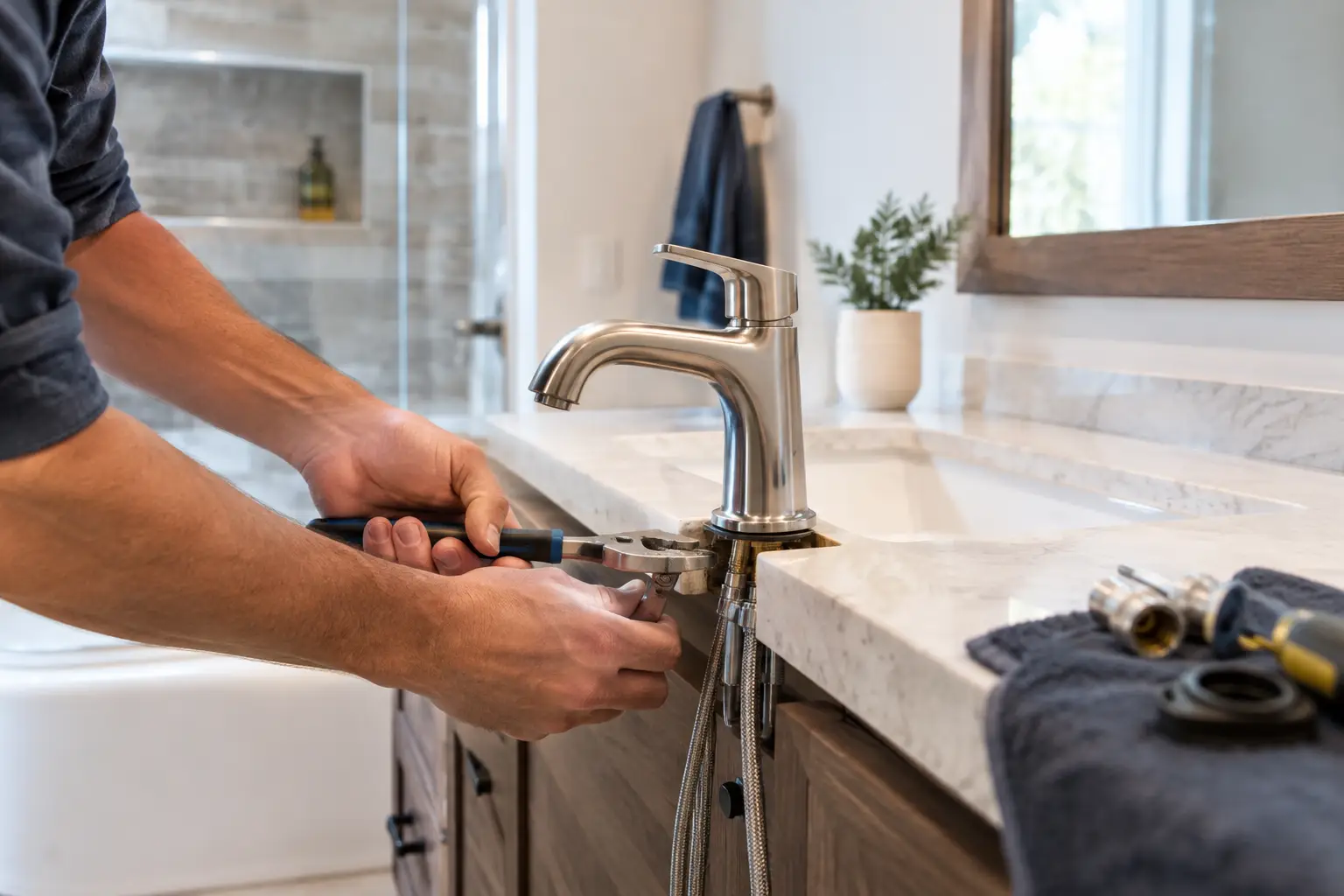
A leaking faucet, weak shower pressure, stained tub hardware, or constantly running toilet can make an otherwise usable bathroom feel worn out. This guide to bathroom fixture upgrades helps Dallas-Fort Worth homeowners decide what to replace, what to repair, and how to plan the work so the finished space looks better and works reliably.
Fixture upgrades can be a focused improvement project or the first step toward a full bathroom remodel. The right approach depends on the age of your plumbing, the condition of the surrounding finishes, and whether you are solving a daily frustration or changing the way the room functions.
Start With Function Before Finish
The fixture style matters, but performance should come first. A beautiful new faucet will not solve a deteriorated shutoff valve under the sink. A rainfall showerhead will not perform as expected if the water pressure is low or the existing valve is failing. Before selecting finishes, look for signs that point to a repair need behind the wall, below the vanity, or at the drain.
Common warning signs include recurring leaks, slow drains, water stains, loose fixtures, inconsistent temperature control, rust around supply connections, and grout or drywall damage near plumbing. In North Texas homes, hard water can also leave mineral buildup that affects faucet aerators, showerheads, and valves over time.
A contractor who understands both remodeling and plumbing can assess the whole condition of the bathroom. That helps prevent a simple fixture replacement from becoming a second project after hidden issues appear.
Prioritize the Fixtures You Use Every Day
Not every upgrade needs to happen at once. If your budget is limited, begin with the fixtures that have the biggest effect on comfort, water use, and maintenance.
Faucets and Sink Fixtures
Bathroom faucets are one of the most noticeable upgrades because they sit at eye level and are used multiple times a day. When choosing a replacement, make sure it fits the existing sink or vanity configuration. Some sinks have one mounting hole, while others have three. Changing the hole layout may require a new countertop, sink, or deck plate.
Finish is a practical decision as well as a design choice. Chrome is classic, versatile, and usually easy to match. Brushed nickel hides water spots well and works with many bathroom styles. Matte black can create a clean, updated look, but it may show dried mineral residue more readily in homes with hard water. Brushed brass adds warmth, though matching it across different manufacturers can be difficult.
Look for solid construction, durable internal components, and a handle style that is comfortable for everyone in the household. A single-handle faucet is easy to operate and simple to clean. Widespread faucets offer a more traditional, custom appearance but require more installation space.
Shower and Tub Fixtures
Shower upgrades often provide the strongest day-to-day return because they improve the part of the bathroom where people want comfort most. A new showerhead alone can refresh the experience, but it is worth considering the control valve, handheld options, tub spout, and drainage at the same time.
If the shower temperature swings suddenly, the valve may need more than a trim kit. A pressure-balancing or thermostatic valve can offer more consistent temperature control, especially in a busy household where other fixtures may be running. Replacing the valve is more involved than changing the handle and trim, but it is the right fix when the issue is inside the wall.
For aging tub-shower combinations, a tub-to-shower conversion can make better use of the space. It can also improve accessibility with a low-threshold entry, built-in bench, grab bars, and handheld shower fixture. This is a larger renovation, so the tile, waterproofing, drain location, and framing should be evaluated together rather than treated as separate upgrades.
Toilets
An older toilet may use more water than necessary, clog frequently, run intermittently, or have a seat height that is uncomfortable. Modern high-efficiency toilets use less water while providing strong flushing performance. Comfort-height models are especially popular with homeowners planning to stay in their homes long term.
Measure carefully before buying. Rough-in distance, bowl shape, wall clearance, and door swing all affect whether a new model will fit well. A compact elongated bowl can be a smart compromise in smaller bathrooms because it provides more comfort without taking up as much room as a standard elongated toilet.
If a toilet rocks, leaks at the base, or has damaged flooring around it, do not assume the fixture is the only problem. The flange, subfloor, and wax ring may need attention before a replacement is installed.
Coordinate Fixtures With the Rest of the Bathroom
A fixture upgrade should feel intentional, not pieced together. That does not mean every item has to come from one collection, but the main elements should share a consistent design direction. Consider the faucet, shower trim, cabinet hardware, mirror frame, lighting, and towel accessories as one visual group.
For a clean transitional bathroom, brushed nickel fixtures with simple cabinet pulls and warm neutral tile are a dependable choice. For a more modern look, matte black fixtures can work well with white walls, natural wood vanities, and large-format tile. In traditional homes, polished chrome or brushed brass may complement detailed vanities and framed mirrors.
Avoid selecting fixtures based only on a showroom display or online photo. The bathroom’s lighting, tile color, ceiling height, and natural light can change how a finish appears. Samples and product photos are useful, but seeing the finish near your existing materials can prevent an expensive mismatch.
Do Not Overlook Lighting and Ventilation
Lighting is often treated as a separate project, yet it has a direct effect on how well every other fixture performs. A vanity light that casts shadows makes shaving, makeup application, and daily grooming harder. Wall-mounted lighting at the sides of the mirror generally provides more even illumination than a single overhead fixture.
Choose bulbs with a comfortable, accurate color temperature. Many homeowners prefer light around 3000K to 4000K in a bathroom, depending on the look they want and the amount of natural light in the room. Dimmable lighting adds flexibility for early mornings, nighttime routines, and guests.
Ventilation matters just as much. A properly sized exhaust fan helps control humidity that can damage paint, cabinets, drywall, and grout. If you are upgrading a shower, vanity, or lighting, it is a good time to confirm that the fan vents outdoors and moves enough air for the room.
Know When a Simple Swap Becomes a Remodeling Project
Replacing like for like is usually straightforward when the existing connections, wall condition, and fixture dimensions are sound. The scope changes when you move plumbing, enlarge a shower, replace a vanity with a different size, alter electrical wiring, or discover water damage.
This is where planning protects the budget. A new vanity can expose missing tile or damaged flooring. A shower valve replacement may require access through the wall behind it. A wall-mounted faucet can require new plumbing inside the wall before tile or backsplash installation. These are not reasons to avoid the upgrade. They are reasons to set realistic expectations and make decisions before work begins.
For larger bathroom projects, it is also wise to select fixtures early. Lead times, discontinued finishes, and missing trim components can delay installation. Confirm the full set of parts needed, including valves, drains, supply lines, mounting hardware, and compatible trim.
Choose Installation Quality Over a Quick Cosmetic Fix
Fixtures only perform as well as the installation behind them. Correct shutoff connections, secure mounting, level placement, proper seals, and tested drainage protect your home from avoidable leaks. In a shower, waterproofing and valve installation deserve the same attention as the visible tile and trim.
Wisez Improvement helps homeowners combine practical repairs with finished bathroom upgrades, from fixture replacement and vanity installation to shower conversions and full remodels. Clear scope, careful installation, and direct communication make it easier to move from an outdated bathroom to a space that is dependable every day.
Before purchasing anything, make a short list of what frustrates you most about the bathroom now. That list will guide better choices than following a trend, and it gives your contractor a clear starting point for a solution that fits your home, timeline, and budget.