
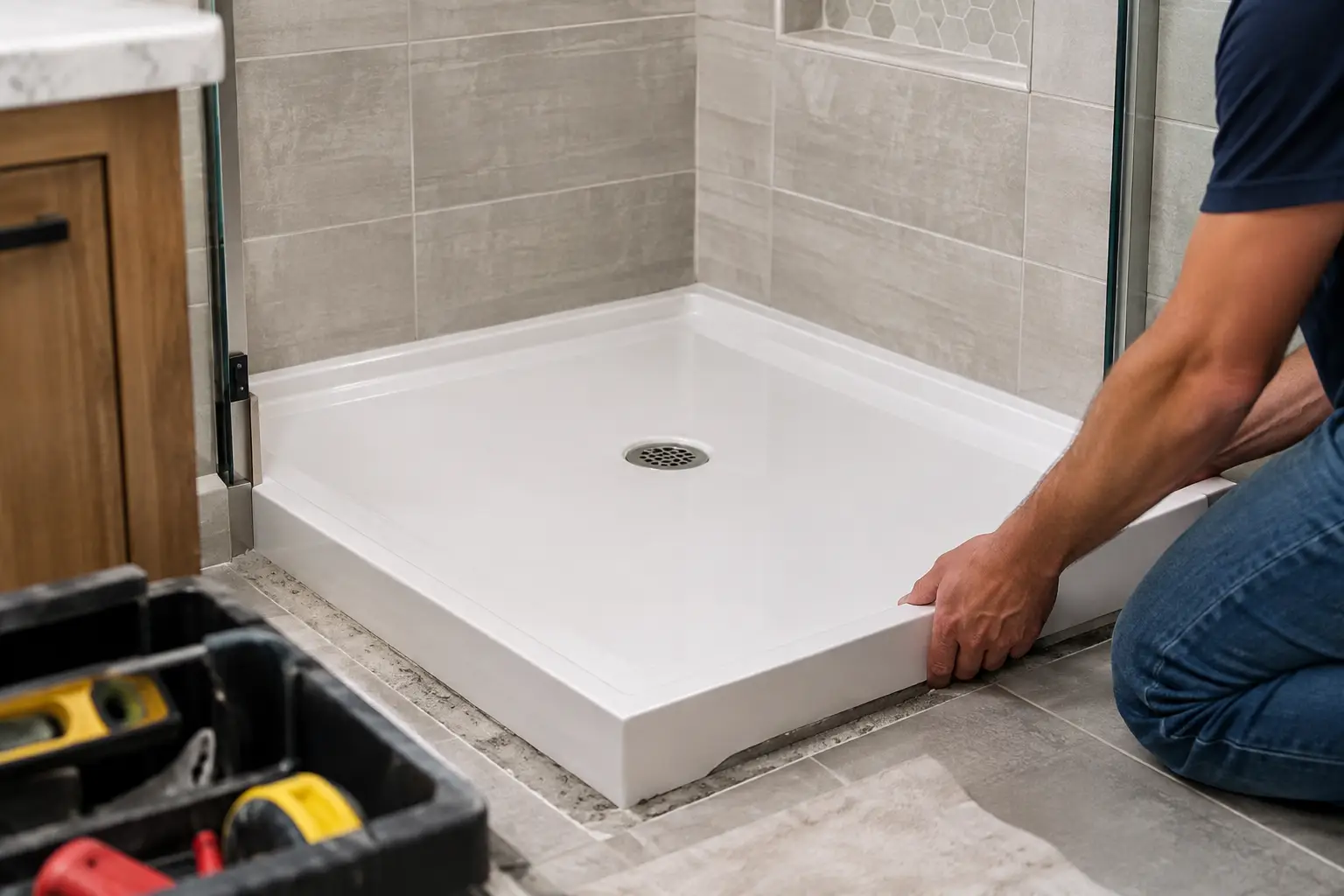
A shower pan can fail quietly for a long time. Water may slip beneath the finished floor, soften subflooring, stain a ceiling below, or create persistent moisture around the shower curb before the problem becomes obvious. This guide to shower pan replacement helps Dallas-Fort Worth homeowners understand what is involved, when a repair may be enough, and when a full replacement is the responsible choice.
The pan is not just the visible floor under your feet. It is part of a waterproof system that directs water to the drain. Replacing it correctly requires attention to the drain connection, wall waterproofing, curb, slope, and surrounding finishes. A new pan installed without addressing those details can create the same problem all over again.
When a Shower Pan Needs Replacement
A small crack in an acrylic or fiberglass shower base does not always mean the entire shower must be rebuilt. Some surface damage can be professionally repaired if the base is still fully supported and the drain connection is sound. But movement, leaking, or damage beneath the pan changes the scope quickly.
A pan replacement is usually warranted when the base flexes or feels soft underfoot, has a crack that continues to open, leaks into an adjacent room or lower ceiling, or shows recurring mold and water damage at the edges. Loose floor tile, failed grout near the drain, and a musty odor can also point to moisture below the surface.
Homeowners sometimes assume a drain leak is the only possibility. In reality, water can enter through failed shower corners, wall-to-pan transitions, curb joints, or improper waterproofing behind tile. The visible symptom matters, but finding the water path matters more. A targeted inspection before demolition helps prevent unnecessary work while making sure the actual failure is corrected.
What a Proper Shower Pan Replacement Includes
The right process depends on whether the shower has a prefabricated base or a tile floor built over a mortar bed and waterproofing membrane. Either way, the work begins with protecting nearby flooring and fixtures, then removing the damaged materials carefully enough to inspect the structure underneath.
Once the old pan is out, the subfloor and framing need to be checked for rot, mold-related deterioration, and movement. Wet or weakened plywood should not be covered up and left in place. Structural repairs, leveling, and drain adjustments are often the work that determines whether the finished shower performs well for years.
The drain must be compatible with the replacement system and secured at the correct height. For a tile shower, the floor must slope consistently toward the drain without low spots where water can sit. The waterproofing must extend into the shower walls and integrate correctly with the drain and curb. Tile, grout, and caulk are finish materials, not the primary waterproof barrier.
With a prefabricated base, correct support is equally important. A base that is not properly bedded or supported may flex, crack, or separate at the drain over time. Installation instructions vary by product, so the selected pan and drain assembly should be treated as a complete system rather than mixed together based on appearance alone.
Choosing Between a Prefabricated Pan and a Tile Shower Floor
A prefabricated acrylic, fiberglass, or solid-surface pan is often the practical choice for a straightforward shower repair. It can reduce installation time, provides a continuous easy-to-clean surface, and works well for many tub-to-shower conversions. It is also a good fit when the goal is to control cost without compromising the waterproofing work underneath.
A custom tile shower floor offers more design flexibility. It can be sized for an unusual layout, coordinate with wall tile, and create a more tailored appearance. However, it requires more labor and carries more variables. The waterproofing, slope, tile selection, grout joints, and drain placement all need to be planned carefully.
For aging-in-place upgrades, a low-threshold or curbless shower may be worth considering. It can improve access and give the bathroom a more open look. That said, a curbless design may require floor recessing, drain changes, and additional planning to maintain proper slope and prevent water from leaving the shower area. It is not always a simple swap for a standard pan.
How Much Does Shower Pan Replacement Cost?
Shower pan replacement costs vary because the visible pan is only one part of the project. A basic replacement with limited surrounding repair generally costs less than a tiled shower reconstruction with a relocated drain, new wall tile, plumbing updates, and subfloor repair.
The biggest cost factors are the type and size of the replacement pan, demolition needs, condition of the subfloor, drain and plumbing work, waterproofing method, tile work, and whether the shower enclosure or glass must be modified. A shower with concealed water damage can require more work than expected after demolition, which is why a clear estimate should explain what is included and how concealed conditions are handled.
Replacing only the floor may be possible when the existing wall tile is in good condition and the waterproofing can be tied in correctly. In many older tiled showers, though, removing the pan disturbs the lower wall sections. Rebuilding the shower walls along with the floor may provide a more dependable result than trying to preserve materials that are already near the end of their service life.
Planning the Work Without Surprises
Before selecting finishes, decide what problem the project needs to solve. If the shower leaks, the priority is a dry, stable structure and a correctly waterproofed base. If the shower is simply dated, the conversation can include layout, storage, lighting, glass, fixtures, and tile design.
In the Dallas-Fort Worth area, permit requirements can vary by city and by the scope of plumbing changes. Moving a drain, altering supply lines, or changing structural framing may involve different requirements than replacing a pan in the same location. A qualified contractor can help determine what applies before work starts.
It also helps to plan for temporary bathroom access. A pan replacement may keep a shower out of service for several days, and a full tile shower rebuild can take longer due to waterproofing, tile setting, grout, and curing time. Rushing these stages to meet an unrealistic deadline can compromise the work.
Questions to Ask Before Hiring a Contractor
Ask how the contractor will identify the source of the leak and what happens if damaged subflooring is found. Confirm the waterproofing system being used, how it connects to the drain, and whether the shower floor will be flood-tested when appropriate. These questions are more useful than choosing solely on the lowest price.
You should also ask who will handle plumbing, tile, and finish work, as well as how the work area will be protected and cleaned during the project. Clear communication is especially valuable in a bathroom, where a small decision about drain placement, curb height, niche location, or glass dimensions can affect the finished result.
For a larger bathroom renovation, using one team for repair work, plumbing, tile, and installation can reduce handoffs and confusion. Wisez Improvement approaches shower projects with that full-picture view, addressing the functional cause of the problem while helping homeowners make practical finish selections.
A failed shower pan is inconvenient, but it is also an opportunity to correct hidden issues before they spread. Choose a solution based on how the shower is built, how long you plan to stay in the home, and the condition of the surrounding bathroom. The best replacement is the one that leaves you with a dry, solid shower you can use confidently every day.