
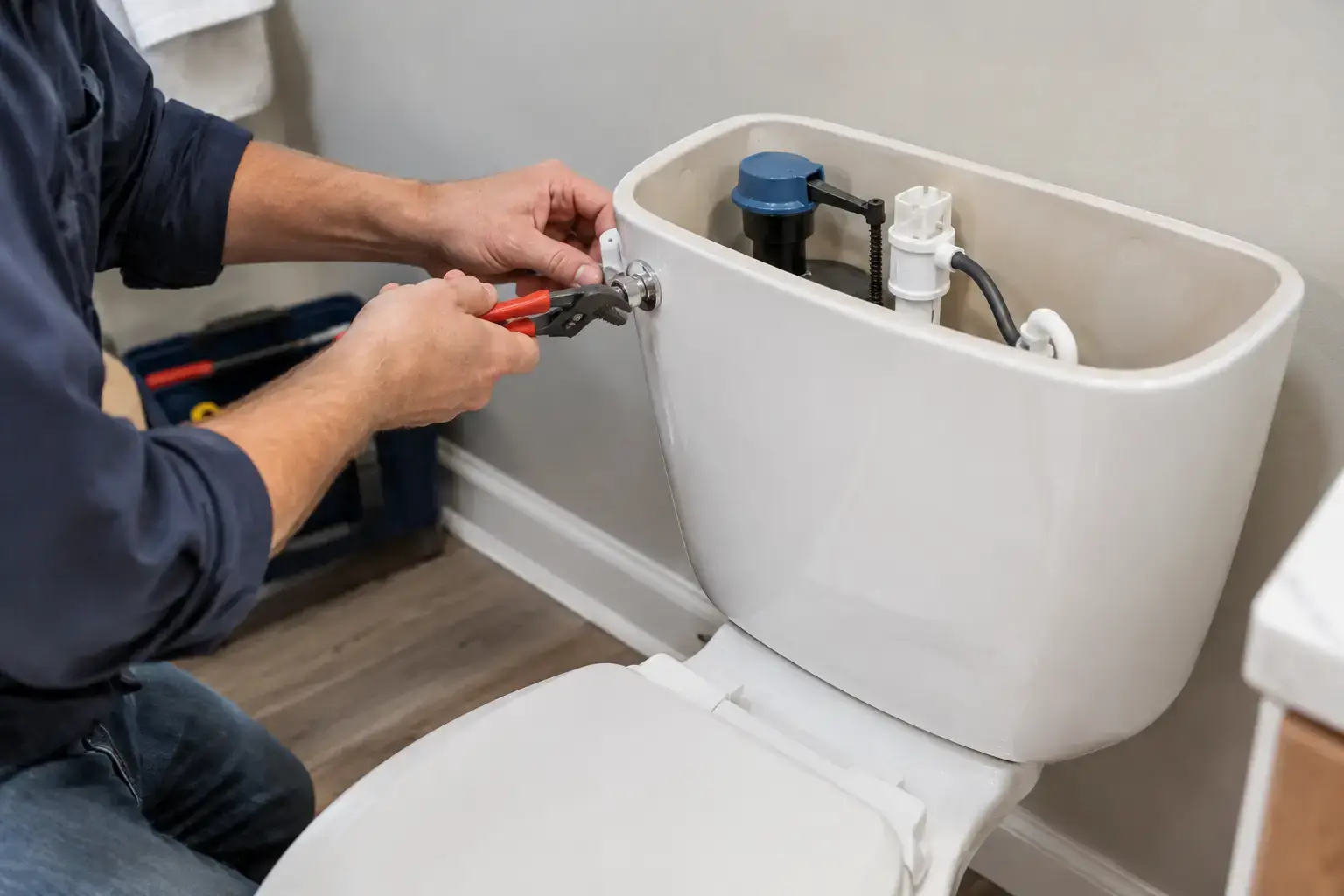
A running toilet is easy to ignore at first. The sound may come and go, especially overnight, but every refill cycle sends treated water down the drain and can add noticeably to your water bill. In many cases, the repair is straightforward. In others, a worn internal part points to a larger plumbing issue that deserves prompt attention.
What a Running Toilet Usually Means
A toilet should refill after flushing, then stop once the tank reaches the proper water level. If it continues hissing, trickling, or briefly turning on throughout the day, water is either escaping from the tank into the bowl or the fill system is not shutting off correctly.
The two most common causes are a leaking flapper and a faulty fill valve. Both parts are inside the tank, both wear out over time, and both can be affected by mineral buildup. Dallas-Fort Worth homes can also experience hard-water deposits that interfere with moving parts and prevent a complete seal.
The good news is that a running toilet does not always mean the toilet itself needs to be replaced. The important step is identifying where the water is going before replacing parts at random.
Start With a Simple Toilet Leak Test
Remove the tank lid and set it somewhere safe. Ceramic lids crack easily, and replacements can be difficult to match. Do not flush yet. Watch the water level for a few minutes and listen closely.
If water is flowing into the vertical overflow tube in the center of the tank, the fill valve is likely allowing the tank to overfill. If the water level is below that tube but the toilet still refills periodically, water is probably leaking past the flapper at the bottom of the tank.
A dye test can confirm a flapper leak. Add several drops of food coloring to the tank water, wait 15 to 20 minutes without flushing, and check the bowl. Colored water in the bowl means tank water is slipping through the flush valve seal.
This test is useful because a slow leak may not create an obvious sound. A quiet leak can still waste a significant amount of water over days or weeks.
Common Causes of a Running Toilet
A worn or warped flapper
The flapper is the rubber or silicone seal that lifts when you flush and closes after water leaves the tank. Over time, it can become brittle, warped, coated with mineral deposits, or simply unable to sit flat against the flush valve opening.
Before replacing it, check for a twisted chain or debris around the sealing surface. The chain should have a small amount of slack when the flapper is closed. If it is too tight, the flapper cannot settle fully. If it is too loose, the flush handle may not lift the flapper properly.
A new flapper is often an affordable fix, but it must be compatible with the toilet. Universal parts work in many cases, not all cases. Some newer toilets use proprietary flush valves, towers, or canister-style seals that require a specific replacement part.
A fill valve that will not shut off
The fill valve controls the water entering the tank after a flush. When it fails, you may hear a persistent hiss or see water spilling into the overflow tube. The valve can wear out internally, become clogged with sediment, or lose its ability to respond to the float position.
Many modern fill valves have an adjustment screw or sliding clip that lets you lower the water level. The correct level is generally about an inch below the top of the overflow tube, though the tank may have a marked water line. Adjusting the level may solve a minor issue, but it will not repair a valve that is failing internally.
A damaged flush valve or tank seal
If replacing the flapper does not stop the leak, the problem may be the flush valve seat beneath it. Hairline cracks, rough mineral deposits, or damage around the opening can prevent a watertight seal. On some toilets, this repair requires removing the tank from the bowl to replace the flush valve assembly.
That is a reasonable point to call a professional. Tank bolts can corrode, old porcelain can crack under uneven pressure, and a small internal repair can turn into a larger replacement job if handled roughly.
Incorrect refill tube placement
The small refill tube sends water into the overflow tube after flushing. It should be clipped above the opening, not pushed down inside the tube. If the tube is inserted too far, it can create a siphon effect that continually pulls water into the bowl.
This is a quick correction, but it is commonly missed after a DIY repair or replacement fill valve installation.
A failing flush handle or chain
A sticky handle, misaligned lift arm, or tangled chain can keep the flapper slightly open. Check whether the handle returns freely after flushing. If it sticks or feels loose, the handle assembly may need adjustment or replacement.
Although this sounds minor, a flapper held open by only a fraction of an inch can cause a constant leak. The toilet may refill every few minutes without anyone noticing.
When You Can Handle the Repair Yourself
A homeowner can often address a running toilet when the issue is clearly limited to a flapper, chain adjustment, refill tube placement, or basic fill valve replacement. Turn off the shutoff valve at the wall, flush the toilet to empty the tank, and keep a towel nearby for the remaining water.
Use the make and model information inside the tank when possible. Matching the correct part matters more than choosing the least expensive option. A part that almost fits may work temporarily but continue leaking or create flushing problems.
After the repair, turn the water back on and flush several times. Watch the tank refill, confirm that the water stops at the correct level, and perform another dye test if the toilet had been leaking into the bowl.
DIY work is less appropriate when the shutoff valve does not close fully, the supply line is corroded, the tank is cracked, or the toilet moves at the floor. Those concerns can involve water damage, a failed wax ring, or plumbing connections beyond the tank components.
When to Call a Plumbing Professional
Call for help if you have replaced the flapper and fill valve but the toilet still runs, if water appears around the base, or if the toilet has recurring issues despite repeated adjustments. A professional can determine whether the problem is inside the tank, at the bowl-to-floor connection, or in the water supply setup.
You should also schedule service when the toilet is old enough that multiple components are failing at once. There is a practical trade-off: repairing a single worn part makes sense, while repeatedly repairing a toilet with a cracked tank, poor flushing performance, or outdated internals may not. A replacement can improve reliability and water efficiency, especially during a bathroom renovation.
For homeowners planning a bathroom update, toilet repair is also a good time to look at the bigger picture. A new vanity, flooring, or shower installation should be coordinated with fixture placement and supply lines before finishes are installed. Addressing plumbing first helps avoid opening newly completed tile or cabinetry later.
Preventing the Problem From Returning
A toilet’s internal parts do not last forever, but a few habits can extend their service life. Avoid chemical tank tablets unless the toilet manufacturer specifically approves them. Some products can degrade rubber seals and plastic components over time.
If mineral buildup is visible inside the tank, clean it gently with a non-abrasive method and inspect the flapper and valve components at the same time. Keep the tank lid in place to prevent debris from falling inside, and address an occasional refill sound before it becomes a constant leak.
A running toilet is rarely a repair worth postponing. If the cause is simple, taking care of it now can stop wasted water and protect your monthly budget. If the issue keeps returning or involves more than the tank hardware, Wisez Improvement can assess the plumbing, explain the options clearly, and complete the repair with the same care expected in a finished bathroom.