
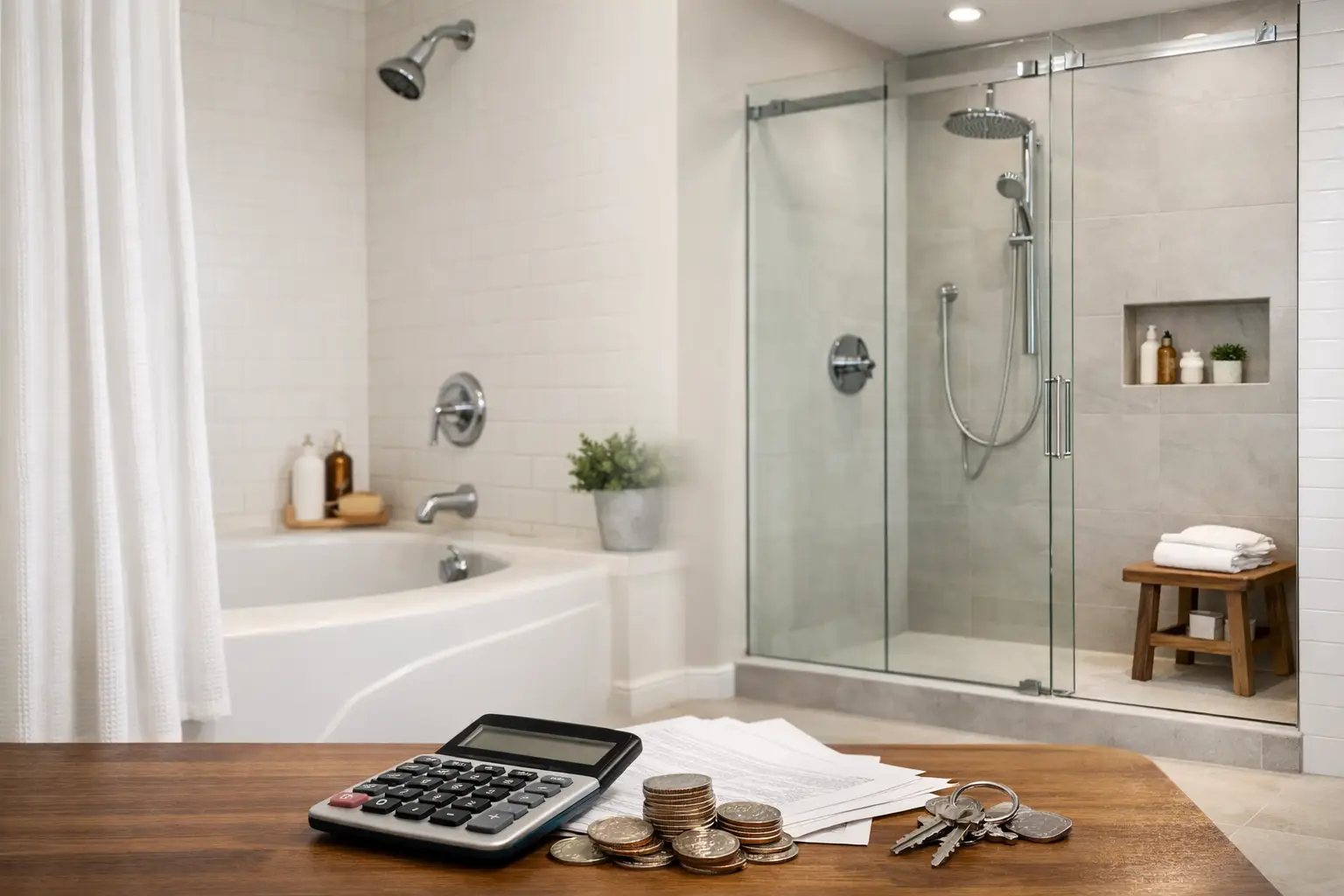
Most homeowners start asking about tub to shower conversion cost when the bathtub has become more trouble than value. Maybe it is rarely used, hard to step into, dated, or taking up space that would work better as a clean, practical shower. The tricky part is that conversion pricing can vary quite a bit depending on the bathroom, the plumbing, and the finish level you want.
If you are planning this kind of upgrade in Dallas-Fort Worth, it helps to think beyond the basic swap. A tub-to-shower conversion is part demolition, part plumbing work, part finish carpentry, and part design decision. The final price reflects all of that, not just the new shower itself.
What is the typical tub to shower conversion cost?
For many homeowners, a typical tub to shower conversion cost lands somewhere between about $4,500 and $12,000. A more basic project with standard materials and minimal plumbing changes often stays in the lower half of that range. A custom build with tile walls, glass, niche storage, upgraded fixtures, and drain relocation can move well beyond it.
That wide spread is normal. A hall bathroom with straightforward access and existing plumbing in the right place is a very different job than a primary bath with old pipes, uneven walls, or a request for a curbless shower and custom glass.
The best way to look at pricing is by project type. If you choose a prefab shower base and simple wall surround, the cost is generally lower. If you want a fully tiled shower with waterproofing, bench seating, and premium fixtures, labor and material costs climb quickly.
What drives tub to shower conversion cost?
The biggest factor is how much has to change after the old tub comes out. Some bathrooms make the conversion easy. Others reveal plumbing corrections, framing repairs, or water damage once demolition starts.
Demolition and preparation
Removing the tub is only the first step. Contractors also need to haul debris, prep the area, check subfloor condition, and make sure the framing is ready for the new shower system. In older homes, the wall behind the tub can expose issues that were hidden for years.
If the bathroom has damaged drywall, soft flooring, or signs of past leaks, repair work adds to the total. That extra work is not optional if you want the new shower to last.
Plumbing changes
Plumbing can have a major impact on price. A simple conversion may reuse the existing drain location and supply lines with only minor adjustments. That keeps labor more manageable.
If the drain must be moved, the valve needs updating, or the water lines are outdated, the cost goes up. Homes with older plumbing systems often need more corrective work than expected. This is one reason an in-person estimate matters more than a rough online number.
Shower base and waterproofing
The shower floor system changes the budget fast. A prefabricated acrylic or fiberglass base usually costs less than a custom tile pan. It also tends to install faster.
A custom tile shower base offers more flexibility in size, look, and entry style, but it requires careful waterproofing and more labor. Done right, it looks excellent and performs well. Done poorly, it creates leak risk. That is not an area to cut corners.
Wall finish choices
Wall materials can shift the project from budget-friendly to high-end. Simple surrounds are typically the most economical option. Tile walls cost more because of labor, layout, waterproofing details, and grout work.
Large-format tile, accent bands, niches, and decorative patterns all add time. That is not necessarily a bad thing. Many homeowners decide the finish is worth it because the shower becomes the focal point of the room.
Glass doors and enclosure style
A curtain setup costs far less than a framed or frameless glass enclosure. Custom glass can look sharp and open up the room visually, but it is a premium item.
If the shower opening is an unusual size, or if the design calls for heavy frameless panels, expect the glass portion of the budget to reflect that. This is one of the most common upgrade decisions that pushes the price higher.
Cost ranges by project level
A basic conversion usually includes tub removal, a standard shower base, simple wall panels, a new valve trim set, and modest finish work. These projects often range from about $4,500 to $7,000, depending on site conditions and product selection.
A mid-range conversion generally includes better fixtures, improved wall materials, some tile work, built-in storage, and a nicer enclosure. Many of these jobs fall between $7,000 and $10,000.
A higher-end conversion often includes custom tile, premium waterproofing systems, frameless glass, upgraded plumbing fixtures, benches, niches, and layout modifications. These projects can run from $10,000 to $15,000 or more.
Those ranges are useful for planning, but they are still broad. Labor rates, plumbing access, and finish choices matter just as much as square footage.
When the lowest price is not the best value
It is tempting to compare only the bottom-line number. In bathroom work, that can be expensive later. A lower quote may leave out waterproofing steps, disposal, plumbing corrections, or finish details that become change orders once the job starts.
A better estimate should clearly explain what is included. That means demolition, plumbing scope, materials, waterproofing method, wall finish, trim, enclosure, and cleanup should all be addressed. Clear scope usually leads to fewer surprises.
This is especially important with tub conversions because the work touches multiple systems at once. The plumbing has to function correctly, the shower has to drain properly, and the finished surfaces have to hold up to daily use.
Should you choose prefab or custom?
If your main goal is speed, straightforward maintenance, and a lower budget, a prefabricated base with a quality surround can be the right answer. It solves the problem, updates the room, and avoids some of the labor tied to custom tile.
If appearance, resale appeal, and design flexibility matter more, a custom shower usually makes sense. You can better match the rest of the bathroom, create useful storage, and tailor the size and look to the room. The trade-off is a higher price and a more involved installation.
Neither option is automatically better. It depends on how long you plan to stay in the home, how heavily the bathroom is used, and what level of finish feels worth the investment.
How to budget for tub to shower conversion cost
Start with a realistic target, then leave room for unknowns. In many bathroom remodels, hidden issues appear after demolition. A smart approach is to reserve an extra 10 to 20 percent beyond the expected project cost.
It also helps to separate must-haves from upgrades. A safe, functional shower with solid waterproofing is a must-have. Frameless glass, designer tile, body sprays, and specialty fixtures are upgrades. Knowing the difference keeps the project under control.
If accessibility is part of the goal, mention it early. Features like low-threshold entries, grab bar blocking, handheld sprayers, and wider openings affect both design and price. Planning for them upfront is usually more efficient than trying to add them later.
Questions to ask before you approve an estimate
Before moving forward, ask what type of waterproofing system will be used, whether plumbing updates are included, and what happens if hidden damage is found. You should also ask about the expected timeline, material allowances, and whether the quote covers disposal and final cleanup.
Good contractors do not avoid those details. They welcome them because clear expectations protect both sides of the job.
For homeowners in DFW, working with a company that understands both remodeling and repair can make a big difference. That is one reason many clients prefer a contractor like Wisez Improvement for bathroom projects that involve finish upgrades as well as plumbing-driven issues behind the walls.
Is a tub to shower conversion worth the cost?
For many homes, yes. A well-built shower can improve day-to-day comfort, make the bathroom easier to use, and modernize the space without requiring a full gut remodel. It can also be a practical move for households that never use the tub.
That said, there are cases where keeping at least one bathtub in the home makes sense, especially for resale or family use. If the house only has one full bath, removing the only tub may not be the best long-term decision. In a home with multiple bathrooms, converting one tub to a shower is usually an easier call.
The right project is the one that matches how you actually live. A bathroom should work well every day, not just look good in photos. If your current tub wastes space, creates access issues, or no longer fits your routine, getting clear numbers on the conversion is a practical next step.