
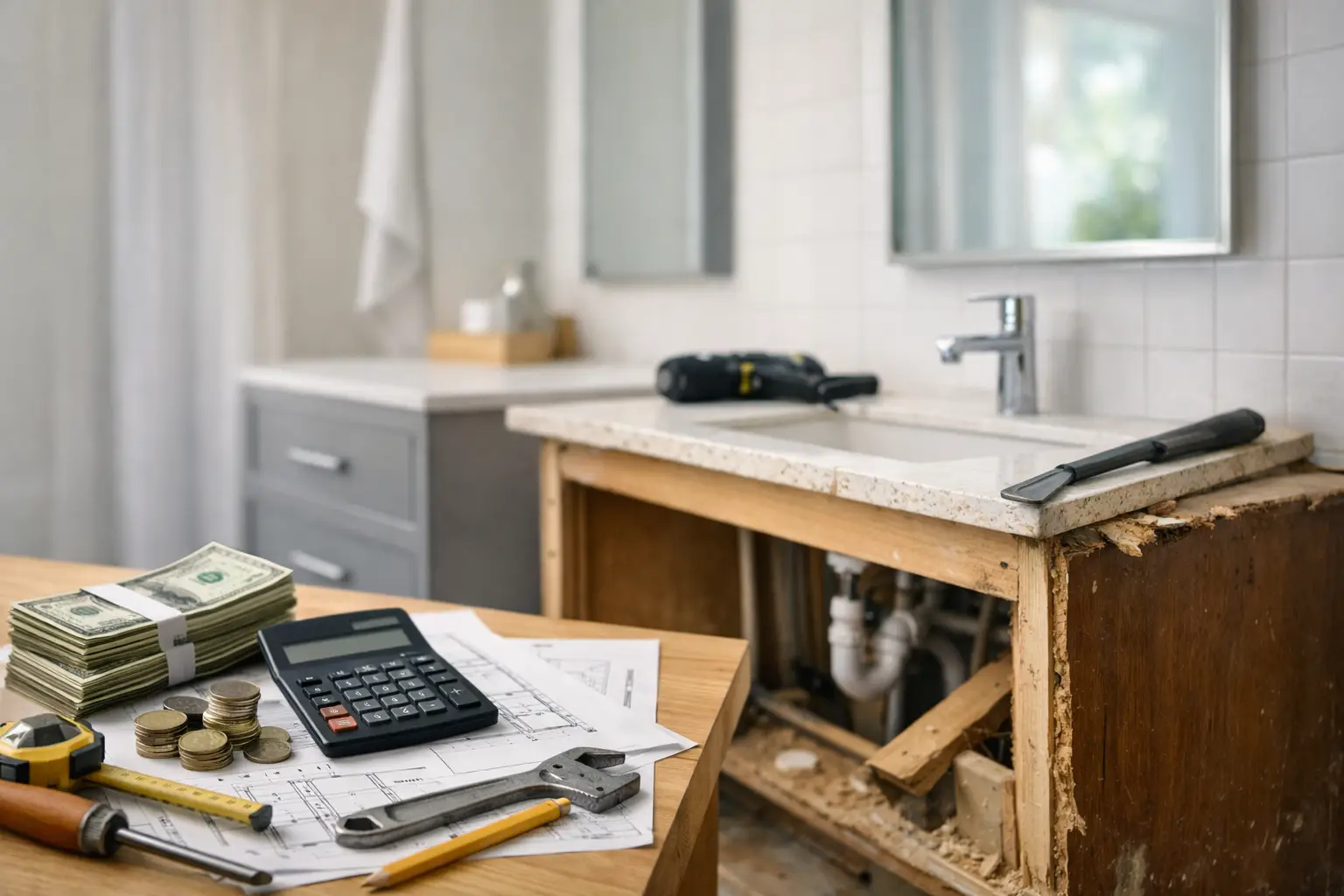
If you’re trying to pin down replace bathroom vanity cost, the fastest way to get realistic numbers is to look past the cabinet price alone. Homeowners in Dallas-Fort Worth often start with a vanity they saw online, then realize the final total also depends on plumbing hookups, countertop material, sink type, wall condition, flooring, and whether the new unit fits the existing layout. A simple swap can stay fairly controlled. A more customized install can move the budget quickly.
What does replace bathroom vanity cost?
In most cases, replacing a bathroom vanity lands somewhere between a basic fixture update and a small remodel. A straightforward like-for-like replacement with a stock vanity, standard top, and minimal plumbing adjustments may fall in the lower range. Once you add stone tops, double sinks, drawer upgrades, new faucets, mirror changes, backsplash work, or repairs behind the old vanity, the cost climbs.
For many homeowners, a practical starting range is about $800 to $3,500 for a standard vanity replacement, with higher-end projects going beyond that. On the lower end, you’re usually looking at a smaller vanity, simpler materials, and little to no layout change. On the higher end, the project often includes better finishes, custom sizing, plumbing modifications, and detail work that makes the upgrade feel complete instead of pieced together.
That wide range is not contractor guesswork. It reflects how many moving parts are hidden behind what looks like a single cabinet.
The biggest factors behind replace bathroom vanity cost
Vanity size is one of the first drivers. A compact powder room vanity costs less to buy and usually takes less labor to install than a larger primary bath setup. A 24-inch or 30-inch unit is naturally less expensive than a 60-inch double vanity with more drawers, more countertop area, and two sink cutouts.
Material quality matters just as much. Stock vanities made from basic composite materials are typically the most budget-friendly. Solid wood construction, better drawer hardware, furniture-style finishes, and custom cabinetry push pricing up. The difference is not just appearance. Better construction usually holds up longer in a humid bathroom where moisture and daily use expose weak spots fast.
Countertop choice also changes the final number. Cultured marble and integrated tops are often more cost-effective. Quartz, granite, and premium stone surfaces raise the price but give you more durability and a more finished look. If the vanity top includes an integrated sink, labor can stay simpler. If you select an undermount or vessel sink, the install may require more coordination.
Then there is plumbing. If the new vanity lines up cleanly with the current drain and supply lines, labor stays more predictable. If drawers interfere with the trap, the sink moves off center, or shutoff valves need replacement, the job becomes more involved. This is where small surprises can affect the budget.
Labor costs are not just about setting the cabinet
A vanity replacement sounds simple until the old one comes out. In real homes, installers often find water damage, loose flooring, failed caulk lines, unlevel walls, or plumbing that was never done cleanly in the first place. Labor pricing reflects demolition, haul-away, wall prep, plumbing reconnection, setting the vanity level, securing it properly, sealing the top, and testing everything before the job is complete.
If the wall needs patching or repainting because the new vanity is a different width or height, that adds time. If the old floor does not extend under the existing vanity, you may need flooring repair or trim adjustments. These are common situations, not unusual ones.
That is one reason low quotes can be misleading. A very cheap install number may only cover the cabinet swap itself and leave repairs, disposal, plumbing corrections, or finish work outside the quote. A clear estimate should spell out what is included.
Basic, mid-range, and higher-end vanity replacement budgets
A basic replacement usually works best when the homeowner keeps the same general footprint and chooses readily available materials. Think single-sink stock vanity, simple top, standard faucet, and no major plumbing movement. In many cases, this is the most cost-effective path for guest bathrooms, rental updates, or practical refreshes.
A mid-range project often includes a better cabinet, quartz or stone top, upgraded faucet, new sink, and some finish work around the vanity area. This is where many primary bathroom updates land because homeowners want durability and a noticeable visual improvement without fully rebuilding the space.
A higher-end vanity replacement is often part of a broader bathroom upgrade. That may include custom cabinetry, double sinks, specialty mirrors, improved lighting, tile backsplash, plumbing relocation, and a more tailored fit to the room. At that point, you are no longer just replacing a fixture. You are improving how the bathroom functions and feels every day.
When a vanity replacement turns into a bigger project
Sometimes the smartest move is not just to swap the vanity and walk away. If the bathroom has aging plumbing, damaged walls, outdated flooring, or a layout that does not work well, a vanity replacement can expose problems that are worth addressing while the area is already opened up.
For example, if the old vanity sat over a slow leak, you may need repair work before a new cabinet goes in. If the current sink placement limits storage or leaves wasted space, resizing the vanity could improve both function and appearance. If the faucet, mirror, and lighting are all dated, replacing only the vanity may make the rest of the room look unfinished.
This is where an experienced remodeling contractor adds value. The goal is not to upsell unnecessary work. It is to help you avoid paying twice for the same area.
How to keep vanity replacement costs under control
The easiest way to protect your budget is to keep the plumbing in the same location whenever possible. Moving drains and supply lines tends to create a ripple effect in labor, wall repair, and installation complexity.
It also helps to choose the vanity after confirming exact measurements. Homeowners sometimes buy a unit first, then discover the door swing, baseboard profile, plumbing depth, or countertop overhang creates an issue. Correct sizing prevents expensive adjustments later.
Material choices matter too. Not every bathroom needs custom cabinetry or premium stone. In a hall bath used by guests or kids, a well-built stock vanity with a durable top may be the better investment. In a primary bathroom where storage and appearance matter more, spending a bit more can make sense.
Another smart step is to think in terms of the full finished area. If you are already changing the vanity, decide whether the faucet, mirror, light fixture, and wall paint should be handled at the same time. Combining related work is often more efficient than scheduling separate updates.
Should you replace the vanity yourself?
A true DIY swap is possible if the new vanity matches the old footprint, the plumbing connections are simple, and there is no hidden damage. But many bathroom vanity replacements are less forgiving than they look. Cabinets need to sit level, tops need proper sealing, sink and drain connections need to be watertight, and any small mistake around plumbing can lead to cabinet damage or wall repairs later.
For homeowners who want a clean finish and less risk, professional installation usually makes more sense. That is especially true when stone tops, double sinks, custom fit issues, or older plumbing are involved. A professional also helps catch problems before they become expensive callbacks.
What to ask before you approve an estimate
Before moving forward, ask whether demolition and haul-away are included, whether plumbing reconnection is part of the price, and what happens if water damage or wall repair is found behind the old vanity. You should also confirm whether faucets, mirrors, backsplash, and finish touch-ups are included or priced separately.
A solid estimate should not leave you guessing. It should explain the scope clearly enough that you know what the finished result includes and where costs could change if hidden issues show up.
For Dallas-Fort Worth homeowners, the best vanity replacement projects usually start with a simple question: are you trying to do the minimum, or are you trying to solve the bathroom properly? Wisez Improvement works with both approaches, but the right choice depends on the room, the condition behind the walls, and how long you want the update to last. If the vanity is failing, water damaged, outdated, or no longer works for your daily routine, getting a clear quote is the most practical next step. A good replacement should not just look better on day one. It should function better every morning after that.