
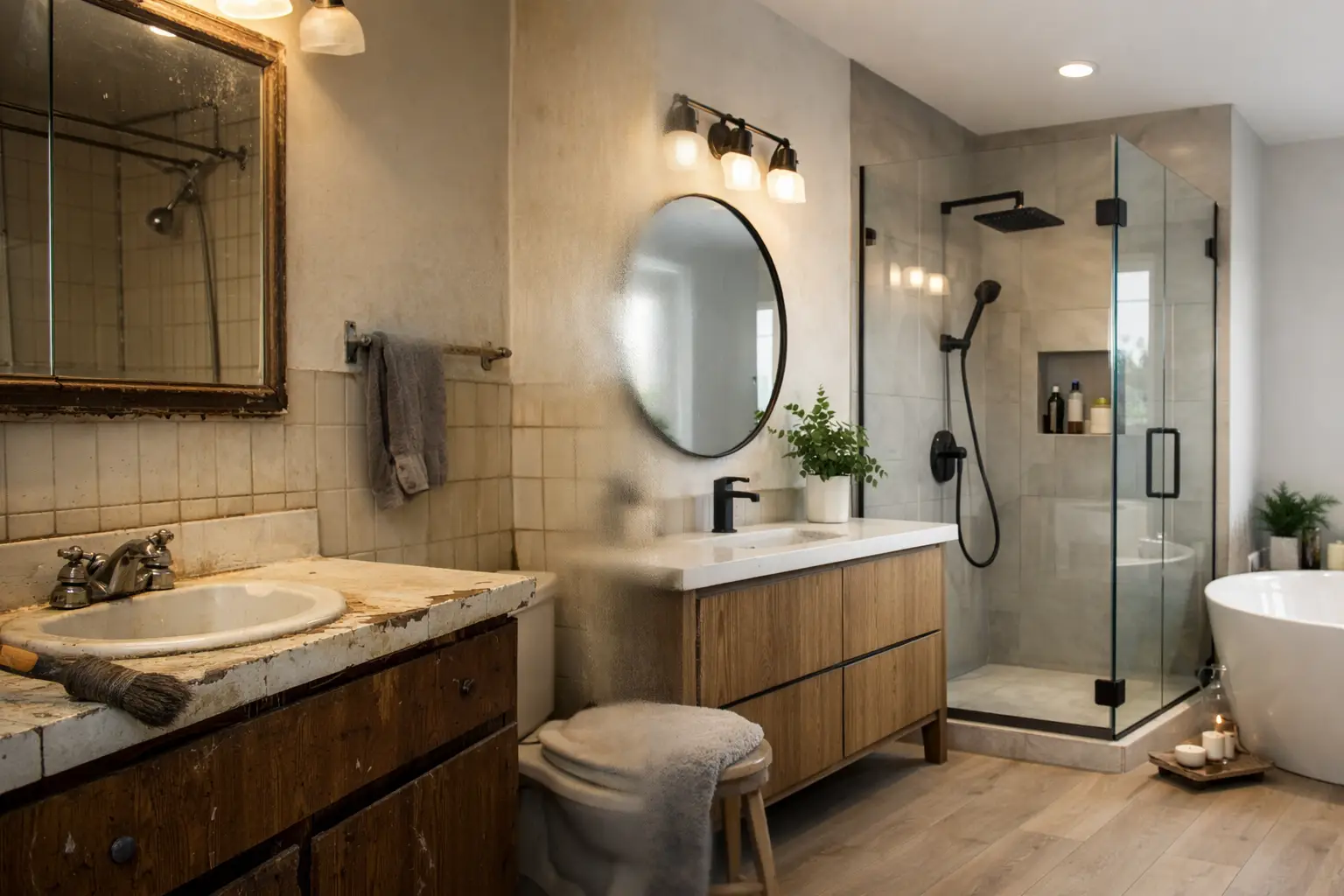
That old bathroom usually tells on itself fast – yellowed finishes, weak lighting, a cramped vanity, worn tile, and fixtures that make the whole room feel tired even when it is clean. If you are wondering how to update outdated bathroom spaces without wasting money, the best place to start is not with trends. It is with the parts of the room that affect daily use, long-term durability, and how much work the space really needs.
Some bathrooms only need a cosmetic refresh. Others have hidden plumbing issues, moisture damage, poor layout decisions, or worn materials that make a surface-level update a short-term fix. A good bathroom update improves how the room looks, but it should also make it easier to use, easier to clean, and more dependable for years to come.
How to update outdated bathroom the right way
The biggest mistake homeowners make is replacing visible items first and asking harder questions later. A new vanity top will not solve a soft subfloor. Modern fixtures will not fix an old shower valve. Fresh paint cannot compensate for poor ventilation. If your bathroom is dated, the smartest approach is to decide whether you are doing a refresh, a partial remodel, or a full renovation.
A refresh works when the layout is functional and the plumbing is in decent shape. In that case, changing finishes can make a major difference. A partial remodel makes sense when one or two areas are clearly dragging the room down, such as an old tub surround, damaged vanity, or outdated floor tile. A full remodel is the better investment when multiple systems are aging at once or the bathroom no longer works for your household.
That decision matters because it affects budget, schedule, and the order of work. It also helps you avoid paying twice for the same area.
Start with the biggest visual problems
If you want the room to feel newer fast, focus on the features that take up the most visual space. In most bathrooms, that means the shower or tub area, the vanity, the flooring, and the lighting.
An old fiberglass surround, stained grout lines, or mismatched tile can age the room more than almost anything else. Replacing a dated tub with a walk-in shower can modernize the entire space while also improving accessibility and everyday comfort. In other homes, keeping the tub but upgrading the wall finish, glass, and plumbing trim is the more practical move. It depends on who uses the bathroom and whether resale matters more than personal preference.
Vanities also do a lot of visual work. A bulky oak cabinet, cultured marble top, or short builder-grade unit can make the room feel older than it is. A new vanity with better storage, updated hardware, and a durable countertop can shift the style immediately. If the room feels cramped, a better-sized vanity or a floating design may help it feel more open.
Flooring has a similar effect. Old sheet vinyl, small dated tile, or cracked surfaces pull the whole bathroom backward. New tile in a simple, clean pattern often gives the room a stronger foundation than decorative materials that may date quickly.
Fixtures matter more than most homeowners expect
When people think about how to update outdated bathroom spaces, they often picture paint and accessories first. Those can help, but the fixtures do more to define the room than wall decor ever will.
A faucet, shower trim, toilet, mirror, and lighting package should feel intentional together. That does not mean everything must match exactly, but the finishes and proportions should make sense in the same room. Swapping out an old polished brass faucet, basic vanity light, and framed mirror for more current options can sharpen the space without changing the footprint.
This is also where function matters. A new toilet can improve water efficiency. Updated faucets can perform better and reduce leaks. Replacing an aging shower valve can improve temperature control and reliability. If you are already opening walls or replacing tile, it is usually smart to address plumbing components at the same time rather than leaving older parts buried behind new finishes.
For homeowners in older Dallas-Fort Worth homes, that point is worth taking seriously. What looks like a style problem on the surface sometimes includes real wear behind the walls.
Lighting can make an old bathroom feel new
Bad lighting ages a bathroom fast. It exaggerates shadows, makes finishes look dull, and can make even a clean room feel closed in. If your bathroom has a single overhead fixture and little else, upgrading the lighting may change the room more than you expect.
Vanity lighting should support everyday tasks like shaving, makeup, and grooming without harsh glare. Recessed lighting can brighten the room evenly. In some bathrooms, adding a light in the shower or over the tub area improves both appearance and usability.
Color temperature matters too. A bright white light can feel too cold in some bathrooms, while a very warm bulb can make finishes look yellow. The right balance depends on the room, but consistency matters more than mixing multiple light colors that compete with each other.
If natural light is limited, brighter finishes, larger mirrors, and clear glass can help the room feel less boxed in.
Use materials that hold up to real life
An updated bathroom should not just photograph well on day one. It should still look good after daily use, steam, water exposure, and regular cleaning. That is why material selection matters as much as design.
Porcelain tile is a strong choice for floors and shower walls because it is durable and relatively easy to maintain. Quartz counters are popular for vanities because they resist staining and do not require the same upkeep as some natural stones. Quality cabinetry, proper waterproofing, and well-installed plumbing fixtures matter more than chasing high-end finishes in the wrong places.
There are always trade-offs. Natural stone can look great, but it may require more maintenance. Open shelving can feel lighter visually, but closed storage usually works better for busy households. Trend-driven tile patterns can add personality, but very specific looks may not age as well as cleaner, simpler choices.
The best update balances style with maintenance and long-term value.
How to update outdated bathroom layouts
Sometimes the bathroom still feels old even after finish upgrades because the layout is the real issue. A poor vanity location, an oversized tub nobody uses, a tight toilet area, or a lack of storage can make the room frustrating no matter how new the materials are.
Layout changes are more involved because they often require plumbing, electrical, tile, and carpentry work. Still, they can be worth it if the existing plan wastes space or does not fit your needs. Converting a tub to a shower, widening a vanity area, improving storage, or opening visual space with custom glass can make the bathroom feel significantly more current.
Not every bathroom needs walls moved. In many cases, keeping the plumbing close to its current location helps control costs while still allowing major design improvements. A contractor who understands both remodeling and repair work can usually tell you where layout changes add value and where they just add expense.
Don’t ignore the repair side of the project
One reason bathroom updates go sideways is that homeowners treat them like decoration projects when they are really wet-area construction projects. Water damage, improper drainage, loose toilets, aging shut-off valves, hidden leaks, and ventilation issues all affect the quality of the finished result.
If you are already investing in a bathroom update, this is the right time to correct those issues. The goal is not only to make the room look better, but to make sure it performs well behind the finished surfaces. That includes waterproofing, slope in the shower, sound plumbing connections, proper fixture installation, and dependable ventilation.
This is where working with an experienced contractor matters. Companies like Wisez Improvement often see what homeowners cannot – the repair problems underneath the style complaints. Handling both sides of the work leads to a better result than treating them as separate jobs.
Budget with priorities, not guesses
Bathroom costs vary widely because scope drives price. Changing fixtures and repainting is a different project from replacing tile, installing a custom shower, moving plumbing, and updating cabinetry. The key is to spend where the room gains the most function and durability.
If your budget is tight, prioritize anything tied to water, wear, and daily use first. That usually means plumbing repairs, shower or tub condition, flooring, vanity function, and lighting. Accessories and decor can always come later.
If you have more room in the budget, invest in the features that will improve daily comfort the most. Better storage, a more usable shower, improved lighting, and quality materials usually give homeowners stronger long-term satisfaction than purely decorative upgrades.
A realistic estimate also needs to account for labor, material lead times, and the possibility of uncovering hidden issues once demolition begins. In older bathrooms, that is not unusual. Planning for it early is better than being surprised in the middle of the project.
What a successful bathroom update really looks like
A successful update does not have to be oversized or flashy. It simply needs to solve the problems that made the bathroom feel outdated in the first place. Sometimes that means replacing old tile and fixtures with cleaner, more durable options. Sometimes it means reworking the shower, correcting plumbing issues, and improving the layout so the room finally works the way it should.
If you are deciding how to update outdated bathroom spaces in your home, start by being honest about what bothers you most. Is it the appearance, the function, the storage, the plumbing, or all of it together? Once you know that, the right scope becomes much clearer.
The best bathroom updates are not built around trends. They are built around daily use, solid craftsmanship, and choices that still make sense after the excitement of the remodel wears off.