
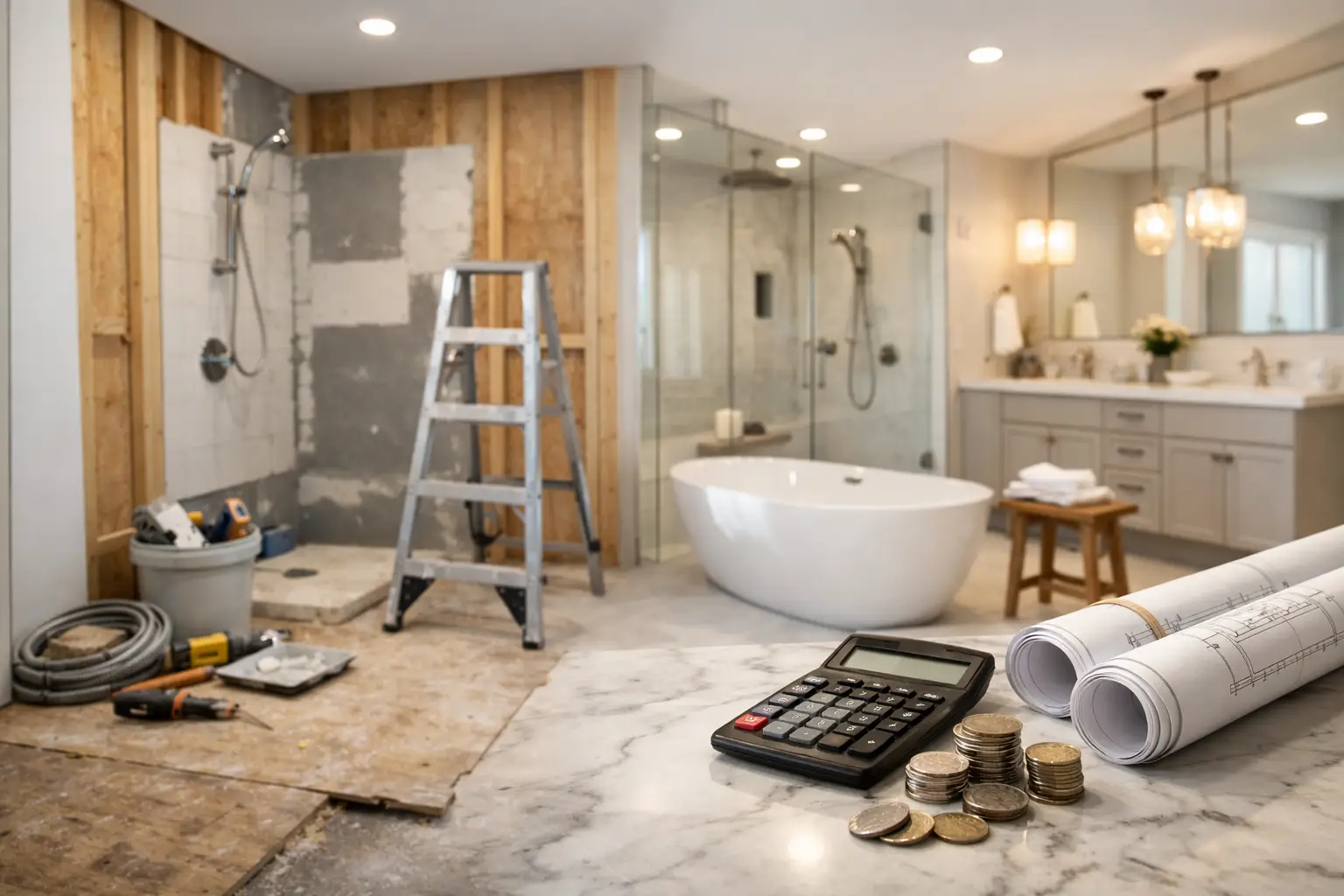
Sticker shock usually hits when homeowners start picking finishes, not when they first say, “We should remodel the bathroom.” If you are asking how much is a master bathroom renovation, the honest answer is that most projects land within a wide range because layout changes, plumbing work, tile choices, and fixture quality all move the number fast.
In the Dallas-Fort Worth market, a master bathroom renovation can start around $15,000 for a more cosmetic update and climb to $40,000 or more for a full custom remodel. High-end projects with structural changes, premium stone, large-format tile, frameless glass, custom cabinetry, and luxury plumbing fixtures can go beyond that. The real question is not just what a remodel costs, but what your bathroom needs to function better and hold up over time.
How much is a master bathroom renovation in real terms?
A basic renovation usually focuses on keeping the existing layout. That means the toilet stays where it is, the shower footprint remains similar, and the vanity location does not move. In that case, your budget is mostly going toward demolition, new finishes, plumbing fixture replacement, vanity installation, lighting, paint, and labor. This is where many homeowners can control cost without settling for a bathroom that still feels outdated.
A mid-range remodel tends to include a more noticeable transformation. You might replace a builder-grade tub with a walk-in shower, install new tile on the floor and walls, upgrade the vanity and mirrors, improve storage, and add better lighting and ventilation. This level of renovation is often where homeowners get the best balance of value, comfort, and resale appeal.
A high-end remodel typically includes custom work from top to bottom. Heated floors, expanded shower areas, custom glass enclosures, freestanding tubs, premium tile installation, niche storage, upgraded plumbing lines, and custom cabinets all raise the price. These projects can be worth it, but only if the final design solves real issues in the space and matches the home.
What drives master bathroom renovation cost?
Square footage matters, but it is not the only thing that matters. A large bathroom with simple materials can cost less than a smaller bathroom loaded with detailed tile work and specialty fixtures. Labor complexity is often the bigger cost driver than room size alone.
Layout changes
Moving plumbing is one of the fastest ways to increase the budget. Relocating a shower drain, shifting a toilet, or reworking water lines behind slab or wall systems adds labor, materials, and time. If your current layout works reasonably well, keeping those core elements in place usually saves money.
That said, some layout changes are worth it. If the shower is cramped, the vanity lacks storage, or the room feels awkward to use every day, a smarter floor plan may justify the extra cost. A renovation should improve function, not just appearance.
Shower and tub decisions
This is often the centerpiece of the project. Converting an old tub and shower combo into a larger custom shower can be a strong investment in comfort and daily use. The price depends on waterproofing, tile selection, pan construction, glass type, plumbing fixture quality, and the amount of custom detail.
If you keep both a tub and separate shower, costs go up because you are renovating two wet areas instead of one. If you remove an unused tub to create more open space, storage, or a larger shower, you may reduce some costs while making the room more practical.
Tile and finish selection
Material choices can swing the final price significantly. Ceramic tile is generally more budget-friendly than porcelain, natural stone, or intricate mosaic installations. Large-format tile can create a clean, modern look, but installation may require more prep for flatness and precision. Accent walls, shower niches, benches, and custom patterns also add labor.
This is one area where homeowners sometimes underestimate the difference between product price and installed price. A tile that costs more per square foot usually also demands more careful installation, which raises labor costs too.
Vanity, cabinets, and countertops
A stock vanity with a standard top keeps costs controlled. A custom-built vanity with stone counters, drawer organizers, integrated lighting, and upgraded hardware changes the look and function of the bathroom, but it also changes the budget. Double vanities, tower storage, and custom cabinetry are great upgrades when space and budget allow.
The right choice depends on how the bathroom is used. In a primary suite shared by two people, storage and countertop space often matter more than adding another decorative feature.
Plumbing and repair work
Older bathrooms often reveal hidden problems after demolition. Water damage, subfloor issues, outdated shut-off valves, slow drains, poor venting, or leaking shower pans can all surface once walls and floors are opened up. This is one reason estimates sometimes include a contingency amount.
Working with a contractor who understands both remodeling and plumbing repair can help avoid delays and finger-pointing. When repair work and renovation work are handled together, the project usually moves more efficiently.
Typical price ranges by project scope
For a light master bathroom refresh, many homeowners spend around $15,000 to $20,000. This usually covers surface-level updates with limited plumbing changes.
For a full mid-range renovation, a common range is about $20,000 to $35,000. This often includes a new shower system, tile work, vanity replacement, updated lighting, plumbing fixture upgrades, and more polished finish selections.
For a high-end master bathroom renovation, costs often start around $35,000 and can move well beyond $50,000 depending on customization. If you are adding luxury materials, custom cabinetry, specialty glass, or reworking the layout, the budget rises quickly.
These are practical planning ranges, not fixed prices. Every bathroom has its own conditions, and every homeowner has different priorities.
How to budget without cutting the wrong corners
The smartest remodel budgets focus first on what cannot be easily changed later. Waterproofing, plumbing quality, tile installation, ventilation, and structural corrections should come before decorative upgrades. A beautiful bathroom will not stay beautiful for long if the shower was not built correctly underneath the tile.
It also helps to separate must-haves from nice-to-haves early. If your top priorities are a larger shower, better storage, and durable finishes, spend there first. Decorative mirrors, premium hardware finishes, or luxury lighting can sometimes be adjusted if the budget needs room.
Another smart move is to leave a contingency, usually around 10 to 15 percent. In remodeling, surprises are common. A realistic budget has room for them.
Where homeowners overspend
One common mistake is mixing luxury finishes with a layout that still does not work. Expensive tile and fixtures cannot fix poor spacing, weak lighting, or bad storage. Another is choosing products based only on showroom appearance without thinking about maintenance, durability, or replacement timelines.
Homeowners also overspend when they piece the job out too much. Hiring separate trades for demolition, plumbing, tile, glass, and finish work can create coordination problems. Delays cost money, and so do mistakes between trades.
Is a master bathroom renovation worth it?
For many homeowners, yes – especially when the current bathroom has daily-use problems. A remodel can improve comfort, storage, water efficiency, lighting, accessibility, and resale appeal. It can also address hidden plumbing issues before they become much more expensive repairs.
The return is not only financial. A well-built primary bathroom makes mornings easier, adds privacy and comfort, and gives the home a more finished feel. That matters when you use the space every single day.
Getting an accurate estimate
Online averages are useful for rough planning, but they do not replace a real on-site evaluation. The only way to know what your master bathroom renovation is likely to cost is to look at the existing condition, confirm the scope, and match the design to your budget.
That estimate should account for demolition, materials, labor, plumbing work, tile installation, fixture upgrades, and possible repair needs. It should also be clear about what is included and where allowances apply. Straight answers upfront usually lead to better projects.
At Wisez Improvement, that practical approach matters because homeowners are not just buying finishes. They are trusting someone to manage the work inside their home, solve issues as they come up, and finish the job properly.
If you are planning a remodel, the best next step is to think beyond the headline number. A good bathroom renovation is not about spending the most – it is about putting your budget where it improves the space for the long term.