
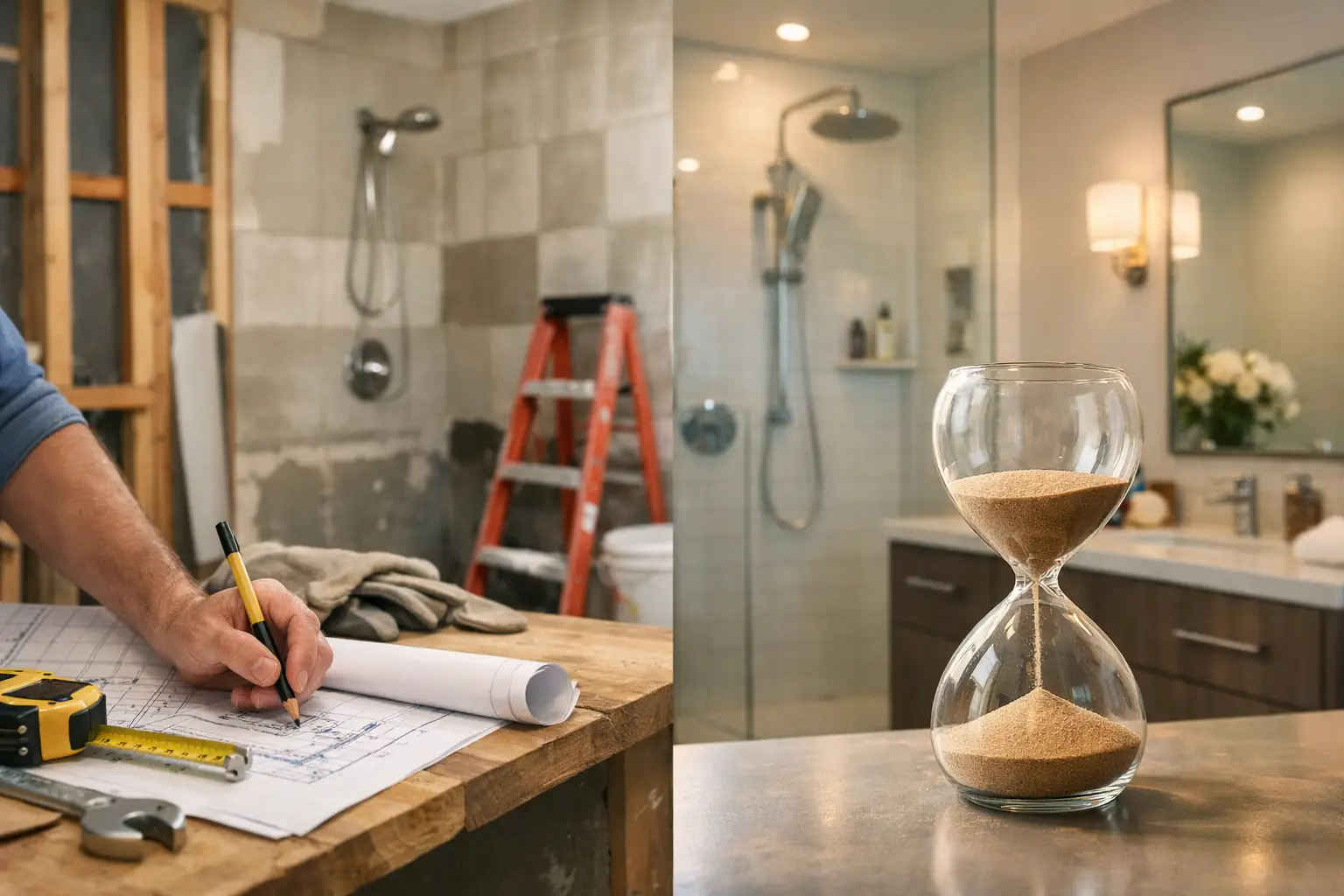
If you are trying to plan around one working bathroom, school mornings, or a busy household, one question matters fast: how long bathroom remodel takes. The honest answer is that most bathroom remodels take anywhere from a few days to several weeks, depending on the size of the job, material availability, and whether plumbing or structural issues show up once the old finishes come out.
A simple cosmetic update moves much faster than a full rebuild. Replacing a vanity, installing a new toilet, updating fixtures, and painting can often be completed in under a week if materials are on site and the layout stays the same. A full bathroom remodel with tile, plumbing updates, custom glass, and finish work usually takes longer because each phase depends on the one before it.
How long bathroom remodel takes for different project types
The biggest factor in timeline is scope. Homeowners often use the same phrase – bathroom remodel – to describe very different jobs.
A light refresh may take 3 to 7 days. This usually includes surface-level improvements such as fixture replacement, vanity installation, mirror updates, lighting, and paint. If no walls are opened and plumbing stays in place, the process is more predictable.
A standard remodel often takes 2 to 4 weeks. That might include demolition, new flooring, tile around a tub or shower, a new vanity, plumbing fixture replacement, drywall repair, and final trim. This is where craftsmanship and scheduling matter because multiple trades may be involved.
A larger or more customized remodel can take 4 to 8 weeks or more. That includes moving plumbing lines, building a custom shower, installing custom glass, replacing subflooring, relocating electrical, or correcting water damage. Older homes especially can hide problems that extend the schedule once demolition begins.
The typical bathroom remodel timeline, phase by phase
Most homeowners feel better about the schedule when they understand what actually happens on the job. The total time is not just install time. It also includes prep, inspections if needed, dry times, and coordination.
Planning and material selection
Before demolition starts, there is usually a planning period. This can take a few days or a few weeks depending on how quickly selections are made. Vanity size, tile style, fixtures, shower doors, and plumbing parts all affect the start date.
This phase is where delays are easiest to avoid. If a vanity is backordered or the tile has not been confirmed, the project can stall before it begins. Clear decisions upfront usually lead to a smoother schedule.
Demolition
Demolition usually takes 1 to 2 days for a standard bathroom. This includes removing old tile, fixtures, vanities, tubs, or shower materials. If the bathroom is small, demo can move quickly. If there are layers of old flooring, heavy mud-set tile, or difficult access, it can take longer.
This is also the point where hidden issues tend to appear. Water damage behind a shower wall or rotted subfloor under a toilet is common in older bathrooms. Those problems need to be fixed before the new work goes in.
Rough plumbing, electrical, and framing
If the layout is changing or systems need correction, rough-in work often takes 2 to 5 days. This can include moving a drain, updating supply lines, adding a shower valve, adjusting lighting, or reinforcing framing.
Bathrooms that keep the same layout generally move faster. Once you start shifting a toilet, enlarging a shower, or adding features that were not there before, the schedule becomes more complex. That does not mean it is a bad idea. It just means the project needs more time.
Drywall, backer board, and prep work
This stage usually takes 1 to 3 days. Walls are repaired or replaced, wet-area backer board is installed, and surfaces are prepared for tile or paint. Good prep work is not the flashy part of a remodel, but it directly affects how long the bathroom holds up.
If waterproofing is part of the shower build, that adds time too. Proper waterproofing is worth it. Rushing this step can create expensive repair issues later.
Tile installation
Tile is one of the biggest timeline variables in a bathroom remodel. A basic floor might take 1 to 2 days, while a custom shower with wall tile, niches, patterns, and detailed cuts may take several more. After tile is installed, grout and cure time also need to be factored in.
This is where homeowners sometimes underestimate the work. Large-format tile, mosaics, natural stone, and detailed layouts all take longer than a straightforward install. The finish can look significantly better, but the schedule should reflect that.
Fixture and vanity installation
Once surfaces are ready, finish installation often takes 1 to 3 days. This includes setting the vanity, toilet, faucets, shower trim, mirrors, lighting, and hardware. If the project includes custom cabinets or specialty fixtures, that can extend the timeline depending on delivery and fit.
This stage usually feels fast because the room starts looking finished. Still, final adjustments matter. Alignment, sealing, plumbing connections, and clean installation should not be rushed.
Custom glass and final details
Custom shower glass is often measured after tile is complete, not before. That means fabrication can add another 1 to 2 weeks after the main tile work is done. In many remodels, the bathroom is nearly finished before the glass goes in.
Punch-list work, final caulking, touch-up paint, cleanup, and walkthrough usually happen at the end. These small details can take a day or two, but they make a major difference in the final result.
What causes bathroom remodel delays?
Even a well-managed project can hit delays. The goal is not pretending delays never happen. The goal is spotting risks early and managing them well.
Material availability is one of the most common issues. A backordered vanity, delayed tile shipment, or missing trim kit can slow down the next phase. This is why experienced contractors push selections and ordering before the work starts.
Hidden damage is another major factor. Leaks behind walls, old plumbing that does not meet current needs, mold, and damaged subflooring can all add time. These are not cosmetic surprises. They affect the safety and durability of the remodel.
Permit and inspection timing can also matter, especially when plumbing or electrical changes are involved. Not every project requires the same level of permitting, but when it does, the schedule should account for it.
Then there is customization. A stock vanity installs faster than a custom cabinet. A standard tub surround moves faster than a fully tiled walk-in shower with a bench, niche, and frameless glass. Custom work gives you a better fit and more design flexibility, but it usually adds time.
How to keep your remodel on schedule
The easiest way to shorten a remodel is to make decisions early and work with a contractor who manages the sequence well. Bathroom projects are compact, but they involve a lot of moving parts. Good scheduling matters.
Choose materials before demolition starts whenever possible. Confirm dimensions, lead times, and product compatibility. A faucet that does not match the valve, or a vanity that arrives damaged, can cost days you did not plan for.
Be realistic about the scope. If you want a full shower conversion, upgraded tile, new lighting, and plumbing corrections, the project should be scheduled like a real remodel, not a weekend refresh. Honest expectations usually lead to less stress.
It also helps to ask how communication will work during the project. A dependable contractor should be able to explain the order of work, flag issues quickly, and tell you when a change may affect the timeline. That kind of clarity matters as much as the labor itself.
How long bathroom remodel takes in an older home
Older homes in the Dallas-Fort Worth area can add a layer of unpredictability. Outdated drain lines, previous patchwork repairs, uneven walls, and moisture damage are all common. A bathroom may look like a standard replacement job on the surface, then open up into plumbing or framing corrections.
That does not mean older homes are a problem. It means they need a contractor who can handle both remodeling and repair. When the same team can address tile, fixture installation, and plumbing-related issues, the project tends to move more efficiently because you are not waiting on separate companies to solve connected problems.
The real answer homeowners should plan for
If you want a practical baseline, expect about 2 to 4 weeks for a standard bathroom remodel and longer for custom or repair-heavy work. Smaller updates can move faster, and larger rebuilds can take significantly more time. The exact schedule depends on what you are changing, what condition the bathroom is in now, and how prepared the project is before demo starts.
At Wisez Improvement, we find that the smoothest remodels are the ones built on clear scope, solid planning, and honest communication from day one. If you are thinking about updating a bathroom, the best next step is not guessing the timeline – it is getting the space evaluated so the schedule matches the real work.