
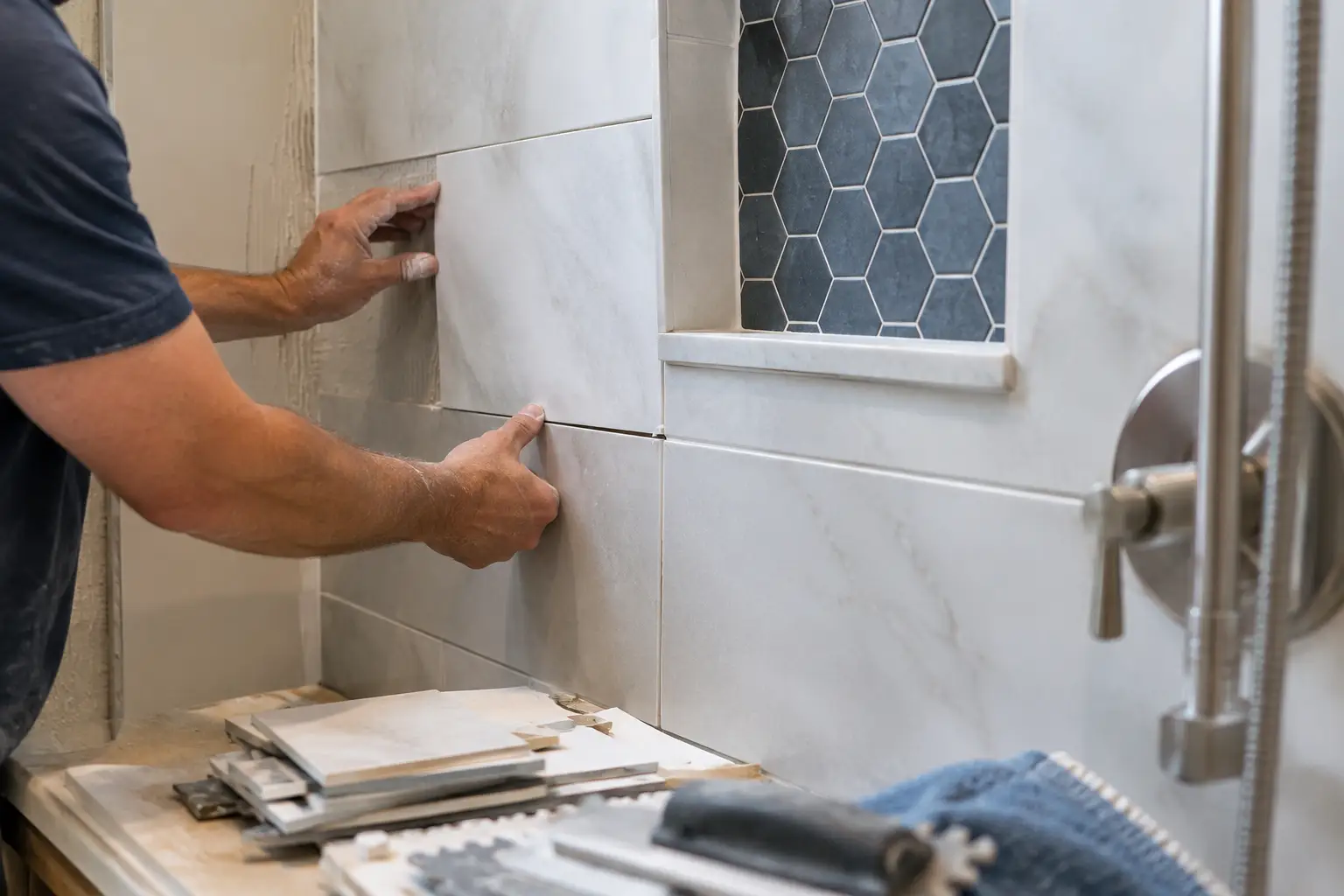
A shower can look finished on day one and still create problems a year later if the tile was chosen for appearance alone. This guide to choosing shower tile helps Dallas-Fort Worth homeowners weigh the factors that affect daily use: water exposure, traction, cleaning, layout, budget, and the quality of the installation behind the tile.
A good tile choice should make the bathroom easier to live with, not just more attractive in listing photos. The best option depends on where the tile will go, who uses the shower, and how much maintenance you realistically want to take on.
Start With the Shower Zone
Not every surface in a shower has the same job. Wall tile primarily needs to resist moisture and be easy to clean. Floor tile has to do that while also providing dependable traction under bare, wet feet. A niche, bench, curb, and accent wall each introduce additional cuts, edges, and grout lines that should be planned before materials are ordered.
For shower walls, porcelain and ceramic tile are both practical choices. Porcelain is denser and generally absorbs less water, making it especially well suited to wet areas. It is also available in a wide range of looks, including stone, concrete, wood, and natural marble effects. Ceramic can be a cost-effective wall option when it is rated for wet locations and installed correctly.
Natural stone creates a distinctive, high-end finish, but it requires more commitment. Many stone products need sealing, can show mineral deposits more readily, and may require specialty cleaning products. In North Texas, hard water can leave visible buildup on darker stone, polished surfaces, and some glass mosaics. Stone can be the right choice, but homeowners should choose it because they value its natural variation and are prepared to maintain it.
Choosing Shower Floor Tile for Safety
Shower floor tile deserves separate consideration. Large-format tile may create fewer grout lines on a wall, but it is rarely the easiest choice for a shower floor. A shower pan must slope consistently toward the drain. Smaller tile follows that slope more naturally, while additional grout lines can provide useful grip.
Mosaic tile is a common and practical floor choice, particularly in sizes around 1 to 2 inches. Porcelain mosaics are durable, readily available, and easier to coordinate with larger wall tile. Textured or matte finishes typically offer better wet-foot traction than highly polished tile.
Do not assume a tile is safe because it is labeled as a floor tile. Ask whether the product is appropriate for a wet shower floor and review its slip-resistance information. This matters even more in households with young children, older adults, or anyone with limited mobility. A curbless shower may need especially thoughtful tile selection because the floor surface continues into the main bathroom.
A small floor tile is not automatically better, however. Very tiny mosaics create more grout to clean. The goal is a balance between traction, drain slope, and manageable maintenance.
Consider Size, Layout, and the Room Itself
Tile size changes the visual scale of a bathroom. Large-format wall tile can make a compact shower feel calmer and more open because there are fewer grout lines. It can also reduce routine grout cleaning. The trade-off is that large tiles demand a flat, well-prepared substrate and careful planning around corners, niches, valves, and windows. Bigger tiles are not forgiving of uneven walls.
Smaller tile can add detail and accommodate complicated surfaces, but too many competing formats may make a modest bathroom feel busy. A reliable approach is to select one main wall tile, a complementary shower floor mosaic, and one restrained accent material if the design calls for it.
Before committing to a layout, consider where the cuts will land. A tile installer should plan the pattern so narrow slivers are not left at the ceiling, floor, or shower edges whenever possible. Centering an accent wall, lining up grout joints with a niche, and selecting the right niche dimensions can make a custom shower look intentional rather than improvised.
For a lower ceiling or smaller shower, horizontal rectangular tile can visually widen the space. Vertical layouts can add height. Neither is universally better. The room dimensions, fixture locations, and tile proportions should guide the decision.
Pick Grout With Maintenance in Mind
Grout has a major effect on the finished look and the cleaning routine. A contrasting grout emphasizes the tile pattern. A grout color close to the tile creates a quieter, more continuous surface. For many busy households, a mid-tone grout offers a practical middle ground because it is less likely to show every water mark than bright white and less likely to fade into a dark, heavy grid.
Grout joints also affect the design. Rectified porcelain tile can often use narrower joints, but tiles still need sufficient space to account for variation and movement. Very narrow grout lines do not eliminate cleaning, and they should not be used as a shortcut for poor layout planning.
Cement-based grout remains widely used, while higher-performance grout options can provide improved stain and moisture resistance. The best choice depends on the tile, joint width, installation conditions, and budget. Epoxy grout can be highly durable, but it costs more and requires skilled installation. Discuss the maintenance expectations before choosing grout, not after the shower is complete.
At changes of plane, such as where walls meet or where the wall meets the shower floor, flexible sealant is generally needed instead of rigid grout. These areas move slightly over time. Using the correct materials helps prevent cracking and water entry.
The Tile Is Only as Good as the Waterproofing
Tile and grout are finish materials. They are not the waterproof layer that protects your framing and subfloor. This is one of the most important points in any guide to choosing shower tile: a beautiful tile selection cannot compensate for improper shower preparation.
A properly built shower requires a compatible waterproofing system behind or directly beneath the tile, correctly treated seams and corners, a properly sloped shower pan, and a drain connection designed for the chosen system. The niche, bench, curb, and plumbing penetrations all require careful waterproofing detail.
During a bathroom remodel, this is also the right time to inspect the plumbing behind the walls. Old valves, worn supply lines, slow drains, or prior water damage should be addressed before new tile goes up. Covering a repair issue with a new finish can turn a planned renovation into a costly tear-out later.
Homeowners should feel comfortable asking a contractor what waterproofing method will be used, how the shower pan will be tested, and how the tile layout will be planned around fixtures. Clear answers are a good sign that the project is being treated as a system, not simply as a tile installation.
Set a Budget That Includes the Details
The price on a tile sample is only one part of the shower budget. Installation labor, waterproofing materials, demolition, substrate repair, plumbing changes, grout, trim pieces, a niche, bench construction, and custom glass can all affect the final number.
Porcelain field tile may be affordable, but a complex herringbone pattern, handmade-look tile with irregular edges, or extensive mosaic work can increase labor substantially. Large-format panels may reduce grout lines but often need specialized handling and cutting equipment. Natural stone may require sealing, extra care during installation, and more long-term maintenance.
It is usually smarter to choose a durable, readily available main tile and use a premium accent in a focused area than to stretch the budget across every surface. This gives the shower a finished look without sacrificing waterproofing, plumbing corrections, or skilled installation – the parts that protect the investment.
Order enough material for the layout and future repairs. Tile batches can vary slightly in shade, texture, and size, and a discontinued tile may be difficult to match later. Your contractor can help calculate overage based on the room, pattern, and expected cuts.
Choose a Style You Will Still Like Later
A shower renovation should reflect your preferences, but it should also work with the age and style of the home. Soft white, warm gray, taupe, sand, and natural stone-look porcelain tend to offer flexibility with changing paint colors and hardware. These choices do not have to look plain. Texture, a thoughtful layout, and quality fixtures can create a custom result without relying on a short-lived trend.
Bold tile can work well in a niche, on one feature wall, or as a floor mosaic. Using it in a smaller area gives the design personality while making a future update less complicated. Bring home samples and view them in the actual bathroom at different times of day. Dallas-Fort Worth homes often have mixed lighting conditions, and tile that looks warm in a showroom can appear cooler under your bathroom lighting.
If you are pairing tile with custom glass, keep the overall composition in mind. Clear glass leaves the tile fully visible, so layout precision matters. Patterned tile and busy glass together can compete. A clean glass enclosure often works best when the tile provides the visual interest.
The right shower tile is the one that fits your household, your maintenance habits, and the way the shower needs to perform every day. Take time to evaluate samples, ask about the construction behind the finish, and choose an installer who can explain the details clearly. That is how a shower stays comfortable, functional, and well finished long after the remodel is complete.