
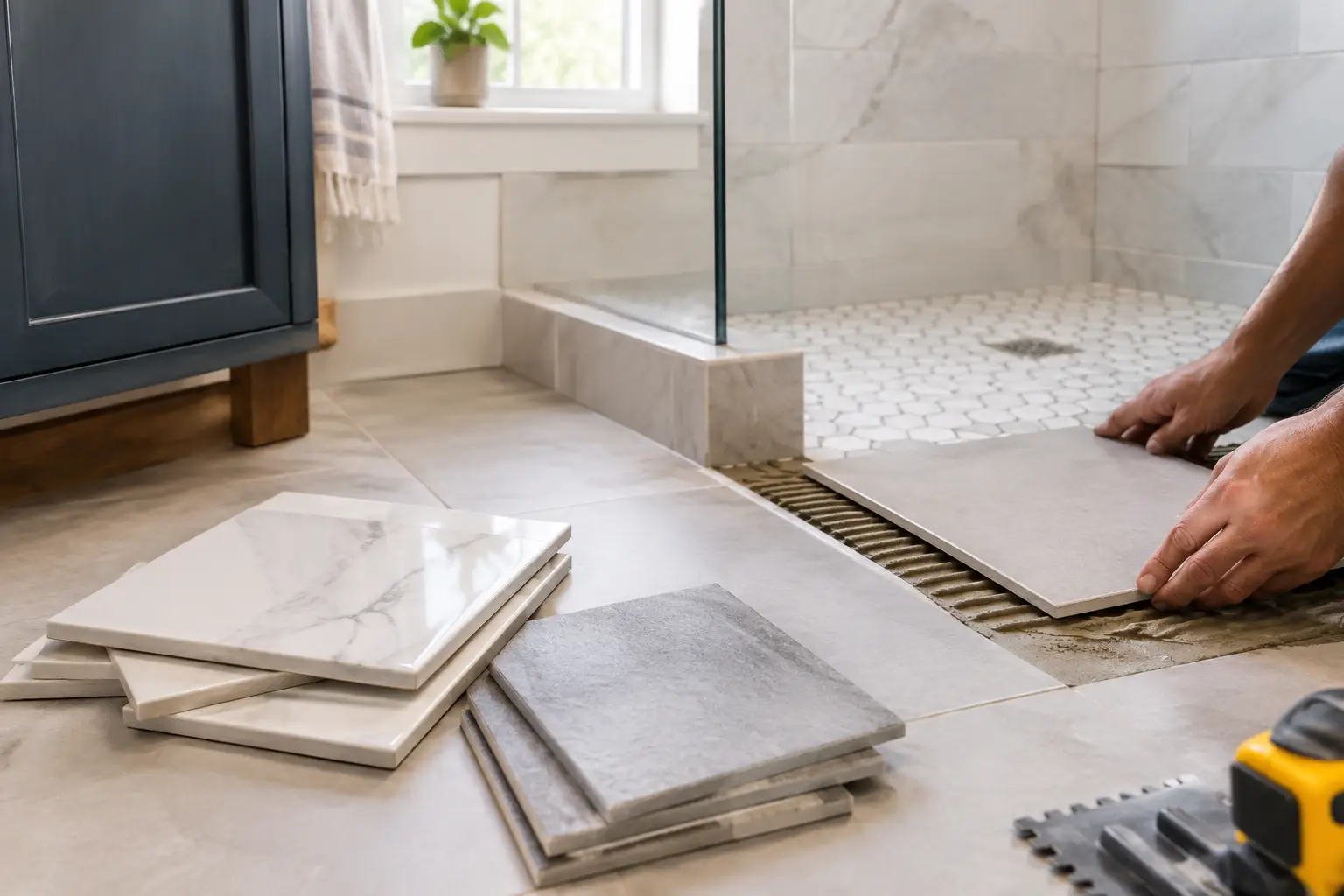
A bathroom floor can look perfect on installation day and still become a problem a year later if the tile does not fit the space. When choosing ceramic or porcelain bathroom tile, the better option depends on where it will be installed, how much water it will face, and how your household uses the room. Both materials can create a clean, durable finish. The difference is in performance, cost, and the level of preparation needed for a long-lasting result.
Ceramic or Porcelain Bathroom Tile: Start With Water Exposure
Porcelain and ceramic are both clay-based tiles fired in a kiln, but porcelain is made from more refined clay and fired at higher temperatures. That process makes it denser and less porous than standard ceramic tile.
In a bathroom, lower water absorption matters. Floors near a shower, shower walls, tub surrounds, and wet-room designs all experience frequent moisture. Porcelain is generally the safer choice for these high-exposure areas because it resists water absorption, staining, and temperature changes more effectively.
Ceramic can still perform well in bathrooms, particularly on walls, backsplashes, and areas away from direct spray. A properly installed ceramic tile wall with sound grout and caulk joints can serve a home for many years. The key is not to treat every bathroom surface the same. A decorative wall behind a vanity has different demands than a shower pan or a busy family bathroom floor.
The Practical Differences Between Ceramic and Porcelain
Porcelain is built for harder use
Porcelain is usually the stronger choice for bathroom floors, especially in active homes with children, pets, or frequent guests. Its dense body holds up well against foot traffic, dropped toiletries, and routine cleaning. Because its color often runs through the tile body, a small chip can be less noticeable than it would be on a glazed ceramic tile.
This does not mean every porcelain tile is indestructible. A heavy object can crack any tile, and a weak or uneven subfloor can lead to cracks over time. Tile durability starts below the surface. Proper subfloor preparation, underlayment, layout, thinset coverage, and expansion allowances matter as much as the material selected.
Ceramic offers more design flexibility for walls
Ceramic tile is often easier to cut, drill, and shape than porcelain. That can make it a practical material for shower walls, accent strips, vanity backsplashes, and detailed layouts around niches or windows. It is also available in a wide range of colors, handmade looks, glazes, and decorative patterns.
For homeowners updating an older Dallas-Fort Worth bathroom, ceramic can be a smart way to add visual character without putting premium flooring material on every surface. For example, a porcelain floor paired with ceramic wall tile can balance durability, style, and budget.
Price is more than the tile label
Ceramic tile often costs less per square foot than porcelain, but the total installed price depends on more than the tile itself. Large-format porcelain, intricate mosaics, patterned layouts, waterproofing needs, demolition, plumbing changes, and subfloor repairs can all affect the project cost.
Porcelain may also require more time and specialized cutting equipment because of its density. That additional labor is often worthwhile in wet or high-traffic areas, but it should be considered during planning. The best value is not always the least expensive tile. It is the material and installation method that prevent avoidable repairs later.
Best Places to Use Each Tile
Porcelain is a strong fit for main bathroom floors, shower floors rated for that purpose, curbless showers, tub surrounds, and bathrooms where water is frequently tracked across the floor. It is also a good choice for homeowners who want a consistent material that can run from the bathroom floor into a shower area.
Ceramic works especially well for shower walls, bathroom accent walls, backsplashes, and low-traffic powder room floors. It can also be appropriate for a full bathroom floor when the selected product is rated for flooring and the installation includes proper moisture protection.
The tile rating matters. Do not choose only by appearance. Confirm that the specific tile is approved for its intended application. A glossy wall tile may look attractive on a floor sample board but can be too slippery or too delicate for daily foot traffic. Likewise, not every mosaic is suitable for a shower floor.
Do Not Overlook Slip Resistance
A polished tile can make a bathroom feel bright and upscale, but shine is not the same as safety. Bathroom flooring should provide reliable traction when wet. This is particularly important around tubs, showers, and toilet areas, where water can end up on the floor without warning.
Matte porcelain, textured finishes, and smaller tiles with more grout joints can improve traction. For shower floors, small mosaics are common because the grout lines provide additional grip and the sheets can follow the slope toward the drain more easily.
There is a trade-off. Highly textured tile can hold onto soap residue and require more detailed cleaning. Very light grout can also show discoloration sooner in busy bathrooms. Choosing a practical finish and grout color makes routine maintenance easier without sacrificing the finished look.
Size, Layout, and Grout Change the Result
Large-format porcelain tiles can make a small bathroom feel more open because there are fewer grout lines. They create a clean, modern appearance, but they demand a very flat surface. If the floor or walls are not properly prepared, lippage can occur, meaning one tile edge sits higher than the next. That affects appearance, comfort, and cleanability.
Smaller ceramic or porcelain tiles are more forgiving around curves, niches, drains, and uneven existing conditions. They can also support more traditional, detailed designs. A classic subway tile wall, for example, may be ceramic, while a hexagon or penny-round porcelain mosaic may be used underfoot.
Grout is part of the design and part of the maintenance plan. A contrasting grout emphasizes the tile pattern. A grout color close to the tile creates a quieter surface. In either case, quality grout installation and properly placed flexible caulk joints are essential in corners, changes of plane, and areas around tubs or showers.
Installation Can Matter More Than the Material
A bathroom tile project involves more than setting tile over an existing surface. Before installation, the contractor should evaluate the subfloor, wall condition, moisture exposure, plumbing locations, and the condition of the shower assembly. If there is water damage, movement in the floor, or an existing leak, covering it with new tile will not solve the underlying issue.
Shower areas need a complete waterproofing approach, not just water-resistant tile. Tile and grout are finish materials, not the waterproof barrier. The layer behind the tile, the drain connection, the shower pan slope, and the treatment of corners and penetrations all need to work together.
This is where a contractor with both remodeling and repair experience can make a difference. Wisez Improvement evaluates the condition behind the finished surface so homeowners can address plumbing or moisture concerns before investing in a new bathroom design.
How to Make the Right Choice for Your Bathroom
Choose porcelain when moisture resistance, floor durability, and long-term performance are the priority. It is often the better all-around material for full bathrooms, shower areas, and homes where the bathroom gets regular use.
Choose ceramic when you want decorative versatility, easier fabrication, or a cost-conscious option for walls and lower-exposure surfaces. It remains a reliable bathroom material when it is used in the right location and installed correctly.
A well-planned bathroom does not need porcelain on every square inch. Many of the best results combine materials strategically: durable porcelain where water and traffic are highest, then ceramic where color, texture, and detail can do more of the visual work. Start with how the bathroom needs to function, then select tile that supports that everyday use for years to come.