
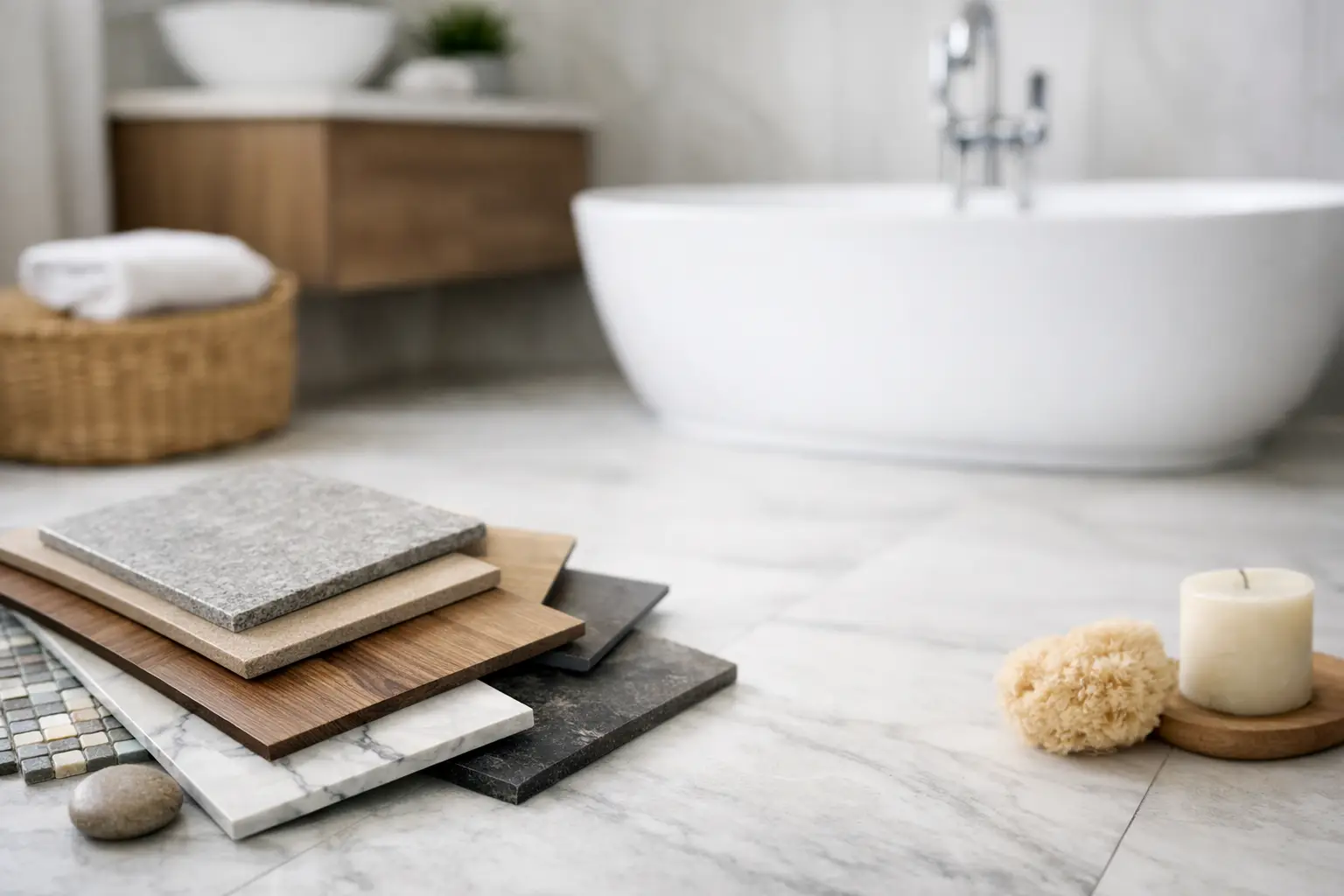
A bathroom floor has to do more than look good. It has to handle water around the tub, humidity after hot showers, dropped tools during repairs, and years of daily traffic without becoming a problem. That is why choosing the best bathroom flooring materials is less about trends and more about performance, maintenance, and how your bathroom actually gets used.
In our experience, the right floor depends on three things first: how much moisture the room sees, how long you want the remodel to last, and how much maintenance you are willing to live with. A busy family bathroom has different needs than a powder room, and a primary bath with a walk-in shower has different demands than a guest bath used once a week.
What matters most in bathroom flooring
Bathroom flooring lives in a harder environment than almost any other floor in the house. Water gets tracked out of showers, toilet seals can fail, and poor ventilation can keep moisture sitting longer than expected. So before looking at colors and patterns, it helps to focus on the practical side.
Water resistance is the first priority. Some materials are truly waterproof, while others are only water-resistant and depend heavily on proper installation. Slip resistance matters too, especially for homes with kids, older adults, or anyone planning to age in place. Then there is durability. A floor might look great on day one but show wear quickly if it cannot handle traffic, cleaning, and humidity.
Cost also matters, but material price alone does not tell the full story. Installation, prep work, subfloor condition, and long-term maintenance all affect the real value of the floor.
Best bathroom flooring materials for most homes
Porcelain tile
For many homeowners, porcelain tile is still the strongest all-around choice. It handles water extremely well, holds up to heavy use, and gives you the widest range of design options. You can get clean modern finishes, wood-look planks, stone-look surfaces, or classic patterns without sacrificing performance.
Porcelain is denser than standard ceramic, which helps it resist moisture and wear. It is especially useful in full bathrooms where floors regularly get wet. If installed correctly over a sound subfloor with proper waterproofing where needed, it can last for many years.
The trade-off is comfort and cost. Tile is harder and colder underfoot than some other options. It also requires skilled installation. Uneven tile, poor grout work, or weak floor prep usually leads to problems later. In many remodels, tile is the material that gives the best long-term result, but it is not usually the cheapest upfront option.
Ceramic tile
Ceramic tile is another solid option and often comes in at a lower cost than porcelain. In a powder room or lower-moisture bathroom, it can perform very well. It also offers a lot of style flexibility and is easier on the budget for homeowners who want a tiled bathroom without pushing the project cost too high.
That said, ceramic is generally a bit less dense and durable than porcelain. In a heavily used bathroom, especially one with frequent water exposure, porcelain often has the edge. Ceramic still works well, but the installation quality becomes even more important.
Luxury vinyl plank and luxury vinyl tile
Luxury vinyl has become a popular answer for homeowners who want a cleaner budget, faster installation, and a softer feel underfoot. Many LVP and LVT products are waterproof or highly water-resistant, and they do a good job standing up to normal bathroom moisture when installed properly.
This material is especially attractive when homeowners want the look of wood or stone without the cost and maintenance of the real thing. It is more forgiving underfoot than tile and can be a smart option for guest baths, secondary bathrooms, or remodels where subfloor conditions make tile less practical.
The caution with luxury vinyl is that product quality varies a lot. A better-grade product with a stable core and strong wear layer performs far better than bargain material. Also, while the surface may be waterproof, the overall floor still depends on good seam work, proper edge detailing, and careful installation around toilets, tubs, and vanities.
Natural stone
Natural stone gives a bathroom a high-end look that is hard to match. Materials like marble, slate, and travertine can make a bathroom feel custom and substantial. For upscale primary bathrooms, it is often chosen for visual impact as much as function.
But stone comes with real maintenance requirements. Many stone products are porous and need sealing. Some are more prone to staining or etching, and some can be slippery depending on the finish. Stone also tends to cost more, both in material and labor.
For homeowners who want a premium finish and are willing to maintain it, stone can be an excellent choice. For families who want easy upkeep, it is often more floor than they actually need.
Bathroom flooring materials that depend on the situation
Sheet vinyl
Sheet vinyl can still make sense in certain bathrooms, especially where budget is tight and moisture protection is the top priority. Because it comes in large sheets with fewer seams, it can do a good job resisting water penetration.
The downside is appearance and repair. While some sheet vinyl products look better than they used to, they generally do not offer the same elevated finish as tile or higher-end luxury vinyl. If damaged, repair is not always simple. For value-focused projects, though, it remains a practical choice.
Engineered wood
Engineered wood is not usually at the top of the list for the best bathroom flooring materials, but some homeowners ask about it because they want continuity with nearby flooring. In a low-moisture bathroom or powder room, it can sometimes work better than solid hardwood.
Still, wood-based products in bathrooms are always a risk compared with tile or vinyl. Moisture, standing water, and plumbing leaks can cause swelling, warping, or surface damage. If the room sees regular shower use, there are usually better options.
Waterproof laminate
Newer waterproof laminate products have improved, and some perform better than older laminate floors that failed quickly around moisture. In the right bathroom, they can be serviceable and cost-effective.
Even so, this category still depends heavily on product quality and installation precision. If water gets where it should not, laminate is less forgiving than tile or better-grade vinyl. For many bathroom remodels, homeowners choose vinyl instead because it offers more peace of mind.
What to avoid in most bathrooms
Solid hardwood is rarely the right call for a bathroom. It looks great, but repeated moisture exposure and humidity swings make it a poor fit in most real-world conditions. Carpet is another material that should usually stay out of bathrooms. It traps moisture, holds odors, and becomes harder to keep clean over time.
These options may work briefly in older homes or very low-use spaces, but they usually create maintenance issues that are expensive to correct later.
How to choose the right floor for your bathroom
If you want the safest long-term choice, porcelain tile is hard to beat. It performs well, adds value, and fits nearly any bathroom style. If budget and comfort matter more, luxury vinyl is often the practical alternative. If you want a premium custom look and accept the maintenance, natural stone can be worth it.
It also helps to think about the bathroom as part of the full remodel. Flooring does not stand alone. The right floor needs to work with the shower base, toilet flange height, vanity installation, transitions to nearby rooms, and the condition of the subfloor underneath. A floor material that looks ideal on paper can become the wrong choice if the room has structural issues, past water damage, or layout changes planned.
That is why material selection should happen alongside the rest of the bathroom plan, not as an afterthought. In Dallas-Fort Worth homes, where we often see bathrooms with aging tile, outdated vinyl, soft subfloors, or plumbing-related floor damage, the best result usually comes from treating the floor as part of the full system rather than just a surface finish.
The installation matters as much as the material
Even the best flooring choice can fail if the prep work is rushed. Uneven subfloors, poor waterproofing, loose toilet connections, and bad transitions are what turn a flooring upgrade into a callback. A bathroom floor should feel solid, drain-related penetrations should be handled carefully, and moisture-prone areas should be built with durability in mind.
That is where professional planning makes a difference. At Wisez Improvement, we look at flooring choices through the same lens as the rest of the bathroom – performance first, appearance second, and no shortcuts on the parts homeowners do not see.
If you are comparing materials, the smartest question is not just which floor looks best. It is which one will still look good and hold up after years of real use in your home. Choose the floor that matches your bathroom, your budget, and the way your household actually lives.