
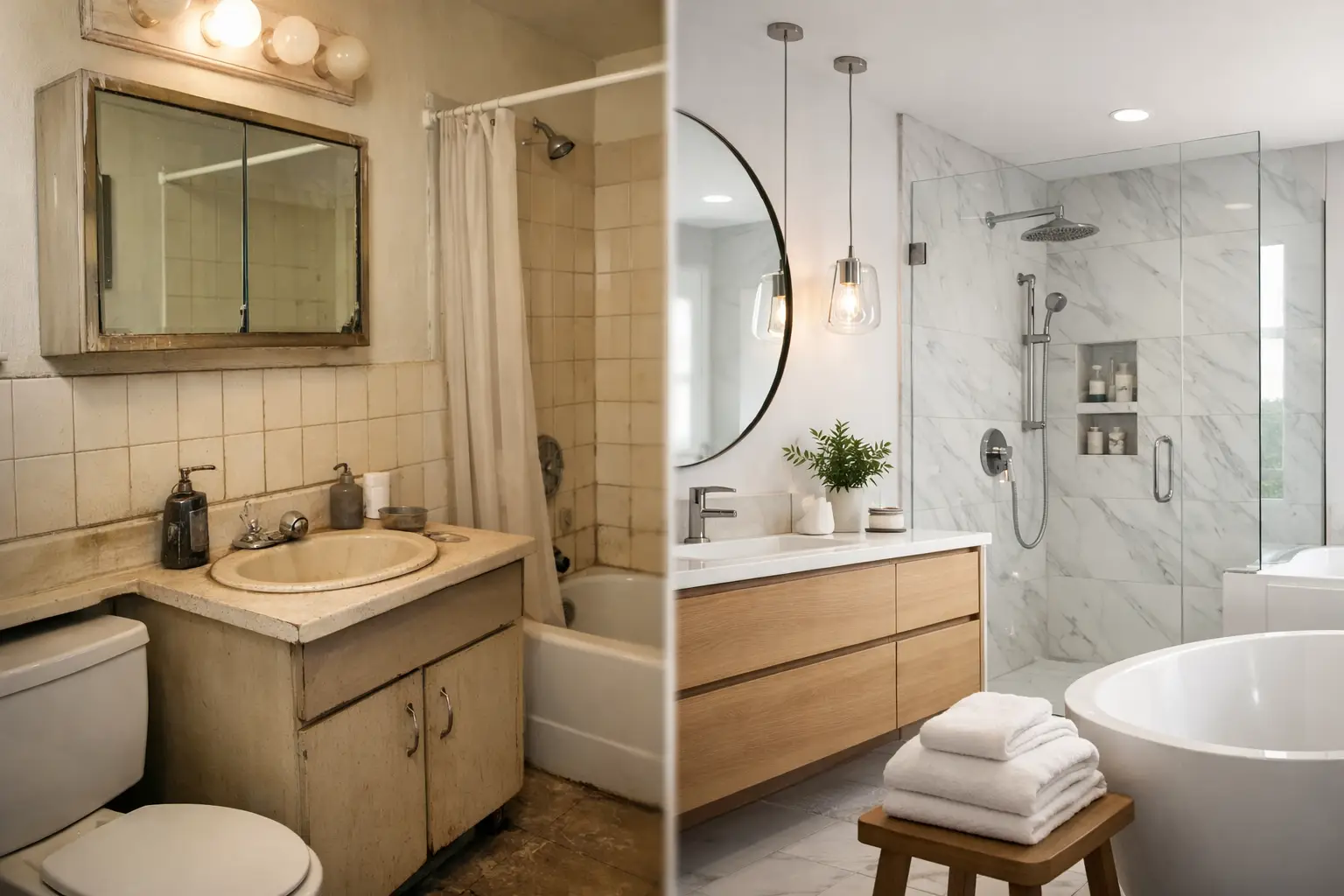
A bathroom usually tells you what is not working within five minutes. The shower feels cramped, the vanity has no storage, the tile looks tired, or a plumbing issue keeps showing up no matter how many small fixes you try. That is why bathroom makeover before after examples are so useful. They show what changed, why it worked, and which upgrades made the biggest difference in daily use.
For homeowners in Dallas-Fort Worth, the best remodels are not just about making a bathroom look newer. They solve layout problems, improve function, and hold up to real household use. The examples below reflect the kinds of transformations that matter most – better storage, easier cleaning, improved lighting, updated plumbing fixtures, and a more comfortable space overall.
Bathroom makeover before after examples that solve real problems
The strongest before-and-after results usually start with one clear issue. Sometimes it is a dated look, but more often it is a bathroom that simply does not work well anymore.
1. Builder-grade hall bath to clean, durable family bathroom
Before, this type of bathroom often has a basic one-piece mirror, worn laminate vanity, standard tub surround, and poor lighting over the sink. It functions, but it feels flat and usually shows wear quickly.
After, a practical upgrade might include a new vanity with drawers, quartz or stone countertop, framed mirror, improved light fixture, and large-format tile around the tub or shower area. This is a common makeover because it changes the room without forcing a full layout move.
What makes this transformation work is balance. Homeowners get a more polished look, but the real gain is storage and easier maintenance. Large-format tile means fewer grout lines to clean, and better vanity design keeps family clutter off the counter.
2. Tight primary bathroom to open walk-in shower layout
Before, many older primary bathrooms have an oversized drop-in tub that rarely gets used and a separate shower that feels too small. The room takes up square footage without delivering comfort.
After, removing the unused tub and combining that area into a larger walk-in shower can completely change how the room functions. Add custom glass, a built-in niche, updated tile, and a better shower valve setup, and the bathroom starts to feel custom instead of cramped.
This is one of the most dramatic bathroom makeover before after examples because the visual change is immediate. The trade-off is resale preference. Some buyers still want a tub in the primary bath, so this choice depends on the home, the neighborhood, and how long the owner plans to stay.
3. Old vanity wall to double-sink setup that actually works
Before, one narrow sink and limited counter space can create daily traffic jams. In busy households, that is not a style problem. It is a routine problem.
After, a longer custom vanity with dual sinks, better drawer storage, and improved task lighting can make mornings much easier. If plumbing lines can stay close to their original location, this upgrade is often more straightforward than homeowners expect.
The key here is measurement. A double vanity only helps if there is still enough room to move comfortably. In some bathrooms, one larger sink with better storage makes more sense than forcing in two small ones.
4. Leaky shower and stained tile to full waterproofed rebuild
Before, surface damage often tells only part of the story. Loose tile, cracked grout, stained corners, or recurring leaks can point to issues behind the wall or under the shower base.
After, a full shower rebuild with proper waterproofing, new backer systems, updated plumbing fixtures, and fresh tile gives homeowners more than a cosmetic improvement. It corrects the underlying failure and protects the home from further damage.
This kind of makeover matters because repairs and remodeling meet in the same project. A bathroom can look fine in pictures and still have moisture damage underneath. That is why experienced planning matters. The finish materials get the attention, but the hidden work is what determines whether the result lasts.
5. Dark guest bath to brighter, more welcoming space
Before, a guest bathroom may have dark wall colors, outdated brass fixtures, a heavy vanity, and a shower curtain that cuts the room in half visually.
After, lighter tile, a floating or more compact vanity, updated hardware, and a clear glass shower enclosure can make the room feel noticeably larger. Even without changing the footprint, the bathroom starts to feel cleaner and more open.
Lighting does a lot of work in this type of remodel. Swapping a single dim fixture for layered lighting around the mirror can change the room more than expensive decorative upgrades alone.
What the best before-and-after bathroom remodels have in common
Good transformations do not happen because every finish is expensive. They happen because the right problems get solved in the right order.
Function comes before finishes
A new vanity color will not fix poor storage. Beautiful tile will not solve a shower that leaks. The best remodel plans start with how the bathroom is used every day. That includes traffic flow, water performance, storage needs, cleaning demands, and lighting.
This is where many homeowners save money in the long run. Instead of replacing materials one piece at a time, they address the root issue and avoid redoing work later.
Layout changes are helpful, but not always necessary
Some of the strongest before-and-after results come from staying within the existing footprint. Keeping plumbing close to its current location can reduce labor while still allowing major visual and functional improvement.
That said, layout changes are worth it when the room fundamentally does not work. If the shower door hits the toilet, the vanity blocks movement, or storage is almost nonexistent, moving components may be the right call.
Material choice affects maintenance as much as appearance
A bathroom is a wet, high-use environment. Homeowners often focus on color and style first, but durability matters just as much. Porcelain tile, quality fixtures, solid-surface counters, and properly installed glass tend to hold up better under daily use.
The right choice also depends on the household. A family bathroom has different wear patterns than a guest bath. A rental property may need simpler, tougher finishes than a primary suite designed for long-term comfort.
More bathroom makeover before after examples by upgrade type
Not every makeover needs a complete gut renovation. Some improvements create strong before-and-after results by targeting one high-impact area.
6. Tub-to-shower conversion for easier access
Before, an old tub may be difficult to step into and rarely used. After, a low-threshold shower with grab-bar blocking, slip-resistant tile, and glass enclosure creates a safer and more convenient space.
This is especially useful for aging-in-place planning or for households that prefer quick, practical daily use over a soaking tub.
7. Basic shower wall to custom tile focal point
Before, a fiberglass surround does the job but offers little style. After, tiled walls with a niche, accent strip, or contrasting floor pattern create a more custom finish.
This works best when the installation underneath is just as solid as the tile on top. Appearance matters, but shower construction matters more.
8. Cluttered vanity corner to built-in storage solution
Before, toiletries pile up because the room has no cabinet space. After, a recessed medicine cabinet, taller vanity, or linen tower adds storage without making the bathroom feel crowded.
Storage upgrades often produce some of the most satisfying before-and-after results because they improve the room every single day.
9. Outdated fixture mix to coordinated hardware and plumbing
Before, the bathroom may have mismatched finishes from years of piecemeal updates. After, coordinated faucets, shower trim, handles, lighting, and accessories make the room feel intentional.
This is a smaller-scale makeover, but it can sharpen the entire space when the tile and cabinetry are still in good condition.
10. Problem bathroom to polished resale-ready update
Before, peeling paint, old caulk, dated fixtures, and visible wear can make the bathroom feel like a project buyers will have to take on themselves. After, a clean renovation with neutral finishes, updated tile, modern vanity, and reliable plumbing gives the home a stronger showing.
For resale, the smartest upgrades are usually broad-appeal choices. Very specific design trends can look great, but timeless materials often make more financial sense.
How to evaluate a bathroom before-and-after idea for your home
Start by asking what frustrates you most. If the answer is storage, spend there first. If it is a shower that leaks or a layout that wastes space, those issues should lead the project.
It also helps to separate must-haves from nice-to-haves. Custom glass may be worth it in a primary bathroom, while a guest bath might benefit more from durable finishes and a simpler fixture package. Budget should not only cover visible materials. It should also leave room for plumbing corrections, waterproofing, and installation quality.
A dependable contractor can help you understand what is cosmetic, what is structural, and what will create the best return in comfort, performance, and long-term value. That practical approach is what turns a bathroom makeover from a nice idea into a finished result that feels right every day. Companies like Wisez Improvement see this firsthand – the best remodels are the ones that solve real problems and look good doing it.
If you are comparing ideas, do not just look at the after photo. Look at what changed behind the walls, under the tile, and in the way the room works. That is where a successful bathroom makeover earns its value.