
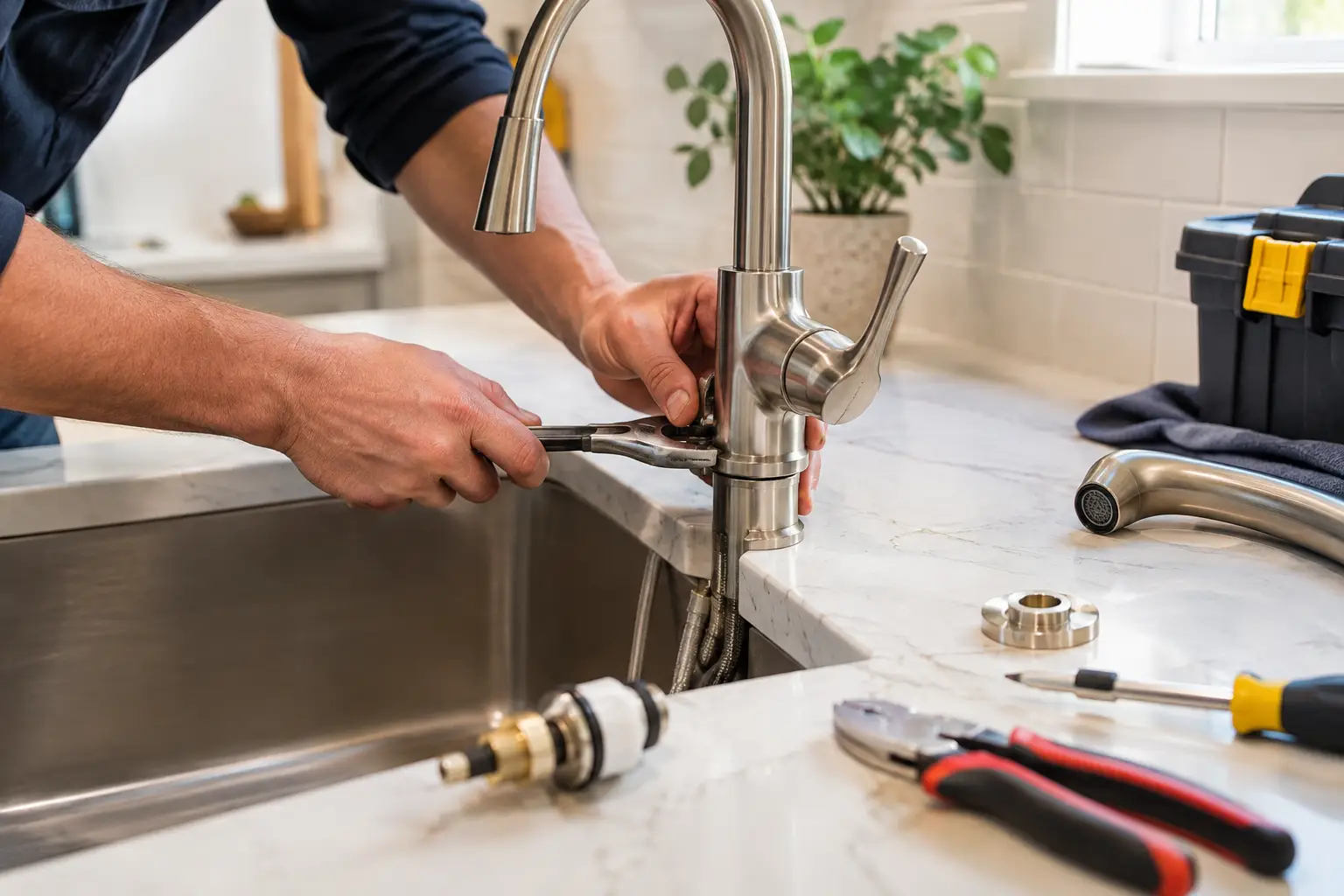
A faucet that drips through the night, squeals when you turn it on, or leaves water around the base can make a small bathroom problem feel bigger than it is. The question is whether to repair or replace faucet components before wasted water, cabinet damage, or a sudden failure creates a more expensive plumbing issue. For Dallas-Fort Worth homeowners, the right answer usually comes down to the faucet’s condition, age, installation quality, and your plans for the room.
Start With the Type of Faucet Problem
Not every faucet issue calls for a new fixture. Many common problems come from a worn internal part rather than a failed faucet body. A steady drip from the spout, for example, may be caused by a worn cartridge, washer, O-ring, or valve seat. If the fixture is otherwise solid, a targeted repair can restore normal operation at a reasonable cost.
A loose handle is also often repairable. The mounting screw may need tightening, the handle adapter may be worn, or an internal component may need to be replaced. Mineral buildup can affect water flow and spray patterns, especially on aerators, but cleaning or replacing that small part is usually straightforward.
The situation changes when water is leaking from the base of the faucet, under the sink, or inside the vanity. A leak under the counter may still be a supply-line or connection issue, but it can also point to a failing faucet body or corroded mounting hardware. The visible problem matters, but so does what the water has been doing out of sight. Swollen cabinet panels, peeling finishes, mildew odors, and stained drywall deserve prompt attention.
When Faucet Repair Makes Sense
Repair is usually the practical choice when the fixture is relatively new, has a quality construction, and matches the rest of the bathroom. Replacing a cartridge or seal in a dependable faucet is often more sensible than removing a fixture that still has years of useful service left.
A repair also makes sense when the problem is isolated. If the faucet has good water pressure, a stable base, smooth handle movement, and no corrosion, the issue may be limited to one replaceable component. In that case, replacing the failing part can solve the problem without changing the look of the vanity or disrupting surrounding finishes.
Homeowners should keep in mind that faucet repairs are not always universal. Some brands use proprietary cartridges and parts, and older models may be difficult to identify. Before committing to a repair, a plumber should confirm that replacement parts are available and that the fixture can be disassembled without causing further damage.
Signs It Is Time to Replace the Faucet
Replacement becomes the better long-term decision when a faucet has multiple problems or has reached the end of its service life. Repeated repairs are a clear warning sign. Replacing a cartridge once is normal. Replacing internal parts, tightening the handle, addressing leaks, and dealing with poor flow over a short period can mean the whole fixture is wearing out.
Corrosion is another reason to replace rather than repair. Pitting on the finish may be cosmetic, but corrosion around the base, valve body, connections, or mounting hardware can compromise function and make removal more difficult later. In North Texas homes, mineral deposits from hard water can also build up over time and affect both the appearance and performance of bathroom fixtures.
Consider replacement if you notice any of these conditions:
- Cracks in the faucet body, handle, or spout
- Water leaking from more than one location
- A faucet that wobbles because its mounting system is failing
- Severe rust, corrosion, or finish deterioration
- Parts that are discontinued or unavailable
- A fixture that no longer fits the bathroom’s layout or needs
A dated faucet is not automatically a failed faucet, but replacement can be worthwhile during a vanity update, new countertop installation, or complete bathroom remodel. Installing a new fixture while the sink and countertop are accessible is often more efficient than waiting for an old faucet to fail later.
Consider the Cost Beyond the Fixture
The purchase price of a faucet is only one part of the decision. A low-cost fixture may save money at checkout but create problems if its components wear quickly, its finish degrades, or replacement parts are hard to find. A better-quality faucet from a reputable manufacturer often offers stronger construction, easier serviceability, and a more dependable warranty.
Installation conditions also affect the cost. If existing shutoff valves are seized, supply lines are deteriorated, or the faucet is tightly installed behind a deep vanity, what appears to be a simple replacement can require additional plumbing work. If water has damaged the cabinet floor or wall behind the vanity, correcting that damage should be part of the plan rather than an afterthought.
For a repair, compare the cost of labor and parts with the age and quality of the existing fixture. There is no benefit in putting significant labor into a low-quality faucet that is likely to develop another problem soon. On the other hand, replacing a premium fixture because of a single worn cartridge can be unnecessary.
Match the New Faucet to the Bathroom
If replacement is the right call, choose a faucet that works with the sink, countertop, and daily routine. Start with the mounting configuration. Bathroom sinks may have one hole, three holes, or a widespread layout with separate hot and cold handles. A new faucet must match the existing hole pattern or be installed as part of a planned countertop or sink update.
Spout height and reach matter more than many homeowners expect. A faucet that is too short may cause splashing near the back of the sink. One that is too tall or extends too far forward can splash onto the counter or make the basin awkward to use. This is especially relevant with vessel sinks, compact powder-room vanities, and shallow basins.
Finish is another practical consideration. Chrome remains easy to match and clean, while brushed nickel, matte black, brass, and other finishes can create a more intentional design direction. For a shared family bathroom, a finish that hides water spots and fingerprints may be easier to maintain. For a remodel, faucet selection should coordinate with cabinet hardware, mirror lighting, shower trim, and towel accessories without forcing every metal finish to be identical.
Don’t Ignore What Is Under the Sink
A leaking faucet can be the visible symptom of a larger plumbing concern. During a repair or replacement, inspect the shutoff valves, flexible supply lines, drain assembly, and P-trap. Older valves may not fully shut off, and aging supply lines can become a weak point after being moved during faucet work.
This is also the right time to check for slow leaks at the drain or around the sink rim. A bathroom vanity can hide water damage for months because the cabinet absorbs small leaks before anyone notices them. Addressing the whole area at once helps protect the new fixture and the investment in the vanity, countertop, and flooring.
Repair or Replace Faucet During a Remodel?
During a bathroom remodel, replacement is usually the smarter choice if the existing faucet is old, mismatched, or showing any wear. Once new tile, cabinetry, countertops, and lighting are in place, an outdated faucet can stand out for the wrong reasons. More importantly, leaving a questionable fixture in a newly finished bathroom risks a future leak that can damage new materials.
That does not mean every remodeling project requires the most expensive fixture available. The best choice is one that fits the project budget, works properly with the sink, and offers reliable components. A well-installed midrange faucet can be a better value than a high-priced option selected only for appearance.
Wisez Improvement helps homeowners evaluate faucet problems in the context of the entire bathroom. Whether the job involves a simple plumbing repair or a full vanity and fixture update, the goal is the same: solve the source of the issue and leave the space functioning properly.
If your faucet is dripping, corroded, loose, or leaking under the sink, avoid waiting until the cabinet shows the damage. A professional assessment can clarify whether a repair will hold up or whether a replacement will give you a cleaner, more dependable result.