
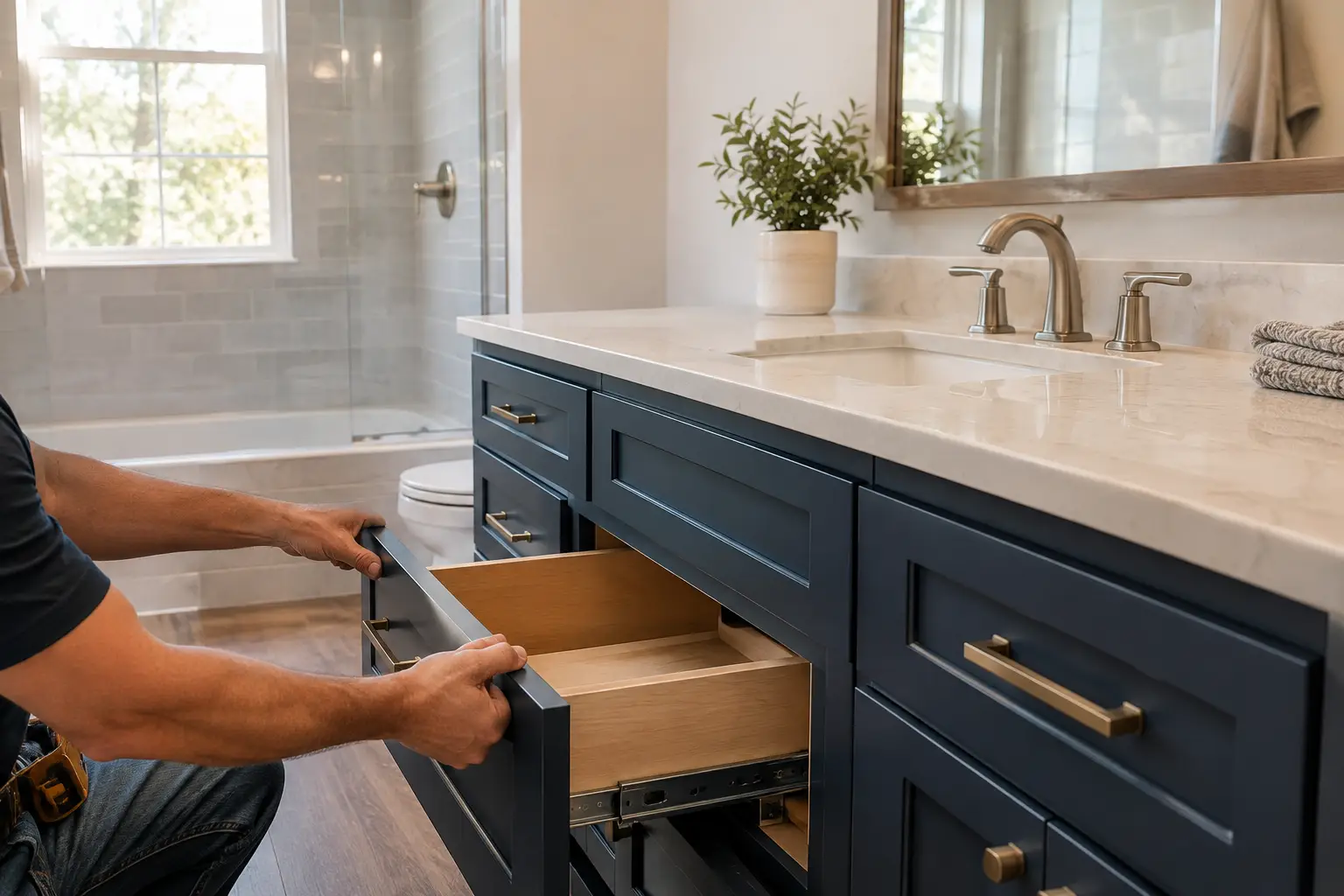
A bathroom can have new tile, a clean shower surround, and updated fixtures yet still feel frustrating if the vanity is undersized, poorly placed, or short on storage. Vanity cabinets do more than hold a sink. They set the room’s working space, hide plumbing, organize daily essentials, and influence how finished the entire bathroom feels.
For Dallas-Fort Worth homeowners, the right choice comes down to more than color and style. Cabinet dimensions, plumbing locations, household routines, moisture resistance, and installation quality all affect whether a new vanity works well for years or becomes an expensive compromise.
Start With the Bathroom’s Actual Layout
The first decision is not door style or countertop material. It is available space. Measure the wall where the vanity will sit, then account for door swings, shower clearance, toilet placement, and the path through the room. A cabinet that technically fits can still make a bathroom feel cramped if it blocks traffic or prevents a door from opening fully.
Standard vanity widths commonly range from 24 to 72 inches, but the best width depends on how the bathroom is used. A compact powder room may need a 24- or 30-inch cabinet that preserves open floor space. A primary bathroom often benefits from a wider single vanity or a double vanity that gives two people room to get ready at once.
Depth matters as much as width. A typical vanity is about 21 inches deep, which works in many bathrooms. In a narrow hall bath, a shallower cabinet may improve clearance. The trade-off is reduced drawer space and countertop room. It is usually better to choose a cabinet designed for the room than force a standard-depth model into a tight layout.
Single or Double Sink?
A double vanity is useful when two people regularly share the bathroom at the same time. It offers personal counter space and separate storage zones, which can reduce morning congestion. However, two sinks require more cabinet width, more plumbing work, and often more countertop expense.
In some bathrooms, one larger sink with generous counter space is the smarter choice. This is especially true when a double vanity would leave very little room for drawers or make the bathroom feel crowded. A well-designed single vanity can be more practical than two small basins squeezed into a wall that is too short.
Choose Vanity Cabinets Around Daily Storage
A vanity should store the items used in that bathroom, not simply fill an empty wall. Before selecting a cabinet, consider what needs to stay within reach: towels, cleaning supplies, hair tools, makeup, grooming products, medication, or extra toilet paper. The answers should guide the cabinet configuration.
Drawers are often more convenient than deep open cabinets for smaller items. They make it easier to see and organize products without kneeling down and reaching behind plumbing. Full-extension drawer slides and soft-close hardware are worthwhile upgrades in a bathroom used every day. They improve access and help the cabinet hold up under repeated use.
Doors still have a role, particularly beneath the sink where plumbing takes up space. Adjustable shelves can make that area useful for taller containers and cleaning supplies. For families, a mix of drawers and cabinet storage usually provides the best balance.
Open shelving can create an airy, updated look, but it requires discipline. Folded towels and decorative baskets look good when maintained. Loose bottles, cords, and everyday clutter do not. In a busy family bathroom, closed storage generally keeps the room looking cleaner with less effort.
Select Materials That Handle Bathroom Moisture
Bathrooms are hard on cabinetry. Steam, splashes, damp towels, and occasional plumbing leaks can damage poorly made vanity cabinets over time. The material beneath the finish matters just as much as the finish itself.
Solid wood and high-quality plywood construction tend to perform well when properly sealed and installed. They offer strength for heavy stone tops and repeated drawer use. Wood cabinets may cost more, but they can be a sound choice for a primary bathroom or a long-term remodel.
Medium-density fiberboard, often called MDF, can provide a smooth painted finish and is common in many vanity lines. Quality varies significantly. Moisture-resistant MDF with a durable factory finish can work well, while lower-grade material may swell if water reaches exposed edges. Particleboard is usually the least forgiving option in a wet environment, especially around sink plumbing and on bathroom floors.
Cabinet finishes should also match the room’s demands. Painted vanities provide a clean, flexible look and work with traditional, transitional, and modern designs. Stained wood brings warmth and can hide minor wear, though the grain and color should coordinate with flooring and wall tile. Matte finishes reduce the appearance of fingerprints, while glossy surfaces reflect light but may show water spots more easily.
Match the Style to the Rest of the Remodel
The vanity often becomes the visual anchor of a bathroom, so it should relate to the tile, shower glass, fixtures, and lighting. That does not mean every finish must match exactly. A room with all-white surfaces and chrome fixtures may benefit from a warm wood vanity for contrast. A darker cabinet can add depth in a larger, well-lit bathroom, while a light vanity can help a small bathroom feel more open.
Floating vanities are popular because they expose more floor and create a lighter appearance. They can make smaller bathrooms feel larger, and the space below is easy to clean. Installation must be precise, though. A wall-mounted cabinet needs secure blocking or framing support, particularly when paired with a heavy countertop.
Freestanding vanities offer a more familiar furniture-style look and can be a practical option when floor support and storage capacity are priorities. They also hide wall and floor variations more easily than floating cabinets. Either option can look polished when the size, finish, and installation details are handled correctly.
Plan for Plumbing Before Ordering
A vanity replacement can reveal plumbing issues that were hidden behind the old cabinet. Drain lines may be too high, shutoff valves may be corroded, or supply lines may need to move for a new drawer layout. These details should be reviewed before the cabinet arrives, not after it is sitting in the bathroom.
This is particularly relevant when changing from a pedestal sink to a vanity, moving from one sink to two, or installing a floating cabinet. Plumbing locations can determine which drawer configurations will work and whether modifications are needed. A cabinet with beautiful deep drawers is not useful if the drain pipe prevents those drawers from opening.
Countertop and sink choices matter here as well. An undermount sink provides a clean edge and makes countertop cleanup easier, while a vessel sink can create a strong design statement. Vessel sinks often require a lower cabinet height or a taller faucet, so the finished height should be planned carefully. Comfort matters more than following a trend.
Do Not Treat Installation as a Final Detail
Even high-quality vanity cabinets can perform poorly when installation is rushed. Cabinets must be level, securely fastened, properly shimmed, and aligned with walls that may not be perfectly straight. Doors and drawers need adjustment after the cabinet is set, and countertop installation should occur only after the base is stable.
Water protection is equally critical. Caulk at wall connections, sealed countertop edges, and correctly connected supply and drain lines help prevent damage that may not be visible right away. If there are existing signs of a leak, soft flooring, or wall damage, repair the source before installing new cabinetry. Covering a plumbing problem with a new vanity only delays a larger repair.
A professional bathroom contractor can coordinate the cabinet, plumbing, countertop, backsplash, fixture, and finish work in the right order. That reduces the risk of incompatible parts, last-minute changes, and damage to newly completed surfaces. Wisez Improvement helps homeowners address both the design decisions and the behind-the-wall details that affect the finished result.
Make the Choice That Fits How You Live
The best vanity is not always the largest, most expensive, or most dramatic option. It is the one that gives your household enough storage, preserves comfortable movement through the room, handles daily moisture, and supports the look you want to live with.
Before making a final selection, bring measurements, photos of the existing bathroom, and a clear list of what is not working now. A vanity that solves those everyday problems will feel like an upgrade long after the new finish has stopped being new.