
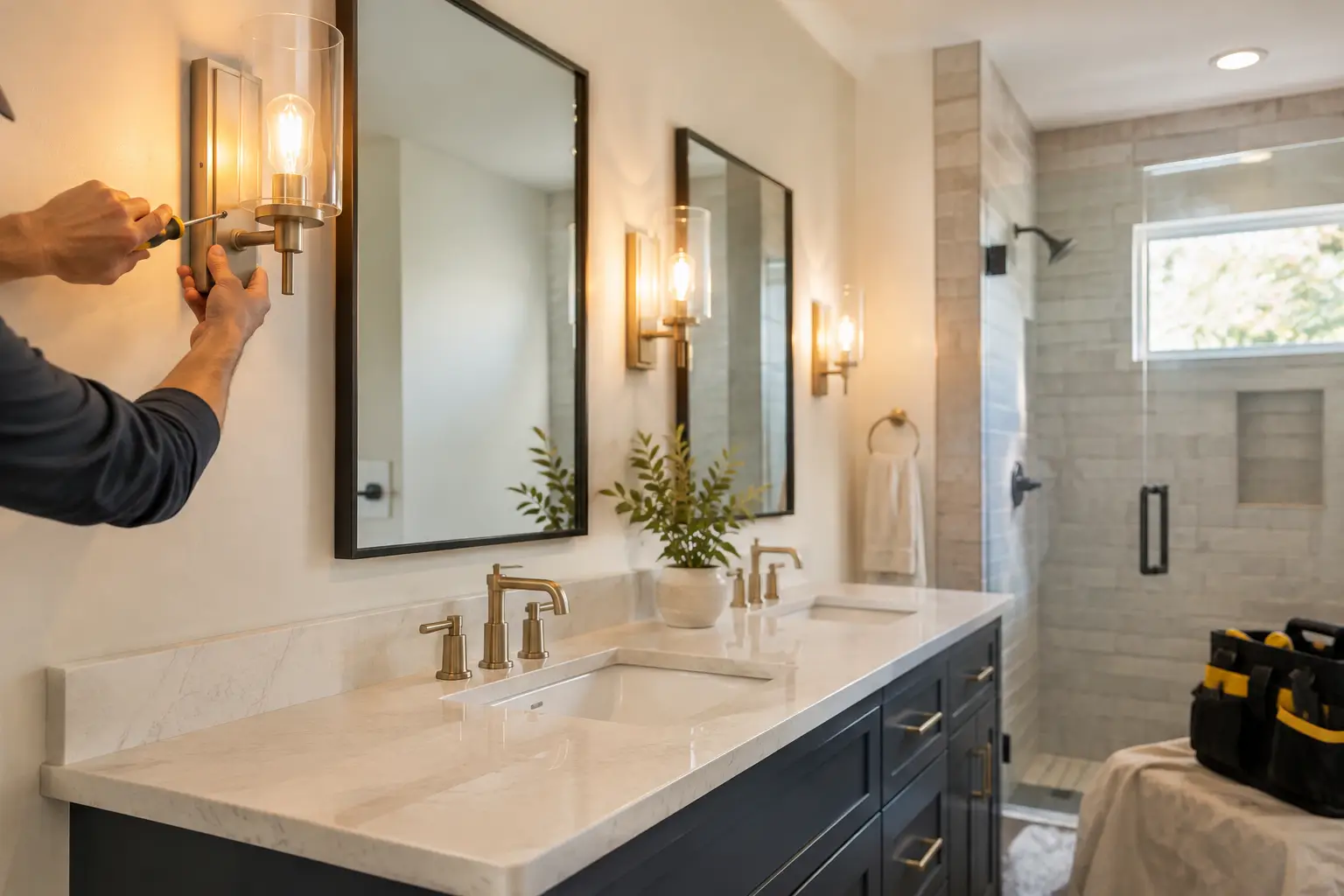
A bathroom can have new tile, a beautiful vanity, and quality fixtures, yet still feel unfinished if the lighting is wrong. The best bathroom lighting ideas do more than brighten the room. They make grooming easier, improve safety, highlight the design choices you invested in, and create a calmer atmosphere at the end of the day.
For Dallas-Fort Worth homeowners planning a bathroom update, the right approach is usually layered lighting. One ceiling fixture rarely handles every need well. A practical plan combines lighting for the mirror, the room as a whole, and specific areas such as a shower, toilet room, or tub.
Best Bathroom Lighting Ideas Start With Layers
Layered lighting gives a bathroom flexibility. You need clear, even light when shaving, applying makeup, helping children get ready, or cleaning. You may also want softer light for an early morning routine or a late-night trip to the bathroom.
A well-planned bathroom typically includes three types of light: ambient lighting for general visibility, task lighting at the vanity, and accent lighting for visual interest or low-level nighttime use. These layers do not all need to be dramatic. In many successful remodels, the best lighting is the lighting that feels natural because each area has enough illumination for its purpose.
1. Use Side Sconces at the Vanity
Side-mounted sconces are one of the strongest choices for a bathroom mirror. Installed on both sides of the mirror, they place light closer to the face and reduce the harsh shadows that often come from an overhead vanity bar.
As a general guideline, sconces are often mounted with their centers around 60 to 66 inches from the floor. The ideal height depends on the homeowner, mirror size, ceiling height, and fixture design. A contractor should confirm placement before electrical rough-in, especially when changing a vanity or moving plumbing.
Sconces also help a bathroom look more intentional. A simple pair of matte black, brushed nickel, brass, or chrome fixtures can frame the mirror and tie into the faucet, shower trim, cabinet hardware, or glass enclosure details.
2. Add Over-Mirror Lighting When Space Is Limited
Not every bathroom has wall space for sconces. Narrow vanity walls, medicine cabinets, tall mirrors, and double-vanity layouts can make an over-mirror fixture the more practical option.
Choose a fixture that is wide enough to distribute light across the full mirror, rather than concentrating it in the center. Frosted shades or integrated LED bars tend to soften glare better than exposed bulbs pointed directly downward. The goal is to light the face evenly, not create a bright spot at the top of the mirror and shadows below the eyes.
For a primary bathroom, a combination of side sconces and a modest overhead mirror light can work well. In a powder room, one carefully selected vanity fixture may be enough.
3. Install Recessed Lights for General Illumination
Recessed ceiling lights provide clean, broad ambient light without taking up visual space. They work particularly well in bathrooms with lower ceilings, contemporary designs, or a shower area that needs dedicated illumination.
Placement matters more than the number of fixtures. A recessed light centered directly over a person standing at the vanity can create unflattering shadows, so it should not be the only source of task lighting. Instead, use recessed lights to brighten circulation areas, open floor space, and the shower.
Avoid packing too many recessed fixtures into a small bathroom. Excessive downlighting can make the space feel flat and overly bright. A few well-positioned lights, paired with proper vanity lighting, usually produce a better result.
4. Choose Wet-Rated Fixtures for Showers and Tubs
A shower light must be rated for wet locations. This is not simply a design preference. Bathrooms have moisture, steam, and splash zones that require fixtures designed for those conditions.
A wet-rated recessed fixture is often the cleanest choice for a standard shower. For larger custom showers, especially those with a bench, multiple showerheads, or a darker tile palette, one fixture may not provide enough usable light. Adding a second properly rated fixture can make the enclosure safer and more comfortable without overwhelming it.
Decorative pendant lights and chandeliers can look striking near a freestanding tub, but clearance and electrical safety rules are critical. This idea works best when the bathroom has adequate ceiling height, the fixture is outside restricted areas, and the installation is planned correctly from the start.
Lighting Ideas for Different Bathroom Layouts
Small Bathrooms Need Light Without Visual Clutter
In a small hall bathroom, prioritize the mirror and shower first. A wide vanity light or compact sconces, a single ceiling fixture or recessed light, and a wet-rated shower light may be all the room needs.
Mirrors can help reflect light, but they do not replace it. If a small bathroom has dark wall tile, a dark vanity, or limited natural light, brighter finishes and well-placed lighting will keep it from feeling closed in. Integrated LED mirrors are another space-saving option, though homeowners should consider serviceability and whether they prefer a replaceable fixture over a built-in component.
Primary Bathrooms Can Support More Atmosphere
A larger primary bathroom offers more opportunities to separate function from mood. Recessed lights can cover the room, sconces can serve each vanity, and a decorative ceiling fixture can create a focal point over an open area or freestanding tub.
This is also a good place for toe-kick lighting beneath a floating vanity or cabinet base. It provides a subtle nighttime path without turning on bright overhead lights. It is a small addition, but one that can make a renovated bathroom feel more customized.
Powder Rooms Are a Good Place for Personality
Powder rooms are used briefly, so they can handle bolder choices. A statement sconce, a sculptural pendant, or a distinctive mirror light can bring personality to a compact space. Since detailed grooming is less of a concern, you have more freedom to prioritize the look of the fixture.
Still, the light should be useful. A beautiful fixture that leaves guests in shadow does not solve the problem. Balance the decorative choice with enough general illumination to make the room comfortable and welcoming.
Select the Right Color Temperature and Brightness
For most bathrooms, LEDs in the 2700K to 3000K range create a comfortable, warm-white appearance. A 3000K lamp is often a practical middle ground: clean enough for grooming, but not as cool or clinical as higher color temperatures can feel.
Color rendering is equally important. Look for bulbs or integrated fixtures with a high Color Rendering Index, often listed as CRI 90 or above. Better color rendering helps skin tones, paint, tile, and finishes appear more accurate.
Brightness should be planned across the whole room rather than based on one fixture’s wattage. A dark bathroom, a larger room, or a vanity used by two people may need more total output than a small bathroom with light-colored walls. Dimmable fixtures give you flexibility, but only when the bulbs, fixture, and dimmer switch are compatible.
Put Lighting Controls Where They Make Sense
Separate switches give homeowners better control. A common setup places vanity lighting, recessed ceiling lights, and shower lighting on different controls. In a primary bathroom, toe-kick lighting or a tub-area fixture may have its own dimmer as well.
Dimmer switches are especially useful for overhead lighting. They allow bright light for cleaning and softer light for relaxing. Motion-sensor switches can be helpful in a guest bath, laundry-adjacent bathroom, or children’s bathroom, although some homeowners prefer manual controls in a primary bath where they want predictable operation.
If the bathroom is being fully remodeled, discuss switch placement early. It is easier to create a clean, convenient control layout before drywall, tile, cabinetry, and mirrors are installed.
Coordinate Lighting With the Rest of the Remodel
Bathroom lighting should be selected alongside the vanity, mirror, tile, faucet finish, and shower glass – not as an afterthought. The size of the mirror affects sconce spacing. The vanity width affects the ideal light bar size. Tile layouts, ceiling details, and plumbing locations can all influence fixture placement.
Wisez Improvement helps homeowners coordinate these details during bathroom renovation work, including the practical corrections that may be needed behind the walls before new finishes go in. Addressing lighting, plumbing, and layout together helps prevent last-minute compromises.
The best choice is not always the most decorative fixture or the brightest bulb. It is the lighting plan that fits how your household uses the bathroom, makes daily routines easier, and still looks right years after the remodel is complete.