
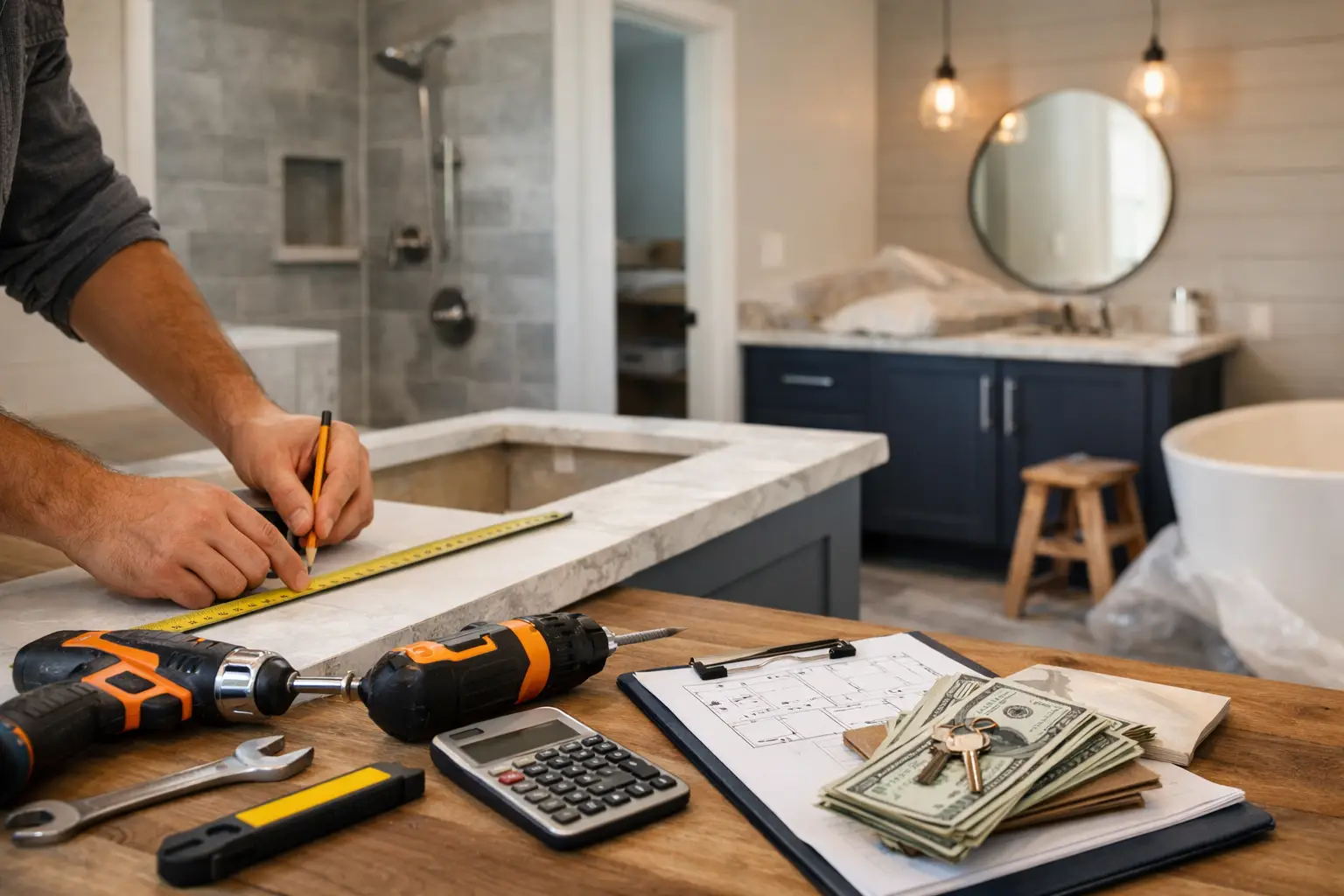
A bathroom remodel rarely comes at a convenient time. A leaking shower pan, failing plumbing, damaged tile, or an outdated layout can move a project from “someday” to a real priority quickly. The right bathroom remodel financing options can help you address the work properly without choosing materials, repairs, or contractors based only on the smallest immediate payment.
For Dallas-Fort Worth homeowners, the best choice depends on the project scope, available savings, home equity, credit profile, and how long you expect to stay in the home. Financing should support a clear remodeling plan, not create pressure to expand the project beyond what your budget can handle.
Start With a Detailed Project Scope
Before comparing loan offers, get clear on what the bathroom needs. Replacing a vanity, toilet, fixtures, and flooring is a very different financial decision from moving plumbing, converting a tub to a walk-in shower, rebuilding a shower enclosure, or correcting water damage behind the walls.
A written estimate should separate the major parts of the work: demolition, plumbing, electrical changes where needed, tile, cabinetry, fixtures, glass, labor, and permit-related costs if they apply. This gives you a realistic number to finance and makes it easier to compare bids fairly. It also helps prevent a common problem: borrowing for the visible upgrades while underestimating the repair work required to make them last.
For older homes, keep room in the budget for conditions that may only become visible after demolition. Water damage, outdated valves, subfloor issues, and previous DIY repairs are not unusual. A sensible financing plan includes a contingency rather than assuming every wall will be clean and every pipe will be in perfect condition.
Bathroom Remodel Financing Options to Consider
There is no single best option for every homeowner. The practical question is whether the financing terms, monthly payment, and repayment period match the value and urgency of your project.
Paying With Savings or Cash
Using savings avoids interest, lender fees, and a monthly payment. For a smaller bathroom refresh or a repair-driven project, cash may be the most straightforward route. It can also make scheduling simpler because there is no lender approval process involved.
The trade-off is liquidity. Draining an emergency fund to install new tile or a custom shower can leave a household exposed if a car repair, medical expense, or HVAC failure follows. If paying cash would leave little financial cushion, consider funding part of the project from savings and financing the balance.
Home Equity Loan
A home equity loan lets you borrow against the equity you have built in your home, typically with a fixed interest rate and fixed monthly payment. This can work well for a defined, larger remodel because you know the payment amount and repayment schedule before the project begins.
Since the home secures the loan, qualification and closing can take more time than an unsecured loan. There may also be appraisal, closing, or lender fees. A home equity loan is generally better suited for planned renovation work than an urgent plumbing repair that needs attention right away.
Home Equity Line of Credit
A HELOC also uses your home equity, but it functions more like a revolving line of credit. You can draw funds as needed during an available draw period, which can be useful when a renovation is completed in stages or when the final scope may change after demolition.
The flexibility is helpful, but many HELOCs have variable interest rates. Your payment can increase if rates rise. Homeowners should also be disciplined about draws. Available credit is not a reason to add unnecessary upgrades or make decisions without a final price and plan.
Personal Home Improvement Loan
An unsecured personal loan does not use your home as collateral. Approval can be faster than home equity financing, making it a reasonable option for homeowners who need to act quickly or who do not want to borrow against their property.
Interest rates and loan amounts vary widely based on credit and income. Compared with a secured loan, the rate may be higher, and repayment periods are often shorter. Still, a personal loan can be a good fit for a mid-range bathroom remodel when the monthly payment is manageable and the project has a clear, fixed cost.
Contractor Payment Plans
Some remodeling companies offer payment plans through third-party financing providers. These programs can be convenient because the application process is tied to the project and may provide a fast decision. Promotional terms can sometimes be attractive, particularly if you can repay the balance before a promotional period ends.
Read every term before accepting. Ask whether the rate is fixed, whether interest is deferred, when interest starts accruing, and what happens if the balance is not paid by the deadline. A low initial payment may not tell the whole story. The total cost of financing matters more than the first month’s payment.
Credit Cards
A credit card may make sense for a limited purchase, such as a fixture allowance or a small repair, especially if you have a true zero-percent promotional offer and a firm plan to pay it off on time. It is usually a riskier choice for a full bathroom renovation.
High standard interest rates can turn a manageable project into expensive long-term debt. If the credit limit is heavily used, it can also affect your credit utilization. Use cards carefully and avoid treating a temporary promotion as a long repayment plan.
Match the Loan Term to the Work Being Done
A new faucet and a full custom shower should not necessarily be financed the same way. Short-lived purchases and minor repairs are usually better handled with savings or short-term financing. Durable improvements that solve layout, accessibility, plumbing, and water-management problems may justify a longer repayment period when the terms are reasonable.
That does not mean every upgrade should be financed over many years. Longer terms can lower the monthly payment while increasing the total interest paid. Review both numbers before deciding: what you will pay each month and what the project will cost after all interest and fees.
If resale is part of your decision, be realistic. An updated bathroom can improve daily comfort and buyer appeal, but it does not guarantee dollar-for-dollar recovery. Choose improvements that fit your home, neighborhood, and future plans rather than borrowing based on an assumed return.
Questions to Ask Before You Apply
The financing conversation should be as clear as the remodeling estimate. Before applying, confirm the total project amount, the deposit and payment schedule, and whether the estimate includes the materials and labor you expect.
Ask lenders or financing providers for the annual percentage rate, repayment term, origination fees, closing costs, prepayment penalties, and any rate changes that could occur later. If an offer includes a promotional period, ask for the payment required to clear the balance before the promotion ends.
It is also smart to compare more than one funding source. A convenient offer is not always the least expensive option. At the same time, the lowest advertised rate is not automatically available to every borrower. Compare actual terms based on your application, not just headline rates.
Keep the Remodel Within a Comfortable Payment
A bathroom should work better when the project is complete, not create a payment that strains the household every month. Build your budget around a payment you can handle alongside your mortgage, insurance, utilities, and other obligations. Avoid using the full amount a lender says you qualify for simply because it is available.
Prioritize work that protects the home first. Plumbing repairs, waterproofing, ventilation, damaged subfloors, and properly installed shower systems should come before purely cosmetic additions. A polished vanity and new fixtures are valuable upgrades, but they cannot correct a hidden moisture problem.
For homeowners considering a renovation in the Dallas-Fort Worth area, Wisez Improvement can help define the work before you choose how to fund it. A clear scope, practical design guidance, and a straightforward estimate give you a stronger starting point for any financing decision.
The most useful next step is simple: decide what must be fixed, what would improve daily use, and what can wait. Then finance only the work that supports a durable, well-executed bathroom you will be comfortable paying for long after the installation is complete.