
A soft spot in bathroom flooring, a vanity cabinet that smells damp, or a toilet that suddenly needs a second flush are not small inconveniences to ignore. Plumbing repairs often start with a symptom that seems manageable, then reveal moisture damage, worn components, or an installation issue behind the wall. Addressing the cause early protects your bathroom, limits disruption, and helps you avoid paying for a much larger correction later.
For Dallas-Fort Worth homeowners, plumbing work also has to account for the way bathrooms are used every day. Hard water can wear on fixtures and valves. Older homes may have aging supply lines or drain connections. A repair should restore function, but it should also be completed cleanly and with attention to the surrounding tile, cabinetry, drywall, and finishes.
When Plumbing Repairs Should Not Wait
Water does not need to be pouring through the ceiling to cause damage. A slow leak beneath a sink can swell cabinet bases and create staining before it becomes obvious. A loose toilet can break its seal at the floor, allowing water to work into the subfloor. A shower valve that drips after the handle is turned off wastes water and may signal a failing cartridge or internal component.
Some problems call for prompt service because waiting increases the risk of damage. These include water around the toilet base, water stains on a ceiling below a bathroom, a burst or visibly corroded supply line, sewage odors, repeated drain backups, and a sudden drop in water pressure at one fixture. If a fixture is actively leaking, shut off its local water valve if possible. If there is no working fixture shutoff, turn off the main water supply and arrange for professional help.
Other concerns may not be emergencies, but they still deserve an inspection. A faucet that drips occasionally, a slow drain, or a running toilet can often be scheduled without an after-hours call. The trade-off is that minor symptoms can become more expensive when they are left unaddressed. A running toilet, for example, may be a simple flapper issue, but it can also involve a worn fill valve, incorrect water level, or a flush valve problem that needs a more complete repair.
Signs the Problem May Be Behind the Surface
Bathrooms hide a great deal of plumbing behind finished walls and floors. That is why visible damage is not always located directly below the source. Peeling paint near a shower wall, loose tile, mildew that returns after cleaning, or a warm area on a floor can all point to unwanted moisture.
Pay attention to changes rather than waiting for a major failure. If a shower takes longer to drain than it did last month, if grout is cracking near a fixture, or if you hear water moving when no fixture is on, it is worth investigating. A careful assessment can separate a plumbing problem from a surface maintenance issue and avoid unnecessary demolition.
Common Bathroom Plumbing Repairs and What They Involve
Bathroom plumbing is not one system. Water supply lines bring clean water to the sink, toilet, tub, and shower. Drain lines carry wastewater away. Valves, traps, seals, fixtures, and connections all have their own points of failure. A reliable repair begins with identifying which part of the system is actually causing the issue.
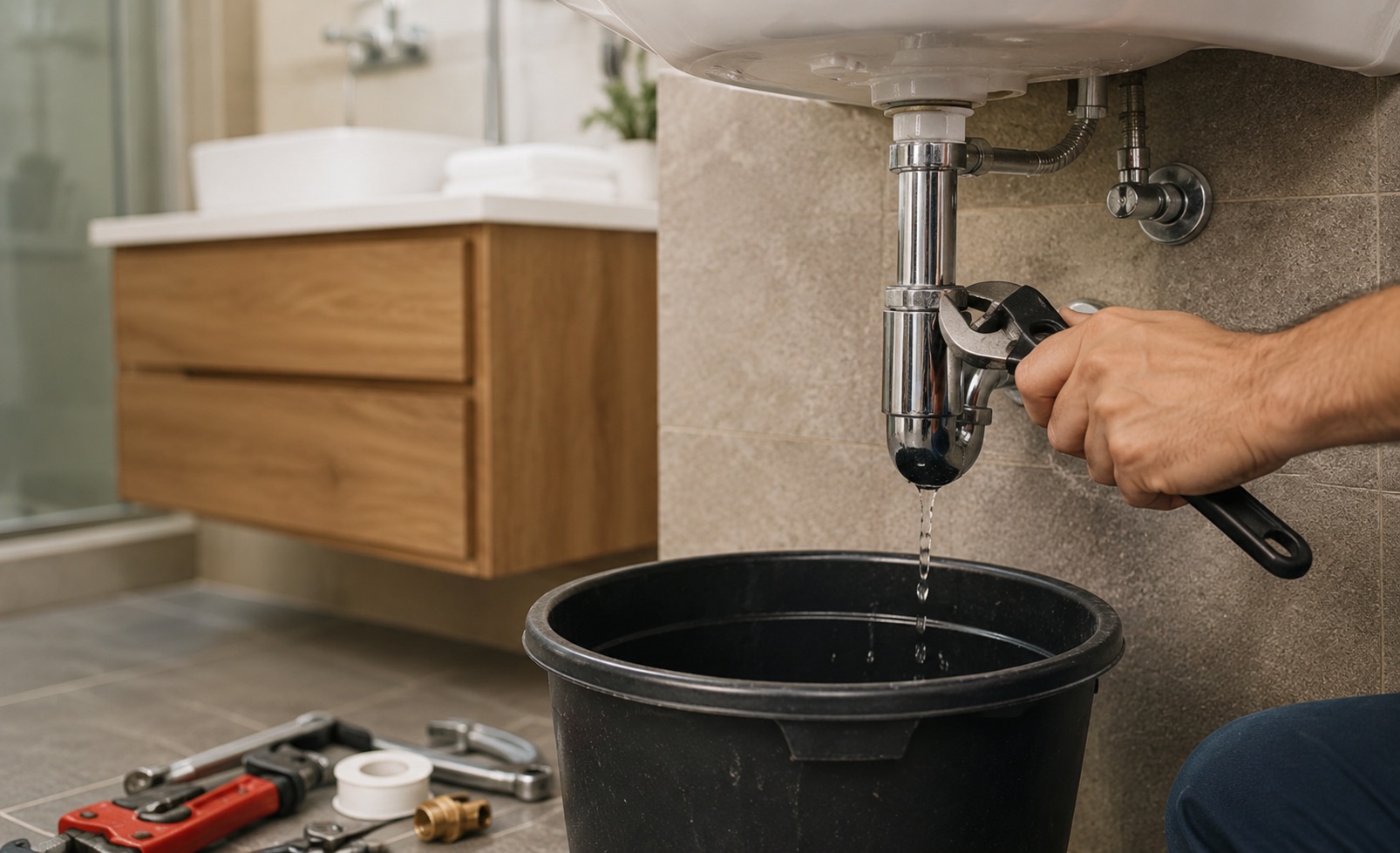
Sink repairs often involve leaking shutoff valves, worn faucet cartridges, damaged supply hoses, failing drain assemblies, or loose connections beneath the vanity. The visible drip may be simple, but a contractor should also check whether water has affected the cabinet, wall, or flooring. Replacing a hose without addressing a damaged valve, for example, can leave the underlying problem in place.
Toilet repairs may include replacing internal tank components, tightening or replacing connections, correcting a weak flush, or resetting the toilet with a new seal. A toilet that rocks should not be ignored or simply caulked around. Movement can compromise the seal beneath it. The right correction may involve securing the fixture, checking the flange, and evaluating the floor condition before reinstalling it.
Shower and tub repairs can be more involved because access is limited by tile and wall finishes. A dripping showerhead may be caused by a cartridge inside the valve. Low pressure may come from mineral buildup, a restricted fixture, or a supply issue. Water escaping around a tub or shower can also involve failed caulk, grout, a door seal, or a damaged waterproofing system. These are different problems, and each needs a different solution.
Drain issues require the same care. Hair, soap residue, and mineral buildup can restrict a bathroom drain over time. Repeated clogs, multiple slow drains, gurgling sounds, or backups usually suggest a deeper problem than a routine blockage. Chemical drain cleaners are rarely a good long-term answer. They can damage certain pipes and fittings, create hazardous conditions for anyone opening the line later, and do nothing to correct a broken or improperly sloped drain.
Repair or Remodel: Making the Practical Choice
Not every plumbing issue requires a bathroom remodel. If the problem is limited to an accessible valve, fixture, drain connection, or toilet component, a targeted repair is often the most efficient option. It restores function while preserving finishes that are still in good condition.
A larger project becomes more practical when the repair requires opening deteriorated walls, removing failed tile, replacing outdated plumbing throughout the room, or correcting an inefficient layout. This is especially true in bathrooms where homeowners are already planning a new vanity, shower conversion, fixture upgrade, or tile replacement. Coordinating plumbing before new finishes are installed prevents avoidable rework.
The decision depends on the age of the bathroom, the extent of hidden damage, and your plans for the home. A homeowner preparing to sell may need a focused repair that stops a leak and presents the room well. A family planning to stay for years may benefit from replacing aging components while the room is open. Neither approach is automatically better. The best choice is the one that addresses the current issue without creating another project in the near future.
Why Workmanship Matters Around Finished Surfaces
Plumbing repair inside a bathroom is different from repairing an exposed line in a utility room. Access may require removing a portion of drywall, tile, a vanity, or a ceiling below. The goal is not only to stop the leak or restore drainage. It is to make the repair with as little disruption as possible and leave the space properly finished.
That means protecting nearby surfaces, using appropriate materials, testing connections before closing an opening, and communicating clearly if the work reveals additional damage. It also means knowing when a plumbing issue intersects with remodeling work. A contractor who understands both can help prevent the common frustration of hiring one person to open the wall and another to rebuild the bathroom around the repair.
Wisez Improvement approaches bathroom work with that wider view. A fixture replacement, shower repair, or leaking connection may be a stand-alone service call, or it may be the first step toward a more functional bathroom. Clear recommendations and a straightforward scope make it easier to decide what should be handled now and what can be planned for later.
What to Expect From a Professional Repair Visit
A good repair visit starts with questions: when the issue began, whether it is getting worse, and what changes you have noticed in water use, drainage, odors, or surrounding finishes. A technician should inspect the fixture and accessible connections, then explain the likely cause and the recommended work in plain language.
For hidden leaks or drainage concerns, further testing may be needed before a final recommendation is made. That can feel inconvenient, but guessing is usually more expensive than diagnosing the problem correctly. If an opening in a wall or ceiling is necessary, you should understand why it is needed, what will be repaired, and how the area will be restored.
Once work is complete, the fixture should be tested for leaks and normal operation. Keep an eye on the area for the next few days, particularly under sinks and around toilet bases. If anything looks or feels different, report it promptly. Clear follow-up communication is part of a repair done right.
Small Habits That Help Prevent Bigger Problems
Most bathroom plumbing eventually needs maintenance, but a few habits can reduce avoidable damage. Avoid using the toilet as a trash can, and do not flush wipes, paper towels, or hygiene products. Clean hair from drain stoppers regularly. Check beneath sink cabinets every few months for moisture, corrosion, or a musty odor. Replace deteriorated caulk around tubs and showers before water can reach the wall or floor behind it.
It also helps to know where your main water shutoff is located and to make sure household members can access it. In a true leak, those few minutes can make a meaningful difference.
When a bathroom starts showing signs of trouble, the most useful next step is simple: address the source before the finish damage becomes the main project. A well-planned repair protects the room you have today and gives you better options for the improvements you may want tomorrow.