
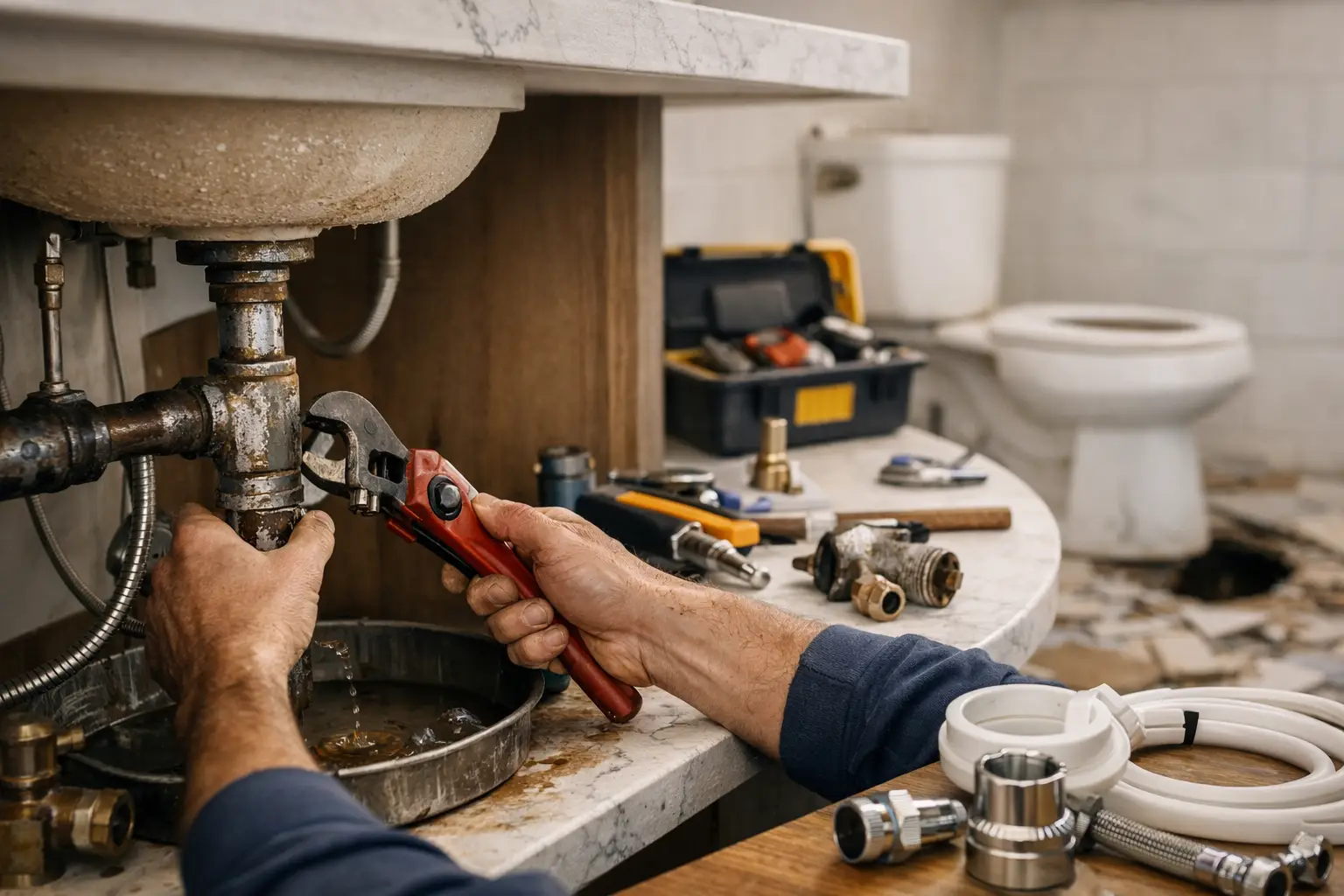
A bathroom can look perfectly serviceable on the surface while the plumbing behind the walls is nearing the end of its useful life. A new vanity, tile floor, or shower fixture will not solve corroded supply lines, recurring drain backups, or a hidden leak under the slab. Knowing when to replace bathroom plumbing helps Dallas-Fort Worth homeowners avoid putting a fresh remodel over a problem that will later require costly demolition.
The right timing depends on the age and material of the pipes, the condition of the home, and the symptoms you are seeing. Some issues call for a focused repair. Others are a clear signal that replacing plumbing during a bathroom renovation is the smarter long-term decision.
When to Replace Bathroom Plumbing Instead of Repairing It
A single dripping shutoff valve or loose trap under the sink usually does not mean the entire bathroom needs new plumbing. Localized repairs make sense when the rest of the system is in good condition and the issue has a clear, isolated cause.
Replacement deserves serious consideration when problems repeat, pipes are made from aging materials, or walls and floors are already being opened for remodeling. The labor involved in accessing plumbing is often the largest part of the job. If a bathroom is being taken down to the studs for a new shower, tub conversion, or layout change, that is often the most practical time to replace old water lines, drain connections, and shutoff valves.
1. You Have Recurring Leaks
One leak can result from a failed fitting, worn seal, or damaged supply hose. Multiple leaks in different locations are different. Water stains on a ceiling below the bathroom, warped baseboards, soft flooring, peeling paint, or a musty smell can point to an ongoing plumbing issue.
Older pipes can corrode from the inside out, especially at joints and connections. Repairing one weak spot may only postpone the next failure. Before closing up damaged drywall or installing new finishes, have the plumbing evaluated so the underlying cause is addressed.
2. Water Pressure Has Dropped Over Time
Low pressure at one faucet may be a clogged aerator or a fixture problem. Low pressure at the shower, sink, and tub together may indicate mineral buildup or corrosion inside aging supply pipes.
Dallas-Fort Worth water can leave mineral deposits over time, and older galvanized steel pipes are especially prone to internal corrosion. As the inside diameter narrows, water flow becomes restricted. Replacing affected lines can improve daily function and provide a more reliable supply for new shower valves and modern fixtures.
3. Your Pipes Are Galvanized Steel, Polybutylene, or Aging Cast Iron
Pipe material matters as much as pipe age. Galvanized steel water lines were common in older homes but can rust internally and develop reduced flow over the years. Polybutylene, used in some homes built from the late 1970s through the mid-1990s, has a known history of failures. Aging cast-iron drain lines can corrode, crack, scale internally, and allow roots or soil movement to affect the system.
Not every older pipe must be replaced immediately. A professional assessment can determine whether the material is still performing well or showing signs of deterioration. But if you are investing in a significant bathroom remodel, leaving questionable pipe materials behind can create an avoidable risk.
4. Drains Clog Often or Drain Slowly
Hair and soap buildup can cause an occasional slow bathroom drain. If plunging, snaking, or drain cleaning has become a regular routine, the issue may be farther down the line. Repeated backups, gurgling sounds, foul odors, or water coming up in another fixture can signal a drain pipe problem rather than a simple surface clog.
A damaged, poorly sloped, or heavily corroded drain line may need partial or full replacement. This is especially relevant when converting a tub to a shower, moving a vanity, or changing the bathroom layout. New fixtures need correctly sized and properly vented drains to work as intended.
5. The Bathroom Has Water Damage or Mold
Bathrooms experience moisture every day, but persistent water damage is never normal. Stained drywall, damaged subflooring, loose tile, swollen cabinet panels, or mold around walls and trim can result from a slow leak that has gone unnoticed.
Replacing plumbing is not always required after water damage, but hidden leaks should be investigated before cosmetic repairs begin. Installing tile over compromised framing or replacing a vanity without correcting a leaking valve can turn a manageable repair into a larger restoration project.
6. You Are Remodeling an Older Bathroom
A full bathroom renovation creates access that is otherwise difficult and expensive to obtain. Once the old tub, shower surround, vanity, and flooring are removed, supply lines and drain connections may be exposed. This is the right moment to inspect what is behind the walls.
Replacing plumbing during a remodel adds cost upfront, but it can prevent having to remove new tile, custom glass, cabinetry, or a finished shower later. The trade-off is straightforward: if the existing pipes are newer, code-compliant, and in good condition, replacement may not be necessary. If they are near the end of their service life, updating them while the room is open is usually the better value.
7. You Want to Move Fixtures or Upgrade the Shower
Moving a toilet, shower, or vanity requires more than selecting a new location. Drain placement, venting, water-line routing, and floor structure all need to be considered. A new rain shower, body sprays, dual sinks, or a freestanding tub may also change water-demand requirements.
This type of project often requires plumbing replacement or reconfiguration by design. The goal is not simply to make the new fixtures fit. It is to ensure the system operates correctly, remains accessible where needed, and supports the finished bathroom for years to come.
8. You Are Preparing the Home for Sale or Long-Term Ownership
For homeowners preparing to sell, visible plumbing problems can raise concerns during inspection and complicate negotiations. Addressing active leaks, failing shutoff valves, damaged drains, and outdated connections can protect the value of a bathroom update.
For long-term ownership, replacement is often about reducing uncertainty. A well-planned plumbing update can improve reliability, support water-efficient fixtures, and make future maintenance easier. The right scope depends on the condition of the system and your plans for the property, not a one-size-fits-all rule.
What Bathroom Plumbing Replacement May Include
The scope can range from replacing a few exposed components to updating all plumbing serving the bathroom. A contractor should explain what is being replaced, why it is needed, and how the work affects the renovation schedule.
A typical project may include new hot and cold water supply lines, shutoff valves, faucet connections, shower or tub valves, drain assemblies, P-traps, and toilet supply connections. When the layout changes or existing drains are damaged, the work may also involve relocating drain lines, correcting venting, or repairing sections of pipe beneath the floor.
Material selection should match the job. Modern PEX and copper are common choices for water supply lines, while PVC or ABS may be used for drain and vent systems where appropriate. The best option depends on the existing system, local code requirements, access, and the specific fixture plan.
How to Plan the Work Without Surprises
Start with an on-site evaluation before finalizing tile, cabinetry, or fixture selections. A good assessment looks beyond what is visible. It considers pipe material, water pressure, drain performance, signs of leaks, fixture locations, and the condition of surrounding walls and flooring.
Ask for a clear scope that separates necessary repairs from recommended upgrades. That distinction helps you make an informed decision and keeps the budget focused on work that protects the bathroom. If hidden conditions are possible, such as damaged subflooring or deteriorated pipes behind a wall, discuss how those discoveries will be documented and approved during the project.
For a bathroom remodel, coordinate plumbing early. Shower valve depth, vanity dimensions, drain placement, tile thickness, and custom glass layout can all affect the final installation. Planning these details before walls are closed helps prevent delays and avoids compromises in the finished design.
Wisez Improvement helps homeowners combine bathroom repair expertise with renovation planning, so plumbing concerns can be addressed before new finishes are installed. The result should be more than an updated bathroom. It should be a bathroom built on reliable work behind the walls.
If your bathroom has recurring leaks, weak pressure, persistent drain trouble, or aging pipes, do not wait for a small problem to reach your new flooring or the room below. A timely inspection can clarify whether a focused repair is enough or whether replacing the plumbing now will save disruption later.