
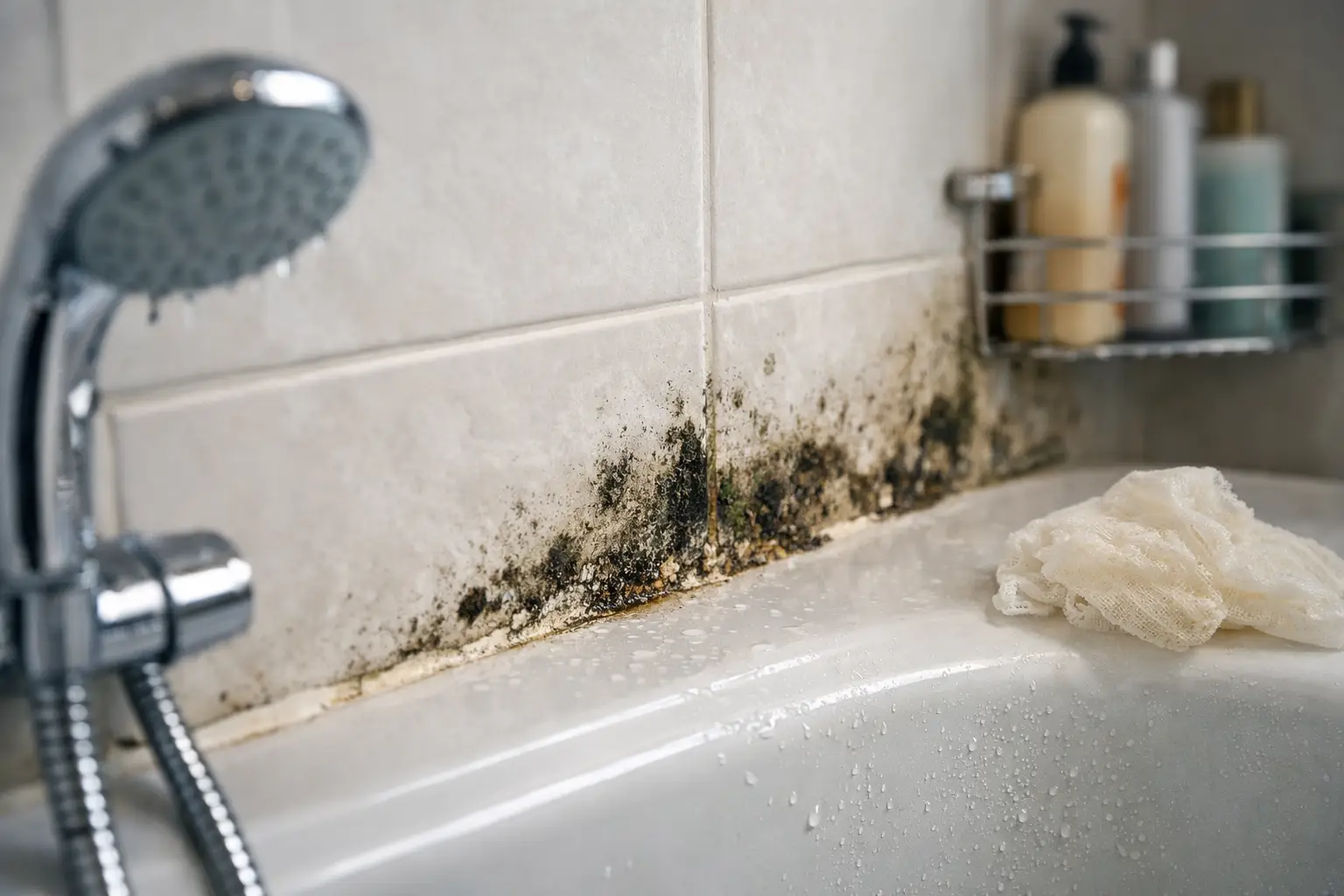
A bathroom can look clean and still be feeding mold behind the scenes. That faint musty smell after a shower, dark specks at a caulk line, peeling paint near the ceiling, or a vanity cabinet that feels damp are all signs worth taking seriously. What causes bathroom mold growth is rarely one issue alone. It is usually a combination of moisture, limited airflow, and materials that stay wet longer than they should.
For Dallas-Fort Worth homeowners, the goal is not simply to remove visible mold. The real fix is finding where the moisture is coming from and correcting the conditions that allow it to return.
What Causes Bathroom Mold Growth?
Mold spores are naturally present indoors and outdoors. They become a problem when they land on a damp surface with something to feed on, such as dust, soap residue, drywall paper, wood, caulk, or grout. Bathrooms provide all of those conditions when humidity and water are not controlled.
Mold can begin growing within a day or two on consistently wet materials. A brief shower does not automatically create a mold problem. The concern is moisture that remains trapped after the room should have dried, whether it is in a poorly ventilated shower, under a leaking toilet, or inside a wall cavity.
Steam and high humidity
Hot showers release a large amount of moisture into a small enclosed space. If the exhaust fan is undersized, not working, vented incorrectly, or simply not used long enough, that moisture settles on ceilings, walls, windows, cabinets, and fixtures.
A bathroom mirror that stays fogged for a long time is a practical warning sign. So is condensation on painted walls or around window frames. The room needs a reliable path to move humid air outside, not into an attic, crawlspace, or another enclosed area where it can create a separate moisture problem.
Plumbing leaks that stay out of sight
Some of the most damaging bathroom mold issues begin with a slow leak rather than a dramatic plumbing failure. A loose drain connection under a sink, a worn toilet wax ring, a cracked shower valve line, or a small leak behind a wall can wet framing and drywall for weeks before anyone sees a stain.
Pay attention to a soft bathroom floor near the toilet, a vanity base that is swollen or discolored, recurring mildew in one specific area, or a water bill that rises without a clear reason. These do not prove there is a leak, but they justify a closer inspection. Waiting for visible water can mean the problem has already spread beyond the surface.
Failed shower caulk, grout, and waterproofing
Tile is water-resistant, but a tiled shower is not automatically waterproof. Grout is porous, and cracked or missing caulk around a tub, shower pan, niche, or fixture opening can let water reach the materials behind the finished surface.
This is where cosmetic repairs and proper repair work are different. Reapplying caulk may solve a small surface gap if the surrounding structure is dry and sound. But if tile is loose, grout cracks keep returning, drywall outside the shower feels soft, or water is appearing on the other side of a shower wall, the waterproofing system may be compromised. Covering the symptoms without addressing the substrate can allow mold to continue growing where it cannot be seen.
Wet towels, bath mats, and everyday moisture
Daily habits can raise the humidity load in a bathroom, especially one shared by a family. Wet towels piled on the floor, bath mats that never fully dry, damp clothing, and a closed door after multiple showers all keep moisture in the room.
These habits usually do not cause a major hidden mold problem by themselves. However, they can make existing ventilation or plumbing weaknesses worse. A well-designed, well-ventilated bathroom should handle normal use. If it cannot dry between showers, the room needs more than a stronger cleaning product.
Cold surfaces and condensation
Condensation occurs when humid air meets a cooler surface. In bathrooms, that may be a window, exterior wall, toilet tank, metal vent cover, or uninsulated plumbing line. Repeated condensation can lead to mold around windows, behind toilets, and in corners where airflow is weak.
The right solution depends on the source. Better ventilation may be enough in one bathroom. In another, the problem may involve a drafty window, missing insulation, or cold-water pipes that need to be insulated. A good diagnosis prevents spending money on a fix that treats only part of the issue.
Where Bathroom Mold Often Hides
Visible black or green spots deserve attention, but mold is not always obvious. In bathrooms, it often develops in areas that stay damp and receive little airflow: beneath a sink, behind a vanity, around toilet bases, under vinyl flooring, behind shower walls, and above ceilings affected by a leak from the floor above.
A persistent musty odor is often more useful than appearance. Bathrooms contain many surfaces that can hide moisture, so a fresh coat of paint or a new bead of caulk can temporarily mask the evidence without resolving the cause.
If you notice bubbling paint, warped trim, soft drywall, loose tile, or recurring mold after regular cleaning, avoid assuming it is a surface-only issue. Those conditions can point to water intrusion that needs repair before finishes are replaced.
How to Prevent Mold From Returning
Prevention starts with drying the room quickly and keeping water where it belongs. Run the exhaust fan during every shower and for at least 20 to 30 minutes afterward. If the fan is noisy, weak, or does not seem to clear steam, have it evaluated rather than relying on an open door alone.
Use a squeegee or towel on shower walls after use, hang towels so air can circulate around them, and wash bath mats regularly. Keep shower doors, liners, and corners clean enough that soap film does not hold moisture against the surface. These are small maintenance steps, but they reduce the damp conditions mold prefers.
Just as important, address plumbing problems promptly. Replace failing supply lines, repair dripping faucets and shower valves, and inspect under-sink connections periodically. If a toilet rocks, leaks at the base, or leaves discoloration in the flooring around it, do not delay the repair. Water below the finished floor can damage subflooring and create a much larger project.
For a bathroom remodel, mold prevention should be part of the design and installation plan. That can include properly sized exterior ventilation, moisture-resistant wall materials where appropriate, a correctly waterproofed shower assembly, durable caulk joints, and fixture placement that allows access for future repairs. A beautiful bathroom should also be built to dry, drain, and perform reliably.
When Cleaning Is Enough and When Repair Is Needed
Small amounts of surface mildew on nonporous materials can often be cleaned safely with the right household product and proper ventilation. The key is to dry the area completely afterward. Repeatedly cleaning the same spot without changing the moisture conditions is not a lasting solution.
Professional repair is the better next step when mold keeps returning, covers a larger area, appears after a known leak, or is accompanied by damaged drywall, flooring, cabinets, or tile. It is also wise to investigate when the affected area is hidden, such as behind a shower wall or beneath a vanity. Disturbing water-damaged materials without understanding the extent of the problem can spread debris and leave the source unresolved.
At Wisez Improvement, bathroom repair and remodeling work begins with the practical question: where is the water getting in, and what will keep it from happening again? Depending on the condition of the space, the answer may be a targeted plumbing repair, replacement of damaged finishes, improved ventilation, or a more complete shower or bathroom renovation.
A bathroom should feel clean, comfortable, and easy to maintain. If yours has recurring mold, a lingering odor, or signs of moisture damage, treat it as a reason to investigate now, while the repair can still be focused and manageable.