
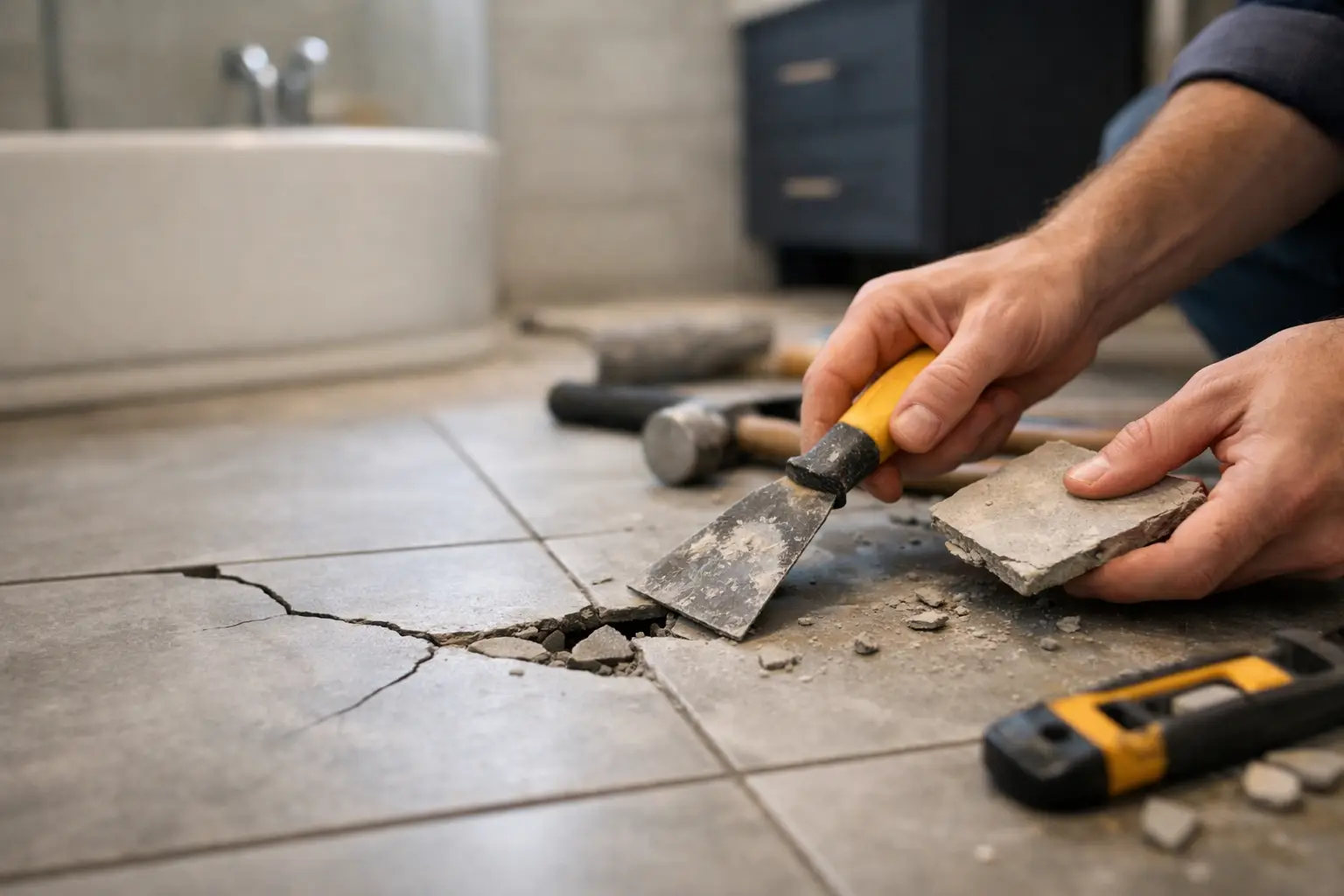
A crack that appears across a bathroom floor tile or runs through a shower wall is rarely just a surface problem. Homeowners often ask why bathroom tile cracks after noticing a thin line near the toilet, a chipped corner by the tub, or several tiles breaking along the same path. The answer depends on where the crack is, what is underneath the tile, and whether water has already reached the materials behind it.
A single damaged tile may be repairable. A pattern of cracking, loose grout, or soft flooring can point to movement or moisture that needs attention before a small repair becomes a larger bathroom project.
Why Bathroom Tile Cracks: The Most Common Causes
Tile is hard, durable, and resistant to water on its face. It is not flexible. When the surface below it moves, expands, weakens, or gets wet, the tile often becomes the visible place where that problem shows up.
Subfloor movement or an uneven surface
Floor tile needs a solid, flat base. If the subfloor flexes when someone walks across it, the tile and grout absorb stress they were not designed to handle. Over time, that movement can create a crack through one tile, break grout joints, or loosen tiles from the floor.
This is especially common in older homes where the original subfloor may not have been prepared for tile, as well as bathrooms where previous work covered an uneven surface instead of correcting it. A repair that only replaces the cracked tile may look good temporarily, but the new tile can crack again if the floor still moves beneath it.
Water damage beneath the tile
Bathrooms deal with regular moisture, but hidden leaks are different. A leaking toilet seal, failing shower pan, loose tub drain, damaged supply line, or slow plumbing leak can allow water to reach the subfloor or wall framing. Wood-based materials can swell, soften, or deteriorate as they stay wet. That changes the support under the tile and leads to cracks, hollow-sounding tiles, or areas that feel soft underfoot.
Water damage does not always produce an obvious puddle. You may first see cracked grout around a tub, tile separating at a shower curb, staining on a ceiling below the bathroom, or a persistent musty odor. In those cases, fixing the visible crack without finding the moisture source is not a complete repair.
House settling and structural movement
Minor settling is normal, particularly in North Texas where expansive clay soils can move with changing moisture conditions. A house can shift slightly through seasonal weather changes, foundation movement, or normal aging. Because tile has very little give, it may crack when that movement transfers through the floor or wall.
Not every cracked tile means there is a foundation issue. One isolated crack can come from an installation problem or a dropped object. Cracks that continue across several tiles in a straight line, however, deserve a closer look. The same is true when tile cracking appears alongside new drywall cracks, sticking doors, or uneven floors elsewhere in the home.
Poor installation practices
A well-installed tile surface starts long before grout is applied. The installer needs the right substrate, proper waterproofing in wet areas, appropriate thinset coverage, correct spacing, and movement joints where needed. Skipping these steps may save time during installation, but it increases the chance of failure later.
For example, tile that has gaps in the adhesive below it can flex when stepped on. Tiles set directly over an unsuitable surface can crack as the base shifts. In showers, missing or incomplete waterproofing allows moisture to enter the wall system even if the tile and grout initially appear intact.
Heavy impact and everyday stress
Sometimes the cause is simple: a heavy object falls and chips or cracks tile. This is more likely with porcelain and ceramic tile than with softer flooring materials. A small impact crack is often limited to one area and does not necessarily indicate a deeper problem.
Still, inspect the surrounding grout and tile before assuming it is purely cosmetic. If the tile sounds hollow, moves under pressure, or has cracks extending from the impact point, the bond underneath may also have been affected.
What the Crack Pattern Can Tell You
The location and shape of a crack offer useful clues. A hairline crack in one wall tile may be a manufacturing flaw, impact damage, or stress from installation. A crack that travels across several floor tiles or follows a long, consistent line is more likely related to movement beneath the surface.
Cracked grout is also worth watching. Grout can develop small cracks as a home settles, but repeated grout failure around a shower floor, tub edge, or wall corner may mean the wrong material was used or the joint is moving more than it should. Changes of plane, such as where a wall meets a tub or another wall, generally need flexible sealant rather than rigid grout.
Loose tiles are a stronger warning sign. If a tile rocks, feels spongy, sounds hollow when tapped, or has grout separating around its perimeter, water intrusion or adhesive failure may be present. Avoid continuing to soak that area until it has been assessed, especially in a shower.
When a Tile Repair Is Enough
A targeted repair can be a practical solution when the damage is clearly isolated. That may include one chipped tile after an impact, a small grout repair, or a tile that can be removed without exposing moisture damage or a failing base.
The challenge is matching replacement tile. Even if the same product is available, an older installation may have changed slightly in color due to wear, cleaning products, and light exposure. A professional can help determine whether a close match will blend well, whether a repair can be placed in a less noticeable area, or whether a larger section should be retiled for a cleaner result.
Before replacing any cracked tile, the underlying surface should be checked. The repair should address the reason for the crack, not simply cover the evidence.
When Cracked Bathroom Tile Calls for More Work
A larger repair or remodel is often the better choice when there is hidden water damage, widespread cracking, a weak subfloor, or an aging shower that lacks reliable waterproofing. This does not always mean rebuilding the entire bathroom. The right scope depends on where the problem starts and how far it has spread.
For a floor problem near a toilet, the work may involve removing the toilet, replacing damaged subflooring, correcting the flange area, and reinstalling tile. For a shower wall with recurring cracks and leaks, the dependable fix may require removing the affected tile, inspecting framing, rebuilding the waterproofed shower system, and installing new finish materials.
This is where repair and remodeling experience matter. Plumbing, substrate preparation, waterproofing, and tile installation all affect the final result. Addressing only one part of the system can leave the homeowner with an attractive surface and the same hidden problem.
What to Do When You Notice a Crack
Start by taking clear photos and noting when you first noticed the damage. Check whether nearby grout is broken, whether the tile moves, and whether the area feels soft or damp. Look below the bathroom, if accessible, for ceiling stains or moisture.
Do not aggressively pry out a cracked tile before understanding what caused it. In a shower or around a toilet, opening the wrong area can expose more damage and make it harder to identify the source. If there is active leaking, a soft floor, loose shower tile, or signs of mold or water staining, arrange an inspection promptly.
For Dallas-Fort Worth homeowners, Wisez Improvement can evaluate the tile, plumbing, and surrounding bathroom conditions together. That makes it easier to determine whether the right solution is a focused repair, a shower rebuild, or a bathroom update that corrects the underlying issue while improving the space.
A cracked tile is your bathroom asking for attention. Responding early can protect the structure behind the finish, keep water where it belongs, and give you a repair that lasts.