
A bathtub that drains slowly can turn a quick shower into standing water around your ankles. In most homes, the cause is not mysterious: hair, soap residue, body oils, and mineral deposits collect just below the drain opening. Knowing how to unclog bathtub drain safely can solve a minor blockage before it becomes a backup, but the wrong method can damage pipes, finishes, or a delicate drain assembly.
Start with the least invasive option. If the drain is completely stopped, water is coming up through another fixture, or you see a leak below the tub, skip the DIY steps and arrange a professional inspection. Those signs can point to a blockage deeper in the line or a plumbing issue that needs more than a quick fix.
Start With a Quick Drain Check
Before using any tool, remove standing water from the tub with a small container if possible. This gives you a clear view of the drain and keeps debris from floating back into the pipe. Put on gloves and look at the drain cover, stopper, and overflow opening.
Many bathtub clogs sit close to the surface. A tangled mass of hair may be caught directly under the stopper or wrapped around the linkage that operates it. If your tub has a pop-up stopper, lift it out if it is designed to be removed by hand. Some styles twist loose, while others connect to a linkage behind the overflow plate. Do not force a part that does not move easily.
Use a flashlight to inspect the opening. If you can see hair or debris, pull it out with a plastic drain tool or a pair of narrow tweezers. Avoid pushing the material farther down the pipe. This simple step often restores normal drainage immediately.
How to Unclog a Bathtub Drain Step by Step
If removing visible debris does not solve the problem, work through these methods in order. Test the drain with a small amount of water after each attempt. There is no reason to escalate to stronger methods once water flows freely.
1. Use a plastic drain tool
A flexible plastic drain tool has small barbs that catch hair and soap buildup. Feed it gently into the drain, move it up and down a few times, and pull it out slowly. Expect it to bring up unpleasant material. Wipe the tool clean, repeat as needed, then rinse the drain with warm water.
This method is especially effective for a tub that drains slowly but is not fully blocked. It is also safer than using a metal coat hanger, which can scratch the drain or become stuck in the pipe.
2. Try a plunger correctly
A standard cup plunger can clear a soft clog, but only if you create a seal. Remove the stopper if possible. Cover the overflow opening with a wet washcloth, as air escaping through that opening will reduce suction. Add enough water to cover the plunger cup, then pump firmly 10 to 15 times.
Lift the plunger and check the water level. If it starts draining, run warm water for a minute or two. Do not plunge aggressively on an older tub with loose trim or a questionable drain connection. Strong pressure can expose an existing weak point.
3. Clean the stopper and overflow components
Hair does not always collect in the visible drain opening. On tubs with a trip-lever stopper, buildup can gather around the linkage behind the overflow plate. Remove the two screws holding the plate in place, pull the assembly out carefully, and clean away hair and residue.
Take a photo before removing any parts so you can reinstall the linkage in the same position. If the mechanism is corroded, bent, or difficult to reassemble, stop there. A poorly adjusted stopper can leave the tub draining slowly even when the pipe itself is clear.
4. Use a hand-crank drain snake for deeper clogs
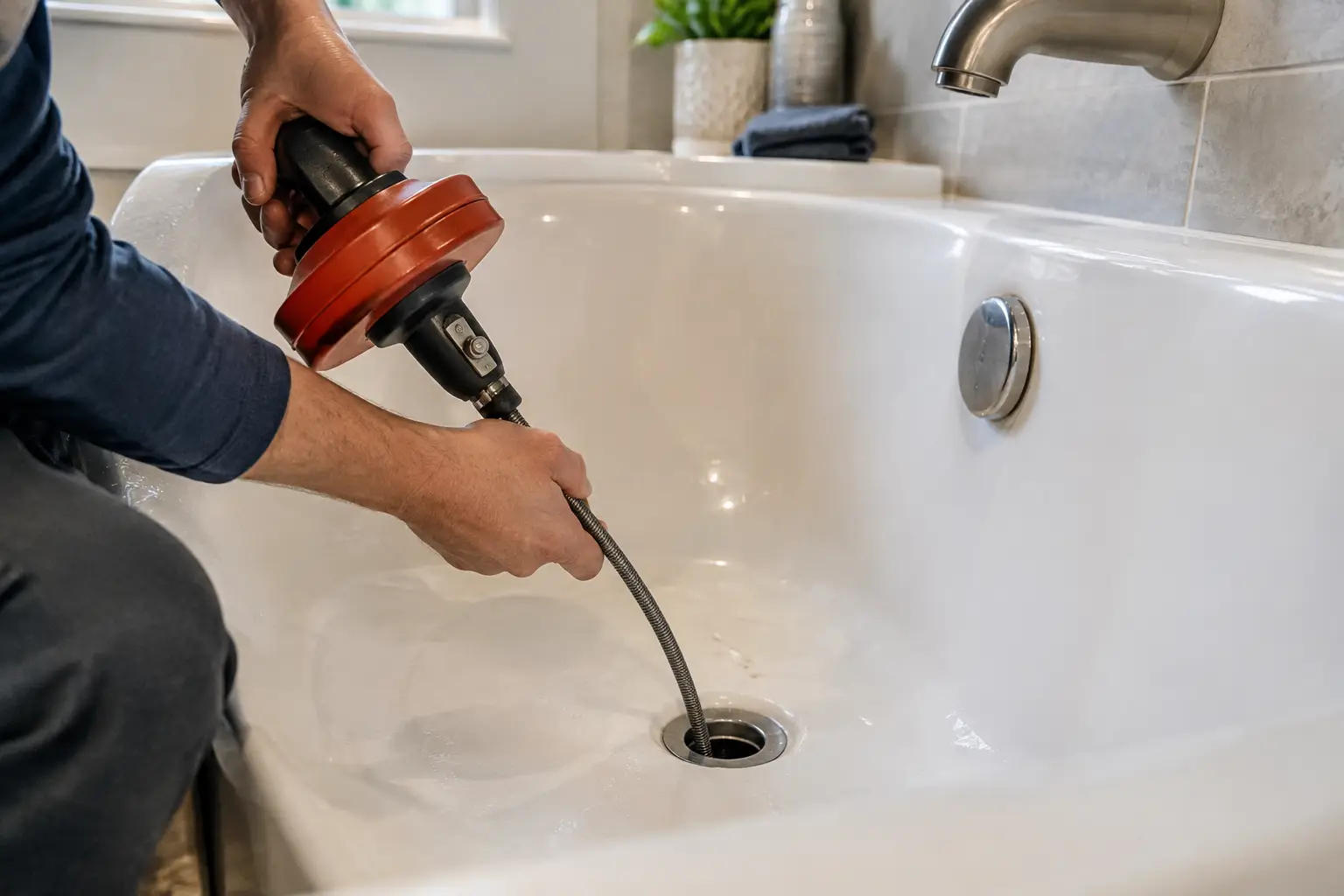
For a clog beyond reach, a small hand-crank drain snake can work well. Feed the cable into the drain slowly, turning the handle only when you meet resistance. When the cable catches the obstruction, rotate it gently and pull back. The goal is to retrieve or break up the blockage without forcing the cable through a tight bend.
A hand snake is useful for stubborn hair clogs, but it takes a careful touch. Pushing too hard can damage older galvanized piping, snag a drain fitting, or leave the cable stuck. If the snake will not advance or you feel hard resistance, do not keep cranking.
What Not to Put Down a Bathtub Drain
Chemical drain cleaners promise a fast fix, but they are a poor first choice for most bathtub clogs. Strong acidic or caustic products can damage pipe materials, weaken seals, discolor fixtures, and create a hazard for anyone who later opens the drain. They are particularly risky when a product sits in standing water.
Never mix drain cleaners with one another, and do not follow a chemical cleaner with vinegar, bleach, or another household product. Dangerous fumes or heat can result. If you already poured a cleaner into the drain, tell the plumber before service begins so they can work safely.
Very hot water deserves caution, too. It may soften soap residue, but boiling water can damage some acrylic tubs, fiberglass surfaces, PVC connections, and older plumbing seals. Warm tap water is the safer choice for flushing a bathtub drain after you remove a clog.
When a Slow Drain Is More Than a Hair Clog
A recurring clog usually means the problem is not limited to what you can reach from the tub. Mineral-heavy water, an aging drain line, pipe scale, poor venting, or a partial blockage farther down the branch line can all slow drainage. In older Dallas-Fort Worth homes, years of buildup inside aging pipes can make a routine hair clog return more often.
Call for plumbing service if the tub backs up repeatedly, drains slowly after you have cleaned the stopper, or gurgles when the sink or toilet is used. Water appearing in the tub when another fixture drains is a more urgent sign of a shared line blockage. A sewer odor, damp drywall, soft flooring, or water below the tub also calls for prompt attention.
Professional service is not only for emergencies. A plumber can identify whether the obstruction is in the trap, the branch line, or a larger drain connection, then clear it without guessing. If the tub drain, overflow, stopper, or plumbing connections need replacement, the repair can be completed without creating new finish damage around the tub.
Prevent the Next Bathtub Clog
The best prevention is a simple hair catcher that fits your drain style and is emptied regularly. Do not let hair collect around the stopper where it can work its way into the pipe. Wipe away visible buildup after bathing, particularly in households with long hair or pets that are washed in the tub.
Once a month, remove the stopper if accessible and clean it with warm water and a soft brush. Flush the drain with warm tap water afterward. This routine will not correct a structural plumbing issue, but it can keep normal soap and hair buildup from becoming a full blockage.
For homeowners planning a bathroom update, drainage problems are also worth addressing before new tile, a custom shower conversion, or a new tub goes in. Wisez Improvement can evaluate plumbing concerns alongside bathroom repair and remodeling work, helping prevent an old drain issue from becoming a problem behind a finished wall.
A clear drain should be quiet, odor-free, and easy to maintain. If your tub still drains poorly after careful cleaning, treating the cause now is usually easier and less disruptive than waiting for a complete backup.