
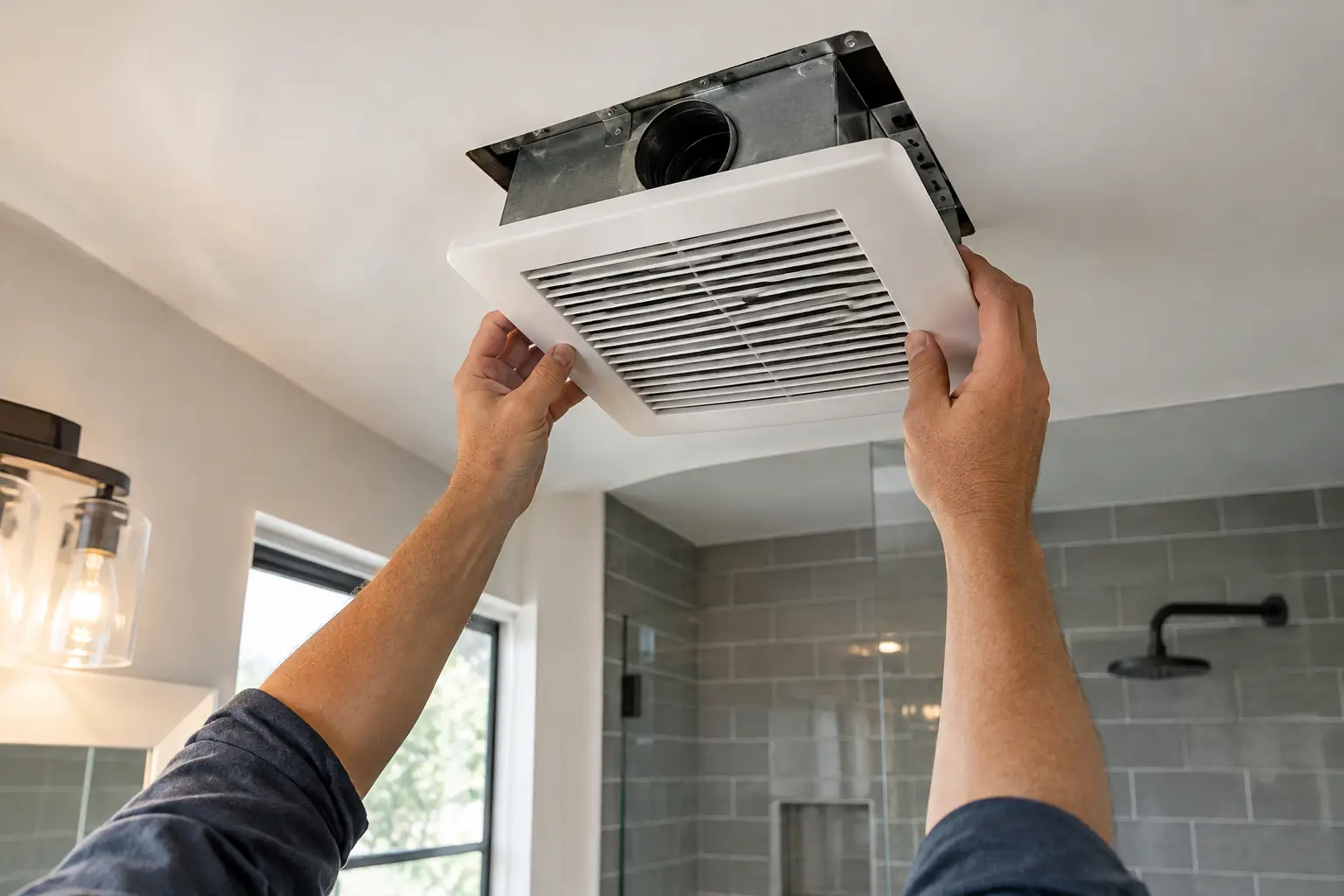
A bathroom fan is easy to overlook until moisture starts leaving evidence behind: a mirror that stays fogged long after a shower, peeling paint above the tub, mildew at caulk lines, or a persistent damp smell. The best bathroom exhaust fan options do more than make noise. They remove humid air at the right rate, operate quietly enough to be used consistently, and fit the bathroom’s layout and electrical setup.
For Dallas-Fort Worth homeowners, ventilation matters year-round. Our hot, humid stretches can add moisture pressure to a bathroom, while tightly sealed homes may not release that humidity as easily as older construction. Choosing the right fan is part product selection and part proper installation. A high-performing fan connected to an undersized or poorly routed duct will not deliver the results it should.
Start With Airflow, Not the Fan’s Appearance
Bathroom exhaust fans are rated in CFM, or cubic feet per minute. This measures how much air the fan can move. For a standard bathroom, a practical starting point is 1 CFM per square foot, with 50 CFM commonly treated as the minimum for a small full bathroom.
That baseline is not always enough. A larger primary bath with a walk-in shower, soaking tub, separate toilet room, or high ceilings may need substantially more ventilation. A 100 to 150 CFM fan is often a better fit for a larger space, particularly when steam is a regular issue.
More CFM is not automatically better. Oversizing a fan can create unnecessary noise, use more power, and pull conditioned air out of the home faster than needed. The goal is to match the fan to the room and the way it is used. A contractor should also consider duct length, turns in the ductwork, and where the exhaust exits the house. Each of those details affects real-world airflow.
Best Bathroom Exhaust Fan Options by Need
The right choice depends on whether your priority is basic ventilation, quieter operation, automatic humidity control, or a more complete bathroom upgrade.
Standard ceiling exhaust fans
A standard ceiling-mounted fan is the sensible choice for many hall bathrooms, guest baths, and smaller powder rooms. These units are straightforward, generally affordable, and effective when properly sized and vented outdoors.
This option works best when the bathroom has ordinary moisture levels and the household will reliably turn the switch on before showering. The trade-off is that a basic fan relies on the user. If family members turn it off too soon, humidity may remain in the room after the shower ends.
Quiet exhaust fans for frequently used bathrooms
Noise is measured in sones. Lower sone ratings mean quieter operation. A fan rated at 1.0 sone or less is generally considered quiet, while units around 0.3 sones can be barely noticeable in normal use.
Quiet fans are a strong upgrade for primary bathrooms, bathrooms near bedrooms, and homes where a loud fan discourages use. Homeowners are more likely to let a quiet fan run for the full shower and post-shower cycle, which is exactly what helps protect drywall, paint, trim, and grout.
A quiet unit may cost more than a basic builder-grade fan, but it can make the room feel more finished. In a bathroom remodel, it is usually worth considering because the fan housing and duct connection are more accessible while the ceiling is open.
Humidity-sensing fans
Humidity-sensing fans turn on when moisture levels rise and shut off after the air clears. They are one of the best bathroom exhaust fan options for busy households, guest bathrooms, rental properties, and anyone tired of reminding others to use the fan.
These fans are particularly useful in bathrooms without windows or in spaces with enclosed showers. Some models allow sensitivity adjustments, which helps prevent the fan from running unnecessarily due to normal changes in indoor humidity.
The main consideration is placement and setup. A sensor should not be positioned where it reacts poorly to a direct blast of steam or where it cannot accurately read the room. Installation details matter as much as the feature itself.
Fans with built-in lights, night lights, or heaters
Combination units can reduce ceiling clutter by combining ventilation with lighting, a night light, or a heat function. They can be a practical choice during a remodel when homeowners want a cleaner ceiling layout or additional light over a shower area.
A fan-light combination is often useful in a smaller bathroom with limited ceiling space. A night light can add safety without turning on bright overhead lighting. Heater-fan units offer comfort on cold mornings, but they require proper electrical capacity and dedicated wiring in many cases. They also are not a replacement for a home’s main heating system.
Choose a combination unit because it solves a real need, not simply because it adds features. A separate fan and light can still be the better solution when lighting placement needs to be more precise.
Inline exhaust fans for larger or challenging layouts
Inline fans are installed in the duct run rather than directly in the bathroom ceiling. Because the motor sits farther from the room, they can provide strong airflow with very quiet operation. They are a good fit for large bathrooms, long duct runs, or situations where one fan needs to serve more than one area.
This option is more involved than replacing a standard ceiling fan. Access in an attic or mechanical space is usually required, and the duct design must be planned carefully. For a major renovation or a bathroom with persistent ventilation problems, an inline system can be worth the added installation cost.
Ducting Can Make or Break Fan Performance
A bathroom fan must vent outdoors. Exhausting humid air into an attic, crawlspace, garage, or soffit cavity can create a hidden moisture problem instead of solving one. Over time, that moisture can contribute to mold growth, damaged insulation, wood deterioration, and staining around ceiling openings.
The duct should be appropriately sized for the fan, as short and straight as practical, and securely connected. Flexible ducting is common, but it should not sag or kink. Long runs and sharp turns reduce airflow, so a fan that looks adequately rated on paper may underperform after installation.
The exterior termination also needs attention. It should include a proper damper to limit backdrafts and pests while allowing exhaust air to escape freely. During a bathroom remodel, this is a good time to correct old ductwork rather than simply installing a new fan into an existing problem.
Installation Factors DFW Homeowners Should Consider
Replacing an existing fan is sometimes simple, but it is not always a direct swap. Older homes may have undersized housings, limited attic access, aging wiring, or ductwork that does not meet current needs. A new fan may also require a larger ceiling opening or a different duct diameter.
Before choosing a unit, confirm the bathroom size, ceiling height, shower type, available electrical capacity, attic access, and exhaust route. If you are adding a humidity sensor, timer, heater, or separate controls, the wall switch wiring may need to change as well.
For homeowners planning tile work, a shower conversion, new vanity lighting, or ceiling repairs, it is often more efficient to address ventilation as part of the full scope. Wisez Improvement helps homeowners evaluate bathroom ventilation alongside plumbing, layout, finishes, and repair needs, so the final space works as well as it looks.
Do Not Ignore Signs of Poor Ventilation
A fan that runs but does not clear the mirror within a reasonable time may be undersized, dirty, improperly ducted, or failing mechanically. Other warning signs include recurring mildew, cracked or peeling paint, swollen cabinet finishes, moisture on walls, and a musty odor that returns after cleaning.
Cleaning the grille and fan housing can improve performance, but it will not fix a blocked duct, weak motor, or vent line that ends in the wrong place. If moisture damage is already visible, address the source before investing in cosmetic repairs. Fresh paint and new caulk will not hold up if the bathroom remains damp after every shower.
A properly selected exhaust fan is a quiet piece of insurance for the bathroom you use every day. Choose one that fits the room, make sure it vents outside, and have the installation checked when steam and moisture keep hanging around longer than they should.