
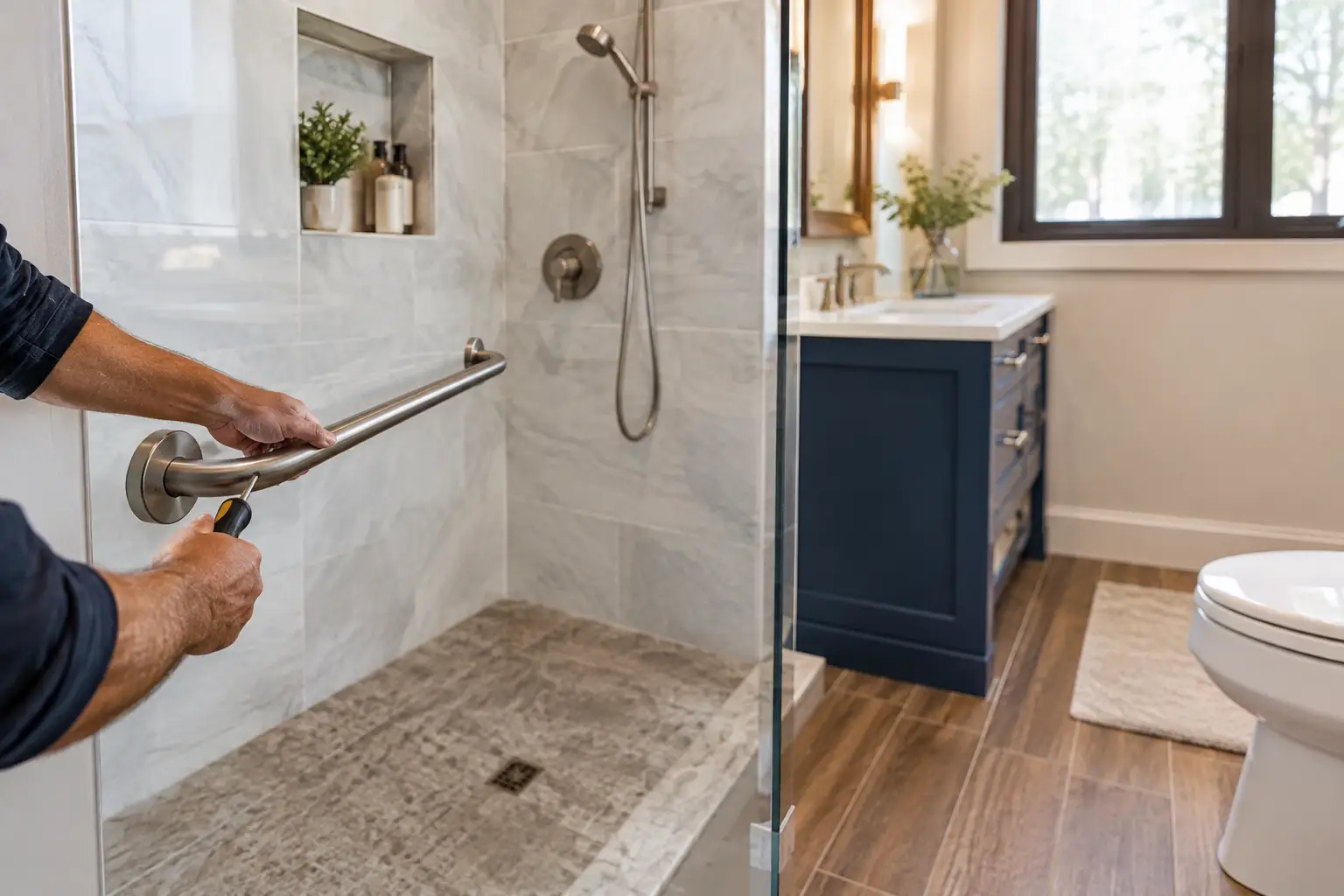
A bathroom can look updated and still create daily problems: a tub wall that is too high to step over, poor lighting at the vanity, slick tile after a shower, or a toilet set too low for comfort. The best aging in place bathroom trends address those details before they become urgent. For Dallas-Fort Worth homeowners, the goal is usually not to make a bathroom feel clinical. It is to create a polished, practical space that works well now and remains easier to use in the years ahead.
A successful remodel starts with how the household actually uses the room. A couple planning to stay in their home may need a low-threshold shower and better storage. A family may want a safer bath that works for older relatives without sacrificing a clean, modern design. Good planning connects accessibility, plumbing, layout, and finish selections from the start.
Aging in Place Bathroom Trends Homeowners Are Choosing
Curbless and low-threshold showers
Replacing a traditional tub with a walk-in shower remains one of the most requested bathroom upgrades. A curbless shower has a floor that slopes gently to the drain, eliminating the raised edge that can become a trip hazard. Low-threshold showers offer a similar benefit when a completely flush floor is not practical.
This trend works because it improves access without changing the visual character of the bathroom. Large-format tile, frameless glass, recessed niches, and a linear drain can make the shower feel more open and custom-built.
There is a practical trade-off. A true curbless shower often requires changes to the subfloor, drain location, waterproofing system, and floor slope. In some homes, particularly on concrete slabs, that work can add complexity and cost. An experienced remodeler should evaluate the existing plumbing and structure before promising a fully barrier-free design. A carefully built low curb may be the smarter option in certain bathrooms.
Grab bars designed into the room
Grab bars no longer have to look like an afterthought. Current options include finishes that coordinate with faucets and shower hardware, along with styles that double as towel bars, shelves, or toilet-paper holders. When placed correctly, they provide real support while fitting the overall design.
The key is installation, not just appearance. Grab bars must be anchored to proper framing or approved blocking. Decorative accessories are not substitutes for weight-bearing support. Even homeowners who do not need grab bars today can benefit from adding wall blocking during a remodel. It is an inexpensive step while walls are open and makes future installation much easier.
Comfort-height toilets and practical clearances
A comfort-height toilet is typically several inches taller than a standard model, making it easier for many adults to sit and stand. It is a straightforward upgrade with a noticeable day-to-day benefit, especially when paired with well-positioned support bars.
Clear floor space matters just as much. A bathroom can have beautiful fixtures but still feel difficult to move through if the vanity, toilet, and shower door crowd the room. Remodeling is the right time to review door swing, toilet clearance, and pathways around the vanity. In tight bathrooms, changing a swing door to a pocket door or installing a more compact vanity can improve function more than an expensive fixture upgrade.
Better lighting at every level
Shadowy bathrooms are frustrating at any age. They become more challenging when applying makeup, shaving, reading medication labels, or stepping into a shower. Layered lighting is now a core part of an aging-in-place remodel: bright, even vanity lighting; general ceiling lighting; and focused illumination in the shower or toilet area.
Sconces on both sides of a mirror often provide more useful face lighting than a single overhead fixture. Recessed ceiling lights can brighten the room without taking up visual space. For nighttime trips, low-level lighting beneath a floating vanity or along a toe kick offers guidance without the glare of full overhead lights.
Choose dimmers where they make sense and place switches where they are easy to reach. Motion-sensor lighting can be helpful, but it should be selected carefully. A sensor that turns lights off too quickly can be more irritating than useful.
Slip-resistant surfaces with a clean finish
Tile is still one of the most popular choices for shower walls and bathroom floors, but the finish matters. Highly polished tile may look striking in a showroom and become slippery when wet. Textured porcelain, matte finishes, and smaller mosaic tile on shower floors generally provide better traction.
Small-format shower tile is practical because the additional grout lines help with slip resistance and allow the floor to follow the needed slope toward the drain. On the main bathroom floor, the right material depends on the layout and maintenance expectations. Natural stone can be beautiful, but it may require more care than porcelain. For many busy households, porcelain delivers a durable, lower-maintenance option with a wide range of stone and wood-look styles.
Comfort Should Not Mean a Clinical Look
The strongest aging-in-place bathrooms do not advertise themselves as accessible. They simply feel easier to use. A built-in shower bench can be a place to sit while drying off, shaving, or helping a child, while also adding a custom spa-like detail. A handheld showerhead on an adjustable slide bar works for seated use, cleaning the shower, and households with different heights.
Storage is another design detail with a major payoff. Deep lower drawers are easier to access than a dark cabinet with a fixed shelf. Pull-out organizers keep everyday items visible, and recessed niches prevent shampoo bottles from accumulating on the shower floor. Lever-style faucet handles are easier to operate than small knobs, though a single-handle faucet may be the simplest choice for temperature control.
Floating vanities are popular because they create a lighter look and make floor cleaning easier. However, they are not always the best solution. A homeowner who needs more enclosed storage may prefer a furniture-style vanity with wide drawers. The right choice depends on storage needs, cleaning habits, and whether knee clearance may be needed later.
Plan Plumbing and Layout Before Choosing Finishes
Aging-in-place upgrades are most effective when they are part of the full renovation plan, not last-minute additions. Moving a shower drain, widening a doorway, or adding a handheld showerhead may involve plumbing and wall changes that are far easier to complete before tile and cabinetry are installed.
This is especially important in older bathrooms where existing shutoff valves, drain lines, or supply pipes may already need attention. A remodel can be an opportunity to correct slow drains, unreliable fixtures, hidden leaks, or outdated plumbing connections rather than covering them with new finishes. Addressing those issues early helps protect the investment in tile, cabinets, and custom glass.
Before finalizing a layout, consider these questions: Can someone enter and turn comfortably? Is there a stable place to hold on when stepping in or out of the shower? Can the vanity storage be reached without bending deeply? Is the toilet area cramped? The answers often point to practical changes that improve the room for everyone.
Which Trends Are Worth Prioritizing?
Not every bathroom needs every accessibility feature. The right scope depends on the homeowner’s budget, timeline, available space, and plans for the home. If a full remodel is not necessary, targeted improvements such as a comfort-height toilet, secure grab bars, better lighting, a handheld showerhead, and slip-resistant flooring can make a meaningful difference.
For a complete renovation, prioritize features that are difficult or expensive to retrofit later. Proper wall blocking, upgraded plumbing, shower access, lighting wiring, and layout changes belong near the top of the list. Fixture finishes, mirrors, and accessories can usually be updated more easily over time.
Wisez Improvement helps Dallas-Fort Worth homeowners evaluate both the design and repair side of a bathroom project, so the finished room is not only attractive but built around the details that affect everyday use. A clear plan, accurate measurements, and quality installation matter more than chasing every new product trend.
The best bathroom is one that lets you move through your routine with less effort and more confidence. Start with the problems you notice now, then build in the features that will keep the room comfortable long after the remodel is complete.