
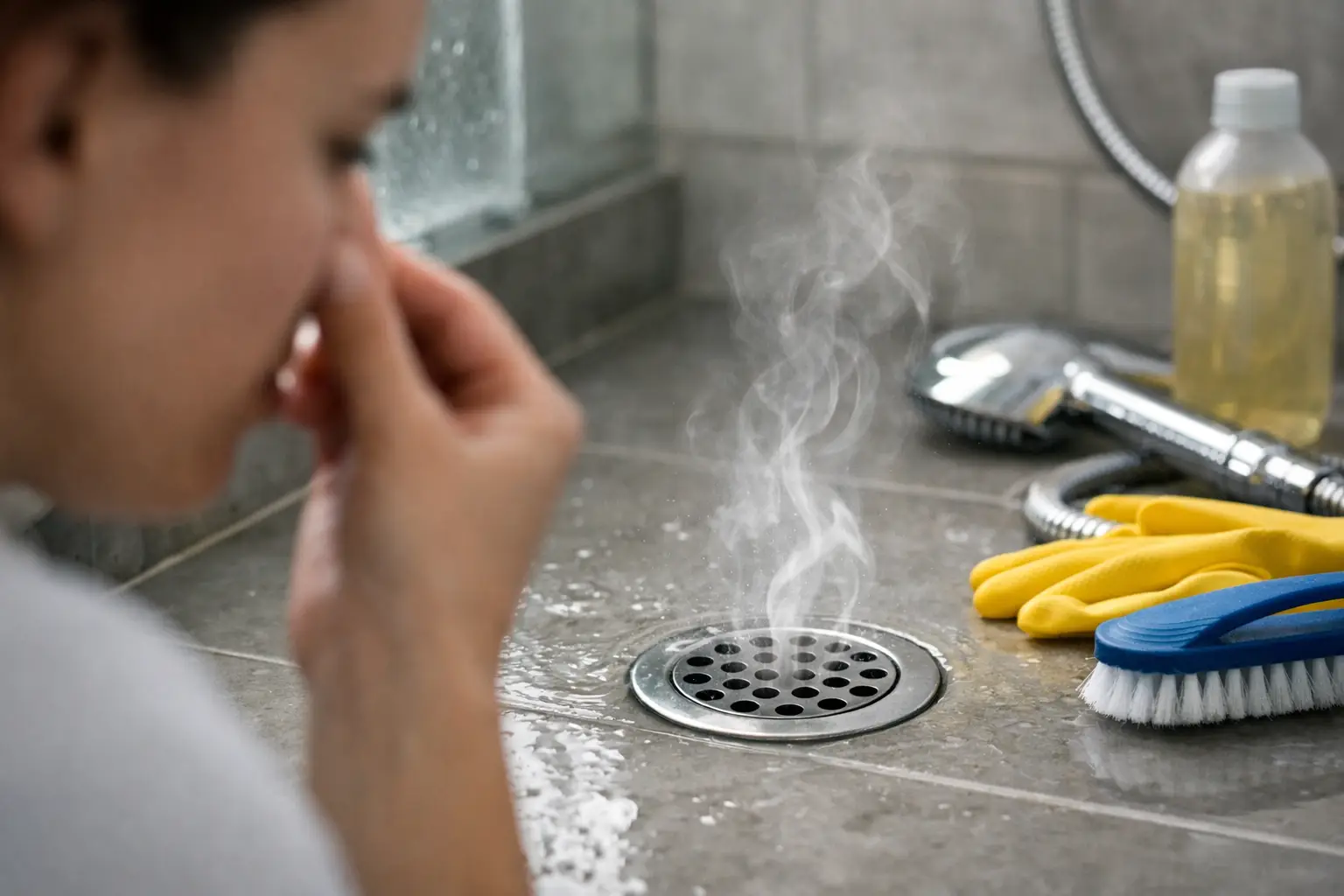
A shower that looks clean but smells like sewage, mildew, or rotten eggs can make the entire bathroom feel unpleasant. If you are asking, “why does shower drain smell,” the answer is usually not the drain cover itself. Odors often come from trapped buildup, a dry drain trap, or a plumbing issue farther inside the system.
Some causes are simple to address at home. Others point to a venting problem, a leak, or worn plumbing components that deserve professional attention. The key is identifying the type of smell, how often it returns, and whether other drains in the home are acting up.
Why Does a Shower Drain Smell Like Sewage?
A sewer-like odor commonly means sewer gas is entering the bathroom. Your shower drain is designed to prevent that. Beneath the drain is a curved section of pipe called a P-trap. It holds a small amount of water at all times, creating a barrier between your bathroom and the sewer line.
When that water barrier disappears or fails, odors can travel upward through the drain. This is especially common in guest bathrooms or secondary showers that do not get used regularly. In Dallas-Fort Worth homes, long summer trips and periods of low water use can leave a shower trap dry enough for odors to become noticeable.
Run water in the shower for a minute or two. If the odor fades shortly afterward, a dry P-trap was likely the issue. Pouring a small amount of water down the drain every few weeks can help prevent it from returning in an infrequently used bathroom.
If the smell returns quickly after you restore the water in the trap, the problem may be more involved. A cracked trap, an improperly installed drain, or a plumbing vent issue can pull water out of the trap and allow sewer gas back into the room.
Hair, Soap Scum, and Biofilm Can Create a Musty Odor
Not every shower drain smell is sewer gas. A damp, sour, or mildew-like odor is often caused by organic buildup inside the drain. Hair catches soap residue, shampoo, body oils, and skin cells. Over time, bacteria feed on that material and create a slimy layer called biofilm.
The visible hair at the drain opening is only part of the problem. Buildup can cling to the underside of the drain cover and the first several inches of pipe, where it stays wet and difficult to reach. This is why a shower may smell even when water still drains reasonably well.
Start by removing the drain cover if it can be taken off without forcing it. Pull out visible hair and scrub the cover with hot, soapy water and a small brush. Then use a plastic drain tool to remove hair and debris just below the opening. Avoid driving a metal tool aggressively into the drain, especially in an older bathroom, because it can damage finishes or catch on pipe connections.
For routine cleaning, flush the drain with hot water and use a non-corrosive drain cleaner appropriate for your plumbing. A simple combination of baking soda followed by vinegar may help loosen minor surface buildup, but it will not remove a serious hair clog or repair a plumbing defect. Do not mix cleaning products, and never combine bleach with vinegar, ammonia, or commercial drain chemicals.
A Partial Clog Can Hold Odor-Causing Debris
A shower does not need to be completely blocked to smell bad. A partial clog slows water just enough for soap residue and debris to remain in the pipe. You may notice that water pools around your feet before draining, or that the odor gets worse after a long shower.
A drain snake or professional cable machine can clear deeper buildup, but the right approach depends on the pipe condition and clog location. Chemical drain openers can be tempting, but repeated use may damage certain pipes, weaken joints, or leave harsh chemicals standing in a backed-up drain. They also do not solve the root problem when the obstruction is heavy hair buildup, scale, or a failing drain assembly.
If the shower drains slowly and the smell keeps coming back after cleaning the top section, a professional drain cleaning service is usually the more reliable fix. The goal is to remove the material causing the odor without creating a bigger repair behind the wall or below the floor.
Mold or Moisture Around the Drain May Be the Source
Sometimes the odor seems to come from the drain, but the actual source is moisture around it. Grout cracks, failing caulk, loose tile, or gaps around the shower pan can allow water to get where it should not. Damp materials behind a shower wall or beneath the floor can develop mold and mildew odors that rise when the bathroom gets warm and humid.
Look for related warning signs: loose tiles, dark grout that returns soon after cleaning, soft flooring, peeling paint outside the shower, stained ceilings below an upstairs bathroom, or persistent moisture near the base of the shower. These are not issues to cover up with stronger cleaners or air freshener.
A bathroom repair may involve resealing a small area, replacing damaged grout or caulk, repairing plumbing, or addressing a shower pan problem. The correct scope depends on where water is getting in and how long the issue has been present. Early repairs are often far less disruptive than waiting for hidden water damage to spread.
Plumbing Vent Problems Can Affect More Than One Drain
Your home’s plumbing vent system helps wastewater drain properly and directs sewer gases safely out of the home. When a vent is blocked, undersized, or incorrectly installed, it can affect the pressure in the drain lines. That pressure can siphon water from a P-trap or make drains gurgle.
A shower drain odor caused by a vent problem may come with other symptoms. You might hear bubbling in the toilet when the shower drains, notice gurgling from a nearby sink, or smell sewer gas in more than one bathroom. These signs suggest the issue may not be limited to the shower itself.
Vent diagnosis often requires more than a quick drain cleaning. A plumbing professional can inspect the drainage behavior, check accessible connections, and determine whether the source is a blocked vent, a damaged pipe, or another issue in the waste system.
When a Rotten Egg Smell Needs Faster Attention
A rotten egg odor can come from bacteria in the drain, but it can also be confused with a natural gas odor. Natural gas is treated with a sulfur-like smell so leaks can be detected.
If the odor is strongest near the shower drain and improves after cleaning and flushing the drain, bacteria are a likely cause. If you smell rotten eggs throughout the room, near gas appliances, or in areas unrelated to plumbing, leave the area and contact your gas utility or emergency services as appropriate. Do not assume every sulfur smell is a drain problem.
When to Call a Bathroom and Plumbing Professional
Home cleaning is reasonable when the odor is mild, the shower drains normally, and the problem improves after removing hair and flushing the trap. It is time to schedule an inspection when the smell persists, returns within days, or comes with slow drainage, gurgling, leaks, or signs of water damage.
Call for professional help if you notice any of the following:
- Sewer odor from multiple drains or bathrooms
- A dry P-trap that repeatedly loses water
- Slow drainage that does not improve after basic cleaning
- Water stains, soft flooring, loose tile, or recurring mold odor
- Gurgling fixtures or toilet bubbles when the shower is used
- A smell that began after a remodel, plumbing repair, or fixture replacement
For homeowners planning a bathroom update, this is also a good time to address aging drain lines, worn shower pans, poor slope, or outdated plumbing connections. Wisez Improvement handles both bathroom repairs and renovation work, helping homeowners correct the underlying issue rather than simply hiding the smell.
A clean-smelling shower should not require constant sprays, harsh chemicals, or repeated temporary fixes. If basic cleaning does not solve the problem, treating the odor as an early warning can protect your bathroom, your plumbing, and the comfort of your home.