
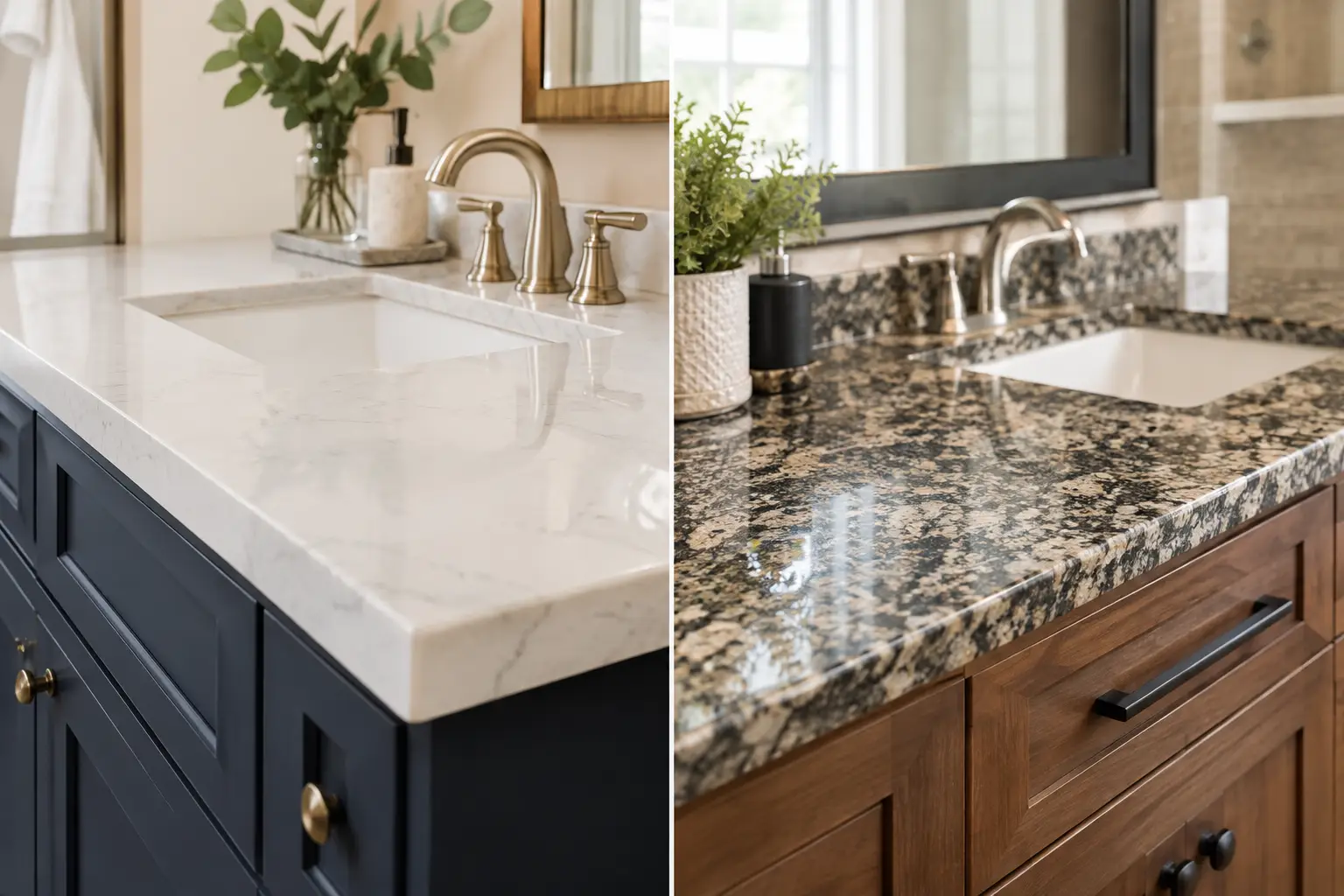
A bathroom vanity top has to handle more than morning routines. It sees wet towels, hair products, makeup, cleaning products, hot styling tools, and the occasional plumbing repair. When comparing a quartz vs granite vanity, the better choice depends on how your household uses the bathroom, the look you want, and how much maintenance you are willing to take on.
Both materials can create a polished, high-value bathroom. The difference is that quartz offers predictable color and easy daily care, while granite brings natural movement and one-of-a-kind character. Neither is automatically the right answer for every Dallas-Fort Worth home.
Quartz vs Granite Vanity: The Main Difference
Quartz is an engineered stone surface made from natural quartz minerals combined with resins and pigments. It is manufactured in controlled slabs, which gives homeowners consistent colors and patterns. A white quartz top with soft gray veining, for example, will look close to the sample you approved.
Granite is a natural stone cut from the earth. Every slab has its own mineral pattern, color variation, and veining. That individuality is the reason many homeowners choose it. It can make a standard vanity cabinet feel more custom, especially in a primary bathroom where the countertop is a major design feature.
The practical difference comes down to surface behavior. Quartz is nonporous, so it does not usually need sealing and is highly resistant to everyday staining. Granite is porous to varying degrees and should be sealed properly to help protect it from moisture, cosmetics, and spills.
Daily Maintenance and Cleaning
For a busy family bathroom, quartz is often the easier material to live with. Wipe it down with a soft cloth, mild soap, and water. It resists common bathroom messes well, including toothpaste, makeup residue, and splashes around the faucet. Avoid abrasive pads and harsh chemicals, which can dull the finish or affect the resin in the surface.
Granite is also easy to clean day to day, but it needs more attention over time. A sealed granite vanity can handle normal use very well, but the sealant should be checked and reapplied when needed. The schedule varies by stone, sealer, and household use. If water no longer beads on the surface, it may be time to reseal it.
Neither material should be treated as indestructible. Clean up hair dye, nail polish, strong cleaners, and spilled oils promptly. This is especially relevant in bathrooms used for getting ready, where products tend to collect near the sink and backsplash.
Durability Around Water, Heat, and Impact
Both quartz and granite are durable choices for a vanity, but they perform differently under stress.
Quartz is exceptionally hard and resists scratches from normal bathroom use. It handles water exposure well because the surface is nonporous. However, quartz is not the best place to set a hot curling iron or flat iron directly on the countertop. High heat can damage the resin binders or leave discoloration, particularly on lighter colors. A heat-resistant holder is a simple precaution.
Granite tolerates heat better than quartz. A hot styling tool is less likely to create a problem, though using a heat pad is still smart. Granite is also very hard, but a sharp impact near an edge or sink cutout can chip it. The same is true of quartz. Chips can often be repaired, but a professional installation reduces the risk by ensuring proper support and careful handling around cutouts.
In a bathroom, water management matters as much as countertop material. A well-installed faucet, sealed sink, secure backsplash, and properly caulked countertop edge protect the vanity cabinet below. A beautiful stone top cannot prevent damage from an active plumbing leak.
Cost Considerations for a Bathroom Remodel
The cost of quartz vs granite vanity tops can overlap more than many homeowners expect. Material price depends on the selected slab, thickness, edge profile, vanity size, sink cutout, backsplash, and installation conditions. Premium quartz patterns and rare granite slabs can both raise the budget.
Because bathroom vanities are smaller than kitchen countertops, the total material cost may be manageable even when you select a higher-end surface. Still, countertop pricing is not just about square footage. Fabrication requires measuring, cutting, polishing edges, creating faucet holes, and cutting the sink opening. A small vanity may use less stone, but it still involves skilled fabrication and installation.
Granite can sometimes be a cost-effective option when a fabricator has a remnant that fits your vanity. Quartz remnants may also be available, though selection can be more limited. If your goal is to control cost, choose your cabinet and sink style first, then review available slabs or remnants that work with the dimensions.
It is also worth considering the full scope of the bathroom project. Replacing a vanity top may reveal plumbing connections that need adjustment, a wall that needs repair behind the backsplash, or an old cabinet that is no longer level. Addressing those conditions before the new top is installed helps avoid rushed decisions later.
Design: Consistency or Natural Character?
Quartz works especially well in clean, contemporary, transitional, and bright bathroom designs. It is available in solid whites, warm neutrals, concrete-look finishes, and marble-inspired veining. Its consistency makes it easier to coordinate with porcelain tile, painted cabinets, and brushed nickel, matte black, or brass fixtures.
Granite has a more organic appearance. Some slabs are subtle, while others have dramatic veining and color movement. That variation can bring warmth and depth to bathrooms with simple cabinetry or neutral wall tile. Before choosing granite, view the full slab whenever possible. A small sample may not show the amount of movement, contrast, or mineral variation that will appear across the finished vanity.
For a double vanity, the slab layout matters. Fabricators can discuss where seams may be needed, how the pattern will flow around sink cutouts, and whether the backsplash should be cut from the same material. These details affect the finished appearance as much as the material itself.
Which Material Fits Your Bathroom?
Choose quartz if you want a low-maintenance surface with reliable color, a clean appearance, and strong resistance to daily bathroom stains. It is a practical choice for guest bathrooms, children’s bathrooms, and primary bathrooms where easy upkeep is a priority.
Choose granite if you value natural stone, want a surface with more visual variation, and do not mind periodic sealing. It can be an excellent fit for homeowners who want the vanity to feel distinctive rather than uniform.
The cabinet style and sink selection should influence the decision, too. A crisp white quartz can balance a dark floating vanity and modern vessel sink. A warm granite may complement stained wood cabinetry and traditional fixtures. If the existing bathroom has busy floor tile, a quieter countertop often creates a better balance. If the room is mostly neutral and simple, a more expressive granite slab may provide the focal point.
Installation Details That Protect Your Investment
A quality vanity countertop installation starts with accurate measurements and a sound base. Cabinets should be level, securely fastened, and able to support the selected top. Wall conditions matter as well, particularly when adding a stone backsplash or working around uneven tile.
The sink must be mounted correctly, faucet holes must align with the fixture, and all plumbing connections should be checked after installation. For undermount sinks, the attachment method and sealing are critical. For vessel sinks, faucet height, drain placement, and countertop hole sizing need to be planned before the stone is fabricated.
A remodel team that understands both installation and plumbing can spot potential conflicts before the countertop arrives. That coordination is valuable when updating an older Dallas-Fort Worth bathroom, where vanity dimensions, drain locations, and shutoff valves may not match current fixtures.
The best vanity top is the one that works with your routine, your design plan, and the condition of the room. Take time to compare full slabs, confirm the installation details, and choose a material you will be comfortable using every day. A well-planned quartz or granite vanity can make the whole bathroom feel finished, functional, and built to last.