
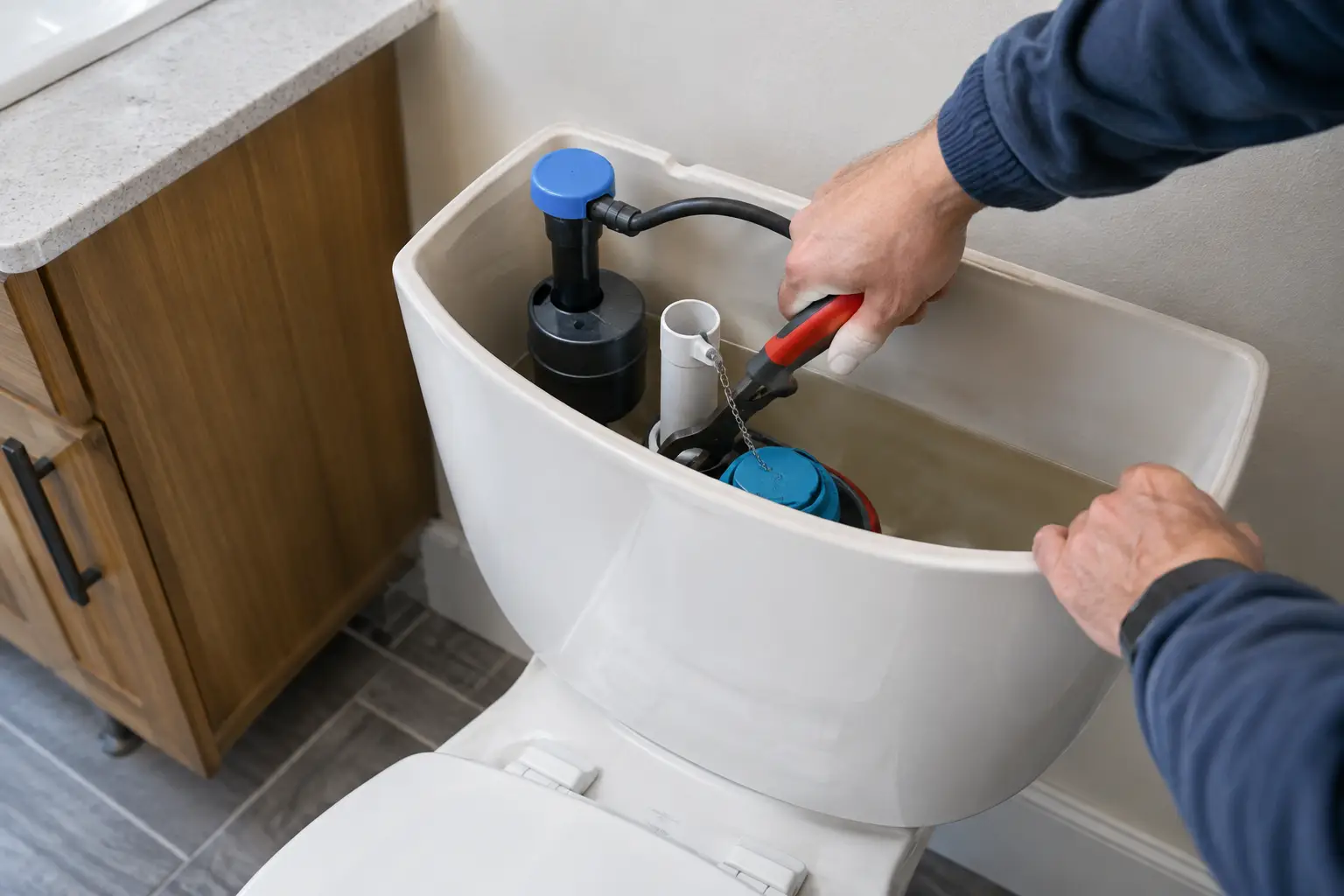
A toilet that refills for a few seconds after flushing is normal. A toilet that keeps running long after the flush is finished is not. That steady hiss or occasional refill can waste a surprising amount of water, raise a utility bill, and signal a worn part inside the tank. In most cases, the issue is repairable without replacing the entire toilet, but the right fix depends on what is causing water to move from the tank into the bowl.
Start With the Water Supply
Before removing the tank lid, look behind or beside the toilet for the shutoff valve. Turning it clockwise stops water from entering the tank. This is useful if the toilet is continuously filling, if water is getting close to the top of the tank, or if you need time to arrange a repair.
Do not force a valve that is stiff or corroded. Older shutoff valves can leak or fail when they have not been operated in years. If it will not turn easily, leave it alone and focus on identifying the issue inside the tank. A plumber can replace an aging valve if needed.
Once the water is off, remove the tank lid carefully and place it on a folded towel. Porcelain lids chip and crack easily. Then flush the toilet to empty most of the tank and make the internal components easier to inspect.
The Most Common Reasons a Toilet Keeps Running
Most running toilets come down to one of three parts: the flapper, the fill valve, or the overflow tube. These components work together during every flush. When one is worn, misaligned, or improperly adjusted, water continues moving when it should stop.
A worn or leaking flapper
The flapper is the rubber seal at the bottom of the tank. It lifts when you press the flush handle, allowing tank water to enter the bowl. After the flush, it should settle back into place and create a watertight seal.
Over time, rubber flappers can warp, harden, collect mineral buildup, or develop small cracks. When the seal leaks, water slowly escapes into the bowl. The tank level drops, the fill valve turns on to replace the lost water, and the cycle repeats.
A simple dye test can confirm this problem. With the tank full, add a few drops of food coloring to the tank water and do not flush. Check the bowl after 10 to 15 minutes. If colored water appears in the bowl, water is leaking past the flapper.
Sometimes the flapper itself is fine, but the chain is too short and holds it slightly open. There should be a little slack in the chain when the flapper is closed. A chain that tangles or catches under the flapper can cause the same issue.
A fill valve that will not shut off
The fill valve controls the water entering the tank after each flush. It should stop the flow when the tank reaches its proper water level. If the valve is worn or clogged with debris, it may continue running or cycle on and off throughout the day.
You may notice a constant hissing sound near the top of the tank. In some cases, water continues to rise until it spills into the overflow tube. This is often an adjustment issue, especially after a recent repair, but a failing fill valve may need replacement.
Many modern fill valves have an adjustment screw or sliding clip that changes the water level. The correct level is usually marked inside the tank and should sit roughly one inch below the top of the overflow tube. Setting it too high sends water down the tube and wastes water with every refill.
Water flowing into the overflow tube
The overflow tube is the open vertical tube in the center of the tank. It prevents flooding by directing excess water into the bowl. If you see water pouring or trickling into this tube while the fill valve is running, the tank water level is too high.
First, adjust the float or fill valve to lower the water level. If that does not stop the flow, the fill valve may not be shutting off correctly. Replacing it is typically a straightforward repair, but the work needs to be done carefully to avoid leaks at the water supply connection below the tank.
A flush handle or chain that sticks
A loose, corroded, or sticking flush handle can prevent the flapper from closing all the way. This problem is easy to miss because the toilet may appear normal until the handle catches in the down position.
Open the tank and press the handle slowly. Watch whether the lift arm returns fully and whether the chain drops freely. Adjusting the chain or replacing the handle assembly can resolve the issue when the flapper is otherwise in good condition.
What You Can Safely Check Yourself
Homeowners can often identify the source of a running toilet without taking apart the entire fixture. Start by watching the tank after a flush. Look for water entering the overflow tube, listen for a continuous fill sound, and check whether the flapper seats flat against the flush valve opening.
Cleaning light mineral buildup from the flapper and its seating surface may help, particularly in an older bathroom. Use a soft cloth and avoid harsh cleaners that can damage rubber parts. If the flapper feels brittle, leaves black residue on your fingers, or looks distorted, replacement is usually the better choice.
It is reasonable to replace a standard flapper or make a minor water-level adjustment if you are comfortable working with the shutoff valve and following product directions. The trade-off is that universal repair kits do not fit every toilet equally well. An incorrect flapper size or poorly matched fill valve can leave the toilet running or create a new leak.
Avoid putting chemical drain cleaners or tank tablets into the toilet tank to solve a running problem. They will not repair a failed seal or valve, and some products can damage internal components over time.
When a Professional Repair Makes More Sense
Call for professional help if you have replaced the flapper and the toilet still runs, the shutoff valve leaks, or water appears around the base of the toilet. These symptoms can point to more than a simple tank repair.
A toilet that runs intermittently may have a slow flapper leak. A toilet that runs constantly may have a fill valve problem or an overflow issue. But if the toilet also flushes weakly, bubbles in the bowl, backs up, or produces water near the floor, the problem may involve the drain line, toilet seal, or fixture installation.
Older toilets can also have worn flush valves, damaged tank bolts, corroded hardware, or parts that no longer match current replacement components. In those cases, repairing only the most visible part can become a short-term fix. A qualified plumber can assess whether a targeted repair is worthwhile or whether replacing the toilet makes better financial sense.
For Dallas-Fort Worth homeowners, this is especially practical when the running toilet is part of a larger bathroom concern, such as an outdated fixture, recurring plumbing repairs, water-damaged flooring, or a planned remodel. Wisez Improvement can address the immediate plumbing issue while helping homeowners make sensible decisions about fixture replacement and bathroom upgrades.
Do Not Ignore the Water Bill
A running toilet is easy to postpone because it often still flushes. The cost, however, can add up quickly. Even a small, intermittent leak sends treated water down the drain all day and night. A toilet that runs continuously can waste far more.
If the sound stops when you lift the float or press down gently on the flapper, you have narrowed the issue down and can take the next step with more confidence. Turn off the water if necessary, avoid forcing old connections, and arrange a repair before a small tank problem becomes an expensive source of water waste.