
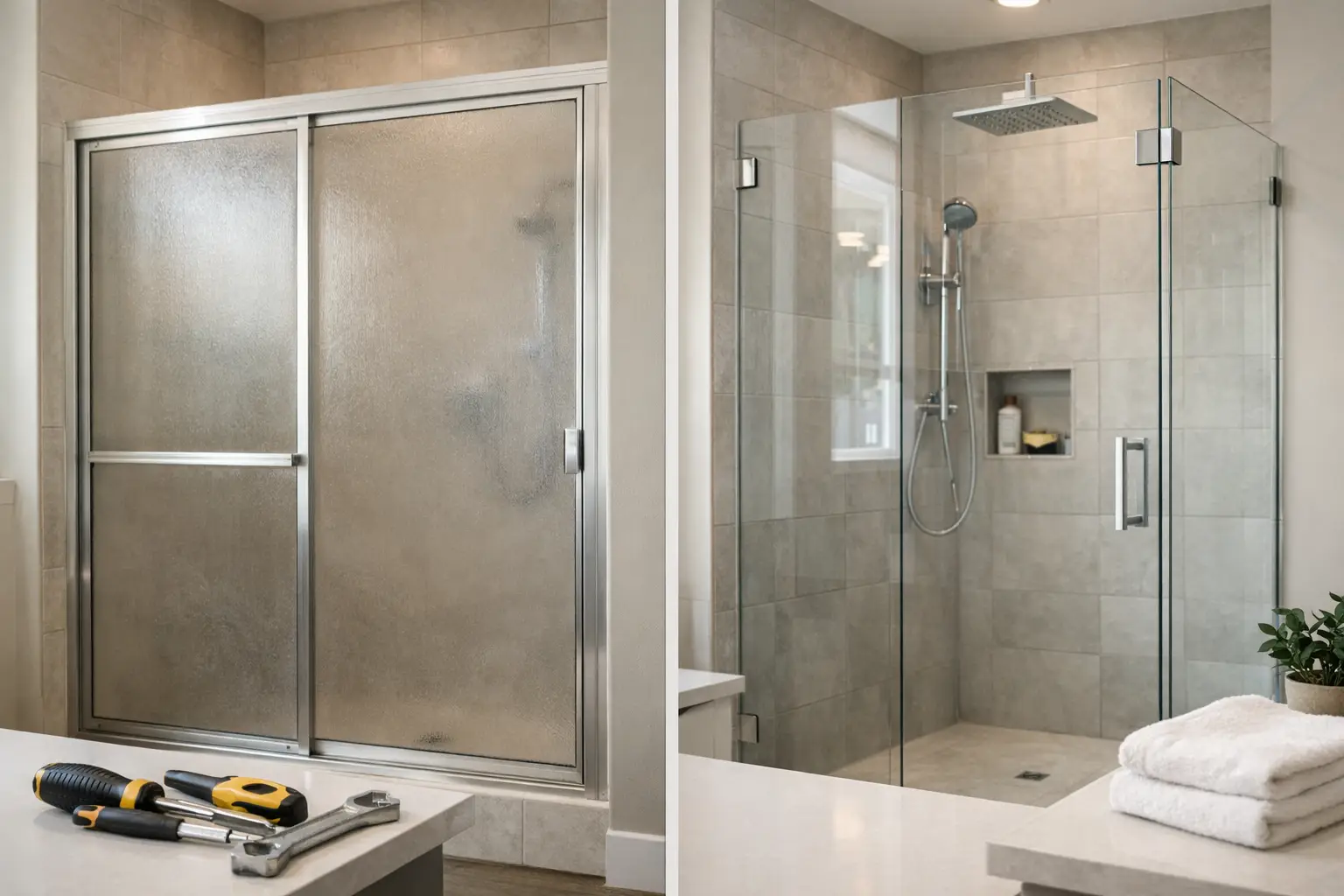
A shower door that drags across the tile, leaks onto the bathroom floor, or refuses to close properly is more than an everyday annoyance. In a Dallas-Fort Worth bathroom, repeated water exposure can damage flooring, loosen trim, stain drywall, and create a larger repair than the door itself. A well-planned shower door replacement restores the look of the room, but just as importantly, it helps keep water where it belongs.
The right answer is not always to replace the entire enclosure. Some problems come down to worn sweep seals, loose handles, or hardware that can be adjusted. Others point to failing glass, an out-of-square opening, water damage, or an outdated enclosure that no longer works for the household. Knowing the difference helps homeowners invest in the right fix instead of paying for the same problem twice.
Signs Your Shower Door Needs More Than a Quick Fix
A small drip at the bottom edge of a door does not always mean the glass enclosure has failed. A damaged vinyl sweep, a missing drip rail, or a hinge adjustment may solve the issue. These are common wear items, especially in heavily used bathrooms.
Replacement becomes the better option when the problem involves the structure or safety of the enclosure. Cracked, chipped, or scratched tempered glass should be addressed promptly. Even a small chip near an edge can weaken the panel. Rusted hinges, corroded tracks, loose wall anchors, and hardware that will not hold an adjustment are also signs that the door may be at the end of its service life.
Pay attention to what is happening around the shower as well. Soft baseboards, peeling paint outside the enclosure, dark grout lines near the curb, or persistent moisture on the floor may indicate that water is escaping beyond the door seal. Before installing new glass, the shower curb, wall tile, and waterproofing details should be inspected. A new door cannot correct a failed shower pan or a curb that slopes the wrong direction.
An older framed door may still function, but it can make the whole bathroom feel dated and harder to clean. Mineral buildup collects in tracks, and worn aluminum frames can be difficult to keep looking presentable. In that situation, replacement is often a practical design upgrade, particularly when the surrounding tile and shower base are in good condition.
Choosing the Right Shower Door Replacement
The best replacement depends on the shower layout, the condition of the existing opening, who uses the bathroom, and how much maintenance the homeowner wants to take on. A door that looks excellent in a showroom may not be the right fit for a narrow bathroom, a sloped ceiling, or a shower with an uneven tile opening.
Framed, Semi-Frameless, or Frameless Glass
Framed doors use metal around the glass edges and typically cost less than frameless options. They can be a sensible choice for a guest bath, rental property, or budget-conscious refresh. The trade-off is more visible hardware and more places for soap residue and mineral deposits to collect.
Semi-frameless doors reduce the amount of metal while maintaining structural support at key points. They offer a cleaner appearance without the full cost of a heavy frameless system. This can be a good middle ground for homeowners updating a standard tub-to-shower conversion or a compact shower enclosure.
Frameless doors use thicker tempered glass and minimal hardware. They create an open, custom look that shows off tile work and makes many bathrooms feel larger. They also require accurate measurements, properly supported walls, and careful installation. Frameless glass is not simply a product upgrade. It is a precision installation, and small errors in layout, hinge placement, or sealing can cause leaks and door alignment problems.
Sliding Doors, Hinged Doors, and Fixed Panels
A hinged door needs enough clear floor space to swing safely. It is often ideal for a walk-in shower with room in front of the opening, but it may not work in a tight hall bathroom where the door could hit a vanity or toilet.
Sliding doors are useful when the bathroom has limited clearance. Modern sliding systems can look much cleaner than older bypass doors, especially when paired with simple hardware and clear glass. Their tracks still need periodic cleaning, and lower rollers or guides eventually require maintenance.
A fixed glass panel with an open entry is a popular choice for larger walk-in showers. It delivers a minimal, easy-to-access look and eliminates moving door hardware. However, it works best when the shower is large enough to contain overspray. In a smaller enclosure, an open panel may leave the bathroom floor wetter than expected.
Glass and Hardware Details Matter
Clear glass provides the most open look, while frosted, patterned, or tinted glass offers more privacy. Clear glass makes tile a focal point, but it also shows water spots more readily. Homeowners with hard water often choose a protective glass treatment and a simple routine with a squeegee after showering.
Hardware finish should coordinate with the shower fixtures and the rest of the bathroom. Matte black, brushed nickel, polished chrome, and warm brass tones can all work well, provided the finish is selected intentionally. More important than the color is the quality of the hinges, handles, rollers, and anchors. Hardware carries the weight of the glass every day, so this is not the place to choose based on appearance alone.
Why Accurate Measurement Is the Difference
Shower openings are rarely perfectly square, particularly in older homes or bathrooms with tile installed over existing walls. A measurement taken only at the top and bottom can miss a bow in the wall or a change in width through the opening. That is why custom glass work begins with a detailed field measurement after tile, wall finishes, and the shower base are complete.
The installer must also confirm that the shower curb slopes inward, the walls can support the selected hardware, and the door swing will clear nearby fixtures. If a wall-mounted hinge is planned, solid backing behind the finished wall is often necessary. Skipping these checks can lead to loose hardware, cracked tile, improper gaps, and water that escapes at the threshold.
For a remodel, it is usually better to plan the enclosure before finalizing the shower layout. The door style can affect curb depth, bench placement, showerhead direction, niche location, and the amount of clearance needed outside the shower. Coordinating those details early creates a better finished result than trying to force a standard door into a custom space later.
Repair, Replacement, or Full Shower Update?
If the shower itself is in good condition, replacing the door can be a focused improvement with a noticeable visual payoff. New glass and hardware can make existing tile look cleaner and more current, especially when the old enclosure is bulky or discolored.
If there are cracked tiles, loose shower walls, recurring leaks, or a deteriorated base, door replacement should be part of a larger repair plan. Installing new glass over unresolved water damage can hide the issue for a while, but it does not stop moisture from reaching the structure behind the walls. The right scope depends on what is causing the problem, not just what is most visible.
A full update may also make sense when the current shower no longer fits the household. Replacing a high-sided tub with a walk-in shower, widening an entry, or improving access can deliver more day-to-day value than changing the door alone. This is where a contractor with both remodeling and repair experience can identify the practical issues before work begins.
What to Expect From Professional Installation
A reliable installation starts with a site visit, measurements, and a clear discussion of the preferred door style, glass type, hardware finish, and any conditions that affect the work. If adjustments to tile, plumbing fixtures, or the shower curb are needed, they should be identified before the glass is ordered.
Once custom glass is ready, installation should include secure hardware mounting, proper panel alignment, appropriate seals, and water testing where applicable. Silicone needs time to cure, so the shower may need to stay dry for a short period after installation. A professional should also explain basic care, including how to clean the glass and when to replace wear items such as sweeps or seals.
For Dallas-Fort Worth homeowners, Wisez Improvement can evaluate whether a shower door issue calls for a targeted repair, custom glass replacement, or a more complete shower renovation. The goal is straightforward: a door that operates correctly, contains water, fits the bathroom, and looks finished from every angle.
A shower door should not be something you have to fight with every morning. If it leaks, binds, looks worn out, or no longer suits the way you use the space, a careful evaluation can turn a recurring frustration into a clean, dependable upgrade.