
A bathroom can have beautiful tile, a well-built vanity, and new plumbing fixtures, yet still feel unfinished if the lighting is wrong. Shadows across the mirror, a dark shower, or a harsh overhead fixture can affect how the room looks and how it works every day. Knowing how to choose bathroom lighting means planning for grooming, safety, comfort, and the finish level you expect from a remodel.
For Dallas-Fort Worth homeowners, lighting decisions should happen early in the renovation process. Fixture locations can affect electrical rough-in, mirror size, medicine cabinet placement, shower design, and even the layout of a vanity. It is much easier to install the right junction boxes and switches before new tile and drywall are complete.
Start With the Jobs Your Bathroom Must Handle
Bathrooms need more than one kind of light because they serve more than one purpose. You need clear, even light at the mirror for shaving, makeup, skincare, and contact lenses. You also need enough general light to move safely through the room, use the toilet area, and find what you need before the sun is up.
A primary bathroom may also need softer lighting for early mornings or late-night use. A guest bathroom can often use a simpler plan, but it should still give visitors a bright, comfortable mirror area. Powder rooms are different again: they may prioritize appearance and ambient light over task lighting, although the mirror should never be left in the dark.
Before selecting fixtures, think about when the room is used and by whom. A family bathroom used by several people before school or work needs reliable, bright lighting. A bathroom designed for aging in place benefits from better visibility, fewer dark corners, and easy-to-reach switches. The right plan depends on the room, not just the fixture style.
Use Layers Instead of One Overhead Fixture
The most functional bathrooms use layered lighting. Each layer has a specific job, and together they make the room feel more balanced.
Ambient lighting
Ambient lighting provides overall illumination. Recessed ceiling lights are a common choice because they spread light across the room without taking up visual space. A central ceiling fixture can also work in a small bathroom, especially when the design calls for a decorative element.
Recessed lights should be placed with the room layout in mind, not simply spaced in a grid. A light directly over the vanity can create shadows on the face if it is the only source of mirror lighting. In a larger bathroom, additional recessed lights may be useful near the toilet area, linen storage, or walkway.
Task lighting at the vanity
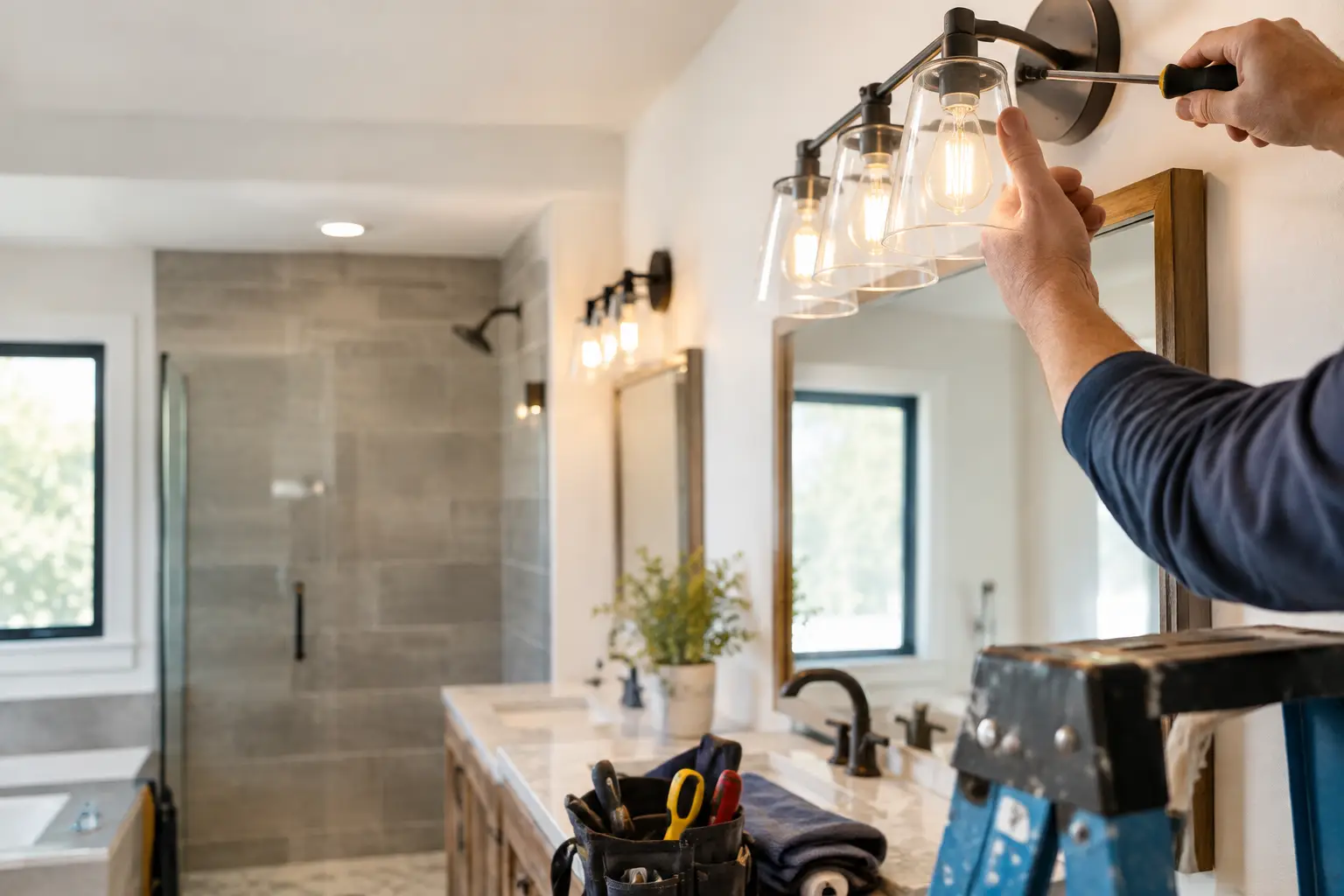
Task lighting is the most important layer for most homeowners. The best location is usually on both sides of the mirror, at about face level, where light can reach the face evenly. Vertical sconces reduce the shadows that often occur when all light comes from above.
If side sconces will not fit because of a narrow vanity, wall layout, or a large mirror, a well-designed fixture above the mirror can still work. Choose one that spreads light broadly rather than sending a narrow beam downward. Backlit mirrors are attractive and can provide useful fill light, but they are not always strong enough to serve as the only source for grooming.
Accent and nighttime lighting
Accent lighting adds comfort and character. It may include a lighted niche, toe-kick lighting under a floating vanity, or a small decorative fixture in a powder room. These details should support the main lighting plan, not replace it.
Low-level lighting is especially useful for nighttime trips to the bathroom. A dimmable vanity light, under-vanity light, or motion-activated night light can make the room safer without the shock of full brightness at 2 a.m.
Choose Brightness Based on the Room, Not the Bulb Package
Brightness is measured in lumens, not watts. Watts describe energy use, while lumens describe the amount of light produced. LED fixtures use far less energy than older incandescent bulbs, so comparing wattage alone can lead to a poorly lit bathroom.
For a typical bathroom, aim for enough ambient lighting to illuminate the full room and enough dedicated light at the vanity for detail work. The exact number of lumens depends on ceiling height, wall color, natural light, fixture shades, and the size of the space. Dark tile, charcoal cabinetry, and windowless layouts absorb more light than white walls and reflective surfaces.
Rather than trying to force one powerful fixture to do everything, divide brightness between ceiling lights and vanity lighting. This provides better coverage and gives you more control. Dimmers are a practical upgrade because the amount of light needed for getting ready is not the same as the amount needed for a relaxing shower.
Select a Color Temperature That Looks Good on People and Materials
Color temperature affects whether a light looks warm, neutral, or cool. It is measured in Kelvin. In most bathrooms, a warm-neutral to neutral white light, generally around 2700K to 3500K, creates a clean appearance without making skin tones look overly blue or clinical.
A 2700K light feels warmer and often works well with traditional finishes, natural wood, and spa-inspired designs. A 3000K or 3500K light can feel brighter and crisper, which many homeowners prefer in modern bathrooms. Cooler temperatures may be appropriate in certain settings, but they can make a residential bathroom feel harsh if overused.
Consistency matters. Mixing a warm vanity fixture with cool recessed lights can make tile, paint, and countertop colors look different from one area to another. Review fixture specifications before ordering, especially when combining integrated LED fixtures with replaceable LED bulbs.
Color rendering is also worth checking. A higher color rendering index, often called CRI, helps colors appear more natural. This is particularly helpful at the vanity, where you want makeup, skin tone, and clothing colors to look accurate before leaving the house.
Plan for Water, Steam, and Electrical Safety
Bathrooms are wet environments, so fixture ratings are not optional details. Lighting installed over a shower or tub must be rated for the location and properly installed for moisture exposure. A decorative fixture that looks right over a vanity may not be approved for use near water.
Ask about damp-rated and wet-rated fixtures. Damp-rated fixtures are designed for humid areas but are not intended for direct water exposure. Wet-rated fixtures are built for locations where water may contact the fixture, such as a shower enclosure. Your contractor and electrician should also confirm proper placement, switching, and code requirements for the project.
Ventilation plays a role here as well. A quality exhaust fan helps reduce moisture that can affect paint, drywall, cabinetry, and fixtures over time. In many remodels, it makes sense to coordinate lighting and ventilation controls so the bathroom is easier to use and maintain.
Match Fixture Size and Style to the Vanity
A vanity light should relate to the size of the mirror and vanity rather than dominate the wall. For a single vanity, the fixture is often somewhat narrower than the mirror. With double vanities, you may use one long fixture, separate fixtures over each sink, or side sconces paired with individual mirrors.
Consider the finish as part of the full room design. Matte black can give a bathroom strong contrast, while brushed nickel and chrome remain flexible choices for many homes. Brass can add warmth, but it should be coordinated with faucets, cabinet hardware, and shower trim so the room looks intentional rather than pieced together.
Glass shades also affect performance. Clear glass exposes the bulb and can create sparkle, but it may produce glare. Frosted or opal glass softens the light and often works better for daily grooming. The best choice depends on whether the bathroom needs more visual drama or more forgiving light.
Decide Controls Before the Walls Are Closed
Switch placement is easy to overlook until the bathroom is finished. Separate switches for vanity lights, ceiling lights, and shower lights give you better control than putting everything on one switch. Dimmers add flexibility, and a timer or humidity-sensing control for the exhaust fan can help prevent unnecessary moisture buildup.
Think about the entry path too. In a large primary bathroom, it may be useful to control lighting from more than one location. In a small bathroom, a simple setup may be all you need. The goal is not to add controls for their own sake, but to make the room easy to use every day.
When a bathroom remodel includes new tile, a custom shower, or a relocated vanity, lighting should be part of the construction plan from the first measurements. Wisez Improvement can help homeowners coordinate practical fixture placement with the plumbing, cabinetry, and finish work that shape the entire room. A well-lit bathroom does more than show off the remodel – it makes every morning, evening, and unexpected nighttime visit work better.