
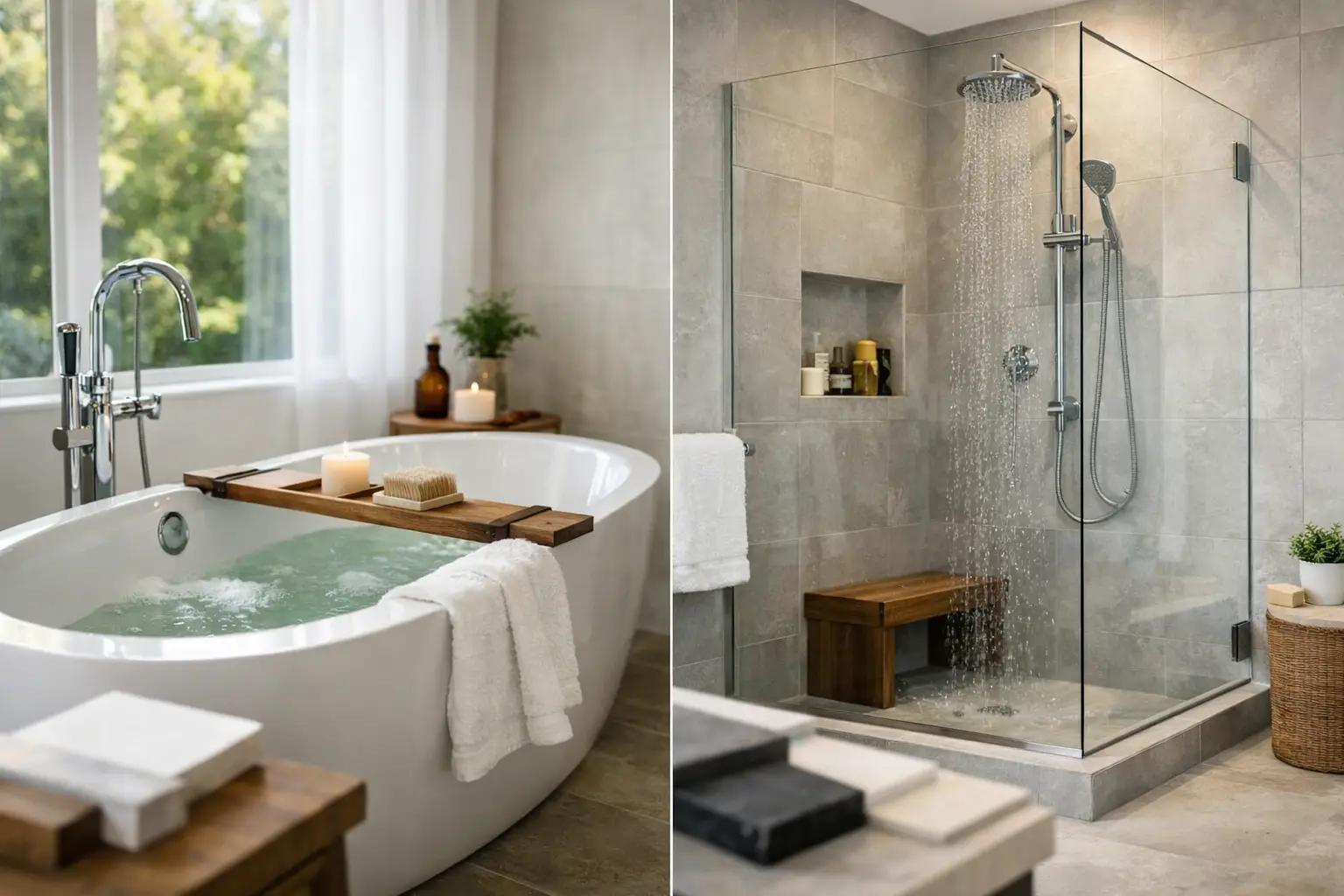
Most homeowners do not start thinking about a tub or shower remodel because they are chasing trends. They start because the bathroom is no longer working. Maybe the old tub is hard to step over, the shower leaks into the wall, the tile never looks clean, or the layout wastes space in a room you use every day. When that happens, the real question is not what looks best online. It is what will function better in your home.
When a tub or shower remodel is the right move
A bathroom can look dated and still work fine. On the other hand, a bathroom can look acceptable on the surface while hiding bigger issues underneath. Cracked tile, failing caulk lines, soft spots near the base, outdated plumbing, and poor drainage are all signs that cosmetic fixes may not be enough.
This is where a remodel makes practical sense. Replacing the tub or rebuilding the shower gives you a chance to correct water-related problems, improve layout, upgrade finishes, and make the space easier to maintain. For many Dallas-Fort Worth homeowners, it also means bringing an older bathroom up to the standard of the rest of the house.
A good remodel is not just about swapping one fixture for another. It should solve the reason the bathroom feels frustrating in the first place.
Should you keep the tub or switch to a shower?
This is the decision that shapes the entire project. There is no universal answer because the best choice depends on who uses the bathroom, how long you plan to stay in the home, and what the rest of the house already offers.
If this is a primary bathroom, many homeowners lean toward a walk-in shower. It is easier to access, often feels more open, and can create a cleaner, more modern layout. A well-built custom shower also gives you more flexibility with tile, glass, niches, benches, and fixture placement.
If this is a secondary or family bathroom, keeping a tub may be the smarter move. Households with young children often want at least one tub in the home. From a resale standpoint, many buyers still expect that. Removing the only bathtub can limit appeal, even if the new shower looks better.
There is also a middle ground. In some homes, replacing an old oversized tub with a more efficient tub-shower combination improves both style and function. In others, converting a neglected tub into a walk-in shower opens up the room and makes daily use much easier. It depends on the bathroom, the plumbing setup, and your long-term goals.
What a shower remodel does better
A shower remodel is often the right choice when convenience and daily usability matter most. Walk-in showers are easier to enter, easier to clean, and better suited for homeowners planning to age in place. They can also make a modest-sized bathroom feel larger, especially when paired with glass enclosures and lighter tile.
Shower remodels also offer more design control. You can create better storage with recessed niches, improve comfort with a bench or handheld showerhead, and address drainage problems that older units tend to develop over time. If the existing shower feels cramped or outdated, a rebuild can make the whole bathroom perform better.
That said, not every shower upgrade should be oversized or highly customized. A large frameless enclosure, full-height tile, and multiple fixtures can look great, but they also raise the cost quickly. Some homeowners are better served by a straightforward, well-executed shower renovation with durable materials and a practical layout.
What a tub remodel does better
A tub still has real value when it matches the way the bathroom is used. For families, it is often the more functional choice. For guest bathrooms, it provides flexibility. And for homeowners who actually enjoy soaking, replacing a damaged or dated tub can improve comfort without changing the room’s basic footprint.
A tub remodel can also be less disruptive than a full conversion, depending on the condition of the surrounding walls and plumbing. If the current layout works and the goal is to refresh the space, replacing the tub, updating the tile surround, and installing new fixtures may deliver the result you want without reworking everything.
The trade-off is accessibility. A standard tub wall is harder to step over than a low-threshold shower, and that matters more over time. So while a tub may fit the home today, it is worth thinking ahead if mobility, convenience, or long-term use is a concern.
Cost depends on more than the fixture
Homeowners often ask whether a tub or shower remodel costs less. The honest answer is that the fixture itself is only part of the number.
The bigger cost drivers are what happens behind the finished surface. If plumbing lines need to move, if water damage has to be repaired, if subfloor sections are soft, or if old walls have to be rebuilt to support new tile and waterproofing, the price can change fast. Material choices matter too. Custom tile work, glass enclosures, upgraded valves, stone accents, and specialty fixtures all add cost.
A tub replacement can be relatively straightforward if the new unit fits the old footprint and the plumbing stays put. A shower conversion can also be cost-effective when the layout allows it. But once you start changing drain locations, enlarging the shower, or adding custom features, that project becomes more involved.
This is why clear estimates matter. A serious quote should account for preparation, waterproofing, finish materials, fixture installation, and any repairs needed once demolition begins. Low numbers that ignore those steps often lead to expensive surprises.
Layout, plumbing, and condition matter more than trends
A bathroom is not a showroom display. It is a working system. The best remodel decisions usually come from the room’s actual limitations, not from what is popular this year.
For example, some bathrooms simply do not have enough space for a comfortable standalone shower without compromising clearance around the toilet or vanity. Others have plumbing placements that make one option more practical than the other. In older homes, hidden repair issues can influence the design just as much as appearance.
That is why on-site evaluation is so important. The right contractor should look beyond finishes and ask the practical questions. Is the floor level? Is the drain located properly? Are there signs of moisture damage? Will the new setup improve function, or just change the look?
A remodel that respects those details tends to last longer and perform better.
Choosing materials that hold up
Bathrooms take daily wear, and materials that look good on day one still have to perform a few years later. That is where many remodels succeed or fail.
For showers, waterproofing behind the tile is just as important as the tile itself. For tubs, the surround and fixture quality matter as much as the basin. Slip resistance, grout maintenance, cleaning habits, and moisture exposure should all factor into product selection.
This is also where homeowners benefit from straightforward guidance. A polished finish may look sharp, but if it shows every water spot and soap mark, it may not fit your household. Large-format tile can reduce grout lines, but it needs skilled installation. Frameless glass creates an open look, but it also requires careful measurement and stable walls.
The best material choices balance appearance, maintenance, durability, and budget.
The value of working with one team
A tub or shower remodel often crosses multiple trades. Demolition, plumbing, waterproofing, tile work, glass, fixture installation, and finish carpentry all have to line up. When those pieces are disconnected, delays and miscommunication usually follow.
That is one reason many homeowners prefer working with a contractor who can manage both remodeling and repair-related issues. If a plumbing problem appears behind the wall, or if the original installation caused hidden water damage, the project can keep moving without turning into a handoff between separate companies.
For Dallas-Fort Worth homeowners, that practical approach matters. Bathrooms are high-use spaces, and most people want the job handled with a clear plan, realistic timeline, and clean execution. Wisez Improvement is built around that kind of service – combining design input, installation experience, and repair knowledge so the final result is not just updated, but properly built.
How to decide with confidence
If you are torn between the two options, start with the bathroom’s purpose. Think about who uses it now, who may use it in a few years, and whether another bathroom in the home already covers the need for a tub. Then look at the condition of the current space. If there are leaks, damage, or layout problems, the right answer may be the one that fixes those issues most effectively.
A good remodel should give you more than a better-looking bathroom. It should make the room easier to use, easier to maintain, and more dependable day after day. When the decision is based on real function instead of guesswork, the investment usually feels right long after the project is done.
The smartest next step is not choosing a fixture from a photo gallery. It is having the space evaluated by someone who can tell you what is possible, what is necessary, and what will hold up in your home.