
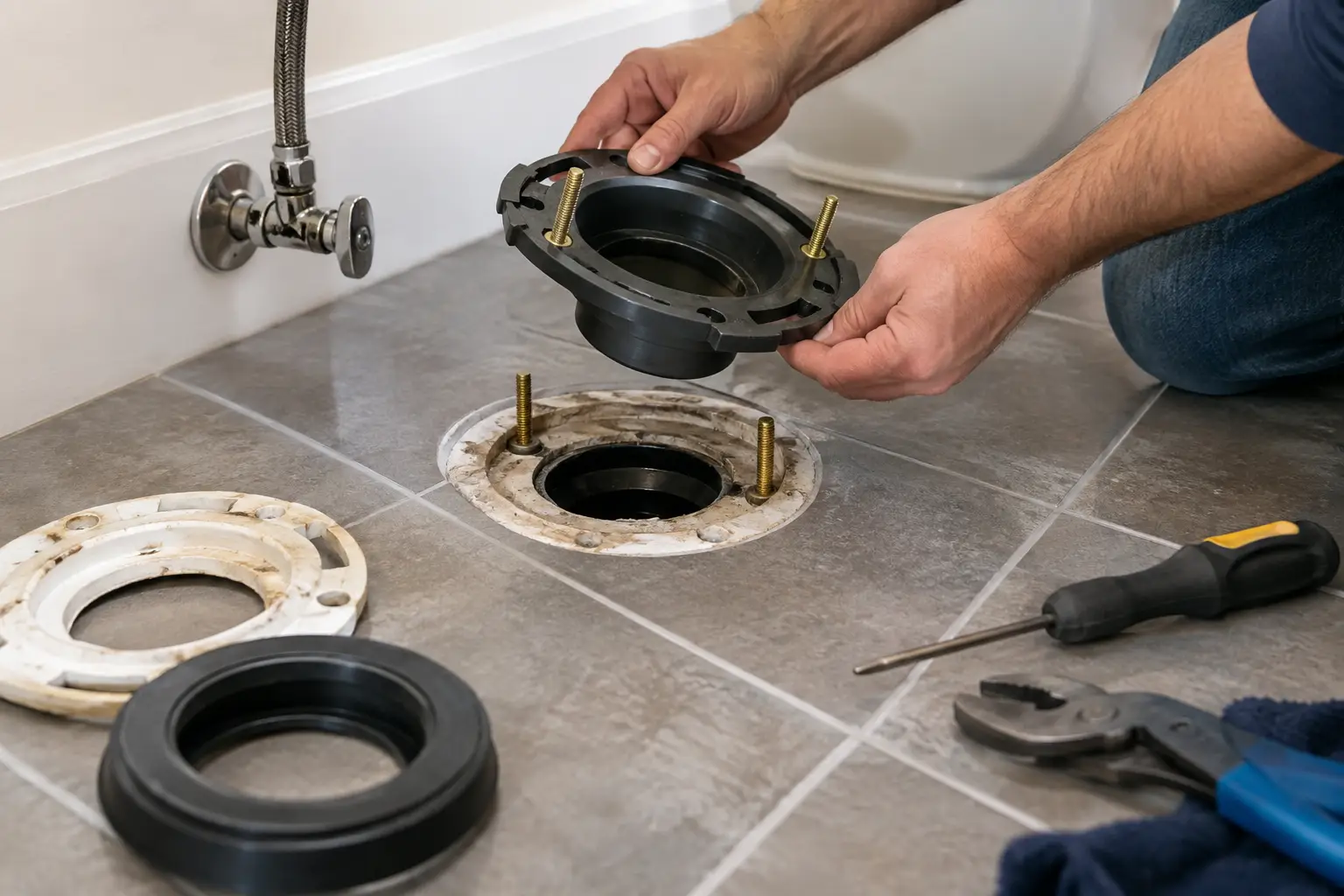
A toilet that rocks, leaks at the base, or keeps producing sewer odor may need more than a new wax ring. Toilet flange replacement addresses the fitting that anchors the toilet to the floor and connects it to the drain line. When that connection is damaged or improperly installed, even a well-maintained bathroom can develop leaks that affect flooring, subflooring, and the ceiling below.
The flange is hidden once the toilet is installed, so homeowners often do not know there is a problem until the damage becomes visible. A prompt inspection can prevent a minor plumbing repair from turning into a larger bathroom restoration project.
What a Toilet Flange Does
The toilet flange is a round fitting at the top of the drainpipe. It provides a secure mounting point for the toilet bolts and creates the proper height and surface for the wax ring or alternative seal. The toilet sits on top of it, while the flange connects to the drain system below.
For the seal to work correctly, the flange should be securely fastened to a solid finished floor and sit at the right height relative to the tile, vinyl, or other flooring. A flange that is cracked, loose, rusted, too low, or set on top of an unstable floor can allow the toilet to move. Movement breaks the seal, and wastewater can escape around the base.
This is why simply tightening the bolts is not always the right answer. Overtightening can crack the toilet base, while tightening a toilet over a failing flange can hide the real issue for only a short time.
Signs You May Need Toilet Flange Replacement
A small amount of water around the toilet does not automatically mean the flange has failed. Condensation, a supply-line leak, or a worn fill valve can create similar symptoms. Still, several signs point to a problem at the floor connection.
A toilet that rocks when someone sits down is one of the most common warnings. Toilets should feel solid and stable. Shims may correct a minor leveling issue, but they will not fix a broken flange, deteriorated subfloor, or failed seal.
Water appearing around the toilet base after flushing is another concern. The leak may be subtle and only occur under the pressure of a flush. In some cases, water travels beneath flooring before it appears elsewhere, so visible moisture may be only part of the problem.
Persistent sewer odor in a bathroom can also signal a compromised seal. The wax ring and flange area are designed to keep sewer gases in the drain system. If the seal has shifted or the flange is damaged, odors may return even after normal cleaning.
Other warning signs include soft flooring near the toilet, dark staining on a ceiling below an upstairs bathroom, loose toilet bolts, or recurring wax ring failures. These symptoms deserve a closer look before new flooring, a vanity, or other bathroom upgrades are installed.
Why Flanges Fail in Dallas-Fort Worth Homes
Flange problems are often connected to age, moisture, or previous remodeling work. In older homes, cast-iron components can corrode, and metal flange rings can rust through. Plastic flanges can crack from impact, overtightened bolts, or repeated movement of the toilet.
Flooring changes are another frequent cause. Adding tile over an existing surface can leave the old flange too low below the finished floor. Removing thick flooring can create the opposite problem. Either condition can make it difficult to achieve a dependable seal without using the correct flange extension or replacement method.
Water damage is especially important to address. A slow leak around the toilet may soften plywood or damage framing around the drain opening. The flange can no longer hold firmly if it is attached to compromised material. Replacing only the visible fitting without repairing the floor structure may lead to another loose toilet and another leak.
A prior installation can also be the source. Flanges should be anchored to the finished floor, not left floating above it or buried below a thick layer of flooring. Improvised repairs, mismatched parts, and reused hardware can all reduce the life of the connection.
Toilet Flange Replacement or Repair?
Not every problem requires full toilet flange replacement. The right solution depends on the flange material, the condition of the drainpipe, the finished floor height, and whether water damage is present.
If the main flange body is intact but the metal ring that holds the toilet bolts is corroded or broken, a repair ring may provide a durable correction. This is often a practical option when the existing flange is secure and properly positioned.
If the flange sits too low after a flooring installation, a flange extender may bring the sealing surface to the correct height. This can work well when the surrounding floor is stable and the existing flange has no cracks or movement. An extender is not a substitute for a failing flange or damaged subfloor.
Full replacement is generally the better option when the flange is cracked, severely corroded, loose from the floor, improperly installed, or connected to a drainpipe that needs correction. It may also be necessary when a remodel exposes outdated plumbing or reveals concealed water damage. The goal is not just to stop a leak today. It is to create a secure base for the toilet and a seal that stays reliable.
What the Repair Process Should Include
A proper repair begins by removing the toilet and inspecting the full area around the drain. The old wax ring must be cleared away so the flange, bolts, floor, and pipe connection can be evaluated accurately.
The installer should check for moisture damage, soft spots, staining, and movement in the subfloor. If flooring around the toilet has been affected, that material may need repair before the new flange is installed. Skipping this step can leave the new part without a stable surface to anchor to.
Next comes the flange repair or replacement itself. The correct method depends on whether the drainpipe is PVC, ABS, cast iron, or another material. The replacement flange must fit the pipe correctly, sit at the proper finished-floor height, and be mechanically secured. New closet bolts are typically installed before the toilet is reset.
Once the toilet is reinstalled, it should sit level and stable without rocking. A new wax ring or compatible seal is used, and the bolts are tightened carefully. The final step is a flush test and a check for leaks at the base, tank connection, supply line, and shutoff valve.
Why This Is Often Not a DIY Repair
Replacing a wax ring is within reach for some experienced homeowners. Replacing the flange is more involved because it can require cutting or modifying drainpipe, working around finished flooring, and repairing water-damaged subflooring. The toilet is also heavy, awkward, and easy to damage during removal or reinstallation.
The bigger risk is an incomplete diagnosis. A new wax ring may seem to solve the issue, only for the toilet to leak again because the flange was loose or the floor was deteriorated. If the bathroom is on a second floor, a missed leak can damage drywall and insulation below before anyone notices.
Professional service is especially advisable when there is visible water damage, sewer odor, a cast-iron drain connection, tile flooring, repeated leaks, or plans for a bathroom renovation. A contractor who handles both plumbing repair and bathroom work can evaluate the drain connection, floor condition, and finish materials together rather than treating them as separate problems.
Protecting Your Bathroom After the Repair
After the toilet is reset, keep an eye on the base for the first few days. The toilet should remain firm, and there should be no moisture or odor after flushing. Avoid using the toilet itself to test its stability. If it moves, contact the installer rather than adding caulk or trying to tighten the bolts yourself.
Caulk around the front and sides of the toilet base can create a cleaner finished appearance and help prevent debris from collecting underneath. Many professionals leave a small gap at the back so a future leak is easier to spot. Local code requirements and installation preferences can vary, so the exact approach depends on the bathroom and the contractor’s method.
A toilet flange issue can be disruptive, but it is also a repair that rewards careful work. Addressing the pipe connection, floor support, and toilet installation at the same time helps protect the bathroom you use every day and prevents a small leak from becoming a costly surprise.